IJERPH, Vol. 21, Pages 491: Optimizing the Selection of Mass Vaccination Sites: Access and Equity Consideration
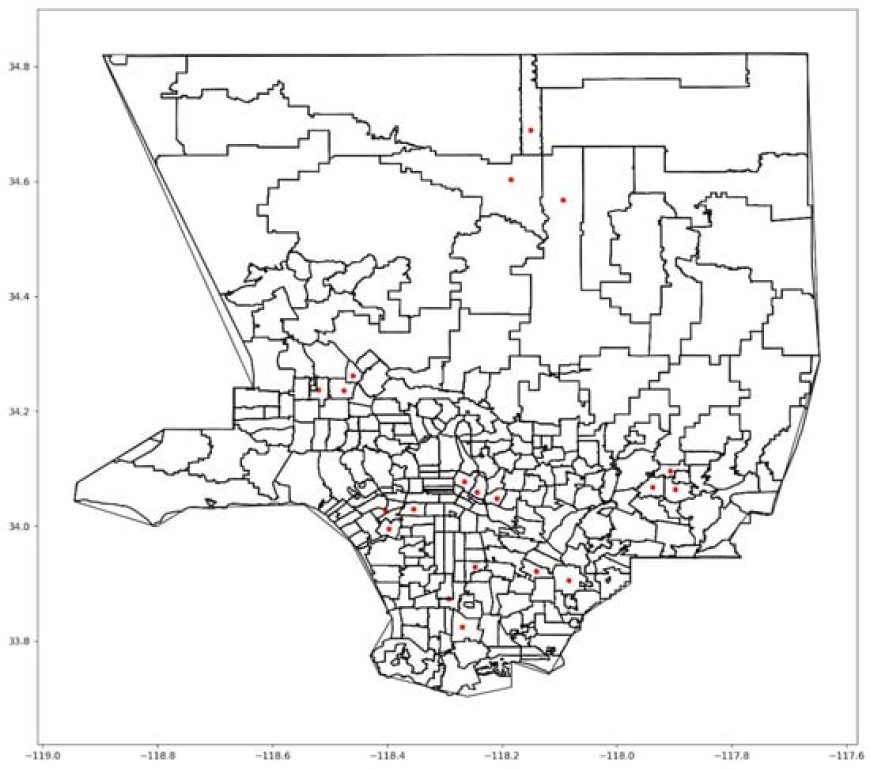
In the early phases of the COVID-19 pandemic, vaccine accessibility was limited, impacting large metropolitan areas such as Los Angeles County, which has over 10 million residents but only nine initial vaccination sites, which resulted in people experiencing long travel times to get vaccinated. We developed a mixed-integer linear model to optimize site selection, considering equitable access for vulnerable populations. Analyzing 277 zip codes between December 2020 and May 2021, our model incorporated factors such as car ownership, ethnic group disease vulnerability, and the Healthy Places Index, alongside travel times by car and public transit. Our optimized model significantly outperformed actual site allocations for all ethnic groups. We observed that White populations faced longer travel times, likely due to their residences being in more remote, less densely populated areas. Conversely, areas with higher Latino and Black populations, often closer to the city center, benefited from shorter travel times in our model. However, those without cars experienced greater disadvantages. While having many vaccination sites might improve access for those dependent on public transit, that advantage is diminished if people must search among many sites to find a location with available vaccines.
IJERPH, Vol. 21, Pages 491: Optimizing the Selection of Mass Vaccination Sites: Access and Equity Consideration
International Journal of Environmental Research and Public Health doi: 10.3390/ijerph21040491
Authors: Basim Aljohani Randolph Hall
In the early phases of the COVID-19 pandemic, vaccine accessibility was limited, impacting large metropolitan areas such as Los Angeles County, which has over 10 million residents but only nine initial vaccination sites, which resulted in people experiencing long travel times to get vaccinated. We developed a mixed-integer linear model to optimize site selection, considering equitable access for vulnerable populations. Analyzing 277 zip codes between December 2020 and May 2021, our model incorporated factors such as car ownership, ethnic group disease vulnerability, and the Healthy Places Index, alongside travel times by car and public transit. Our optimized model significantly outperformed actual site allocations for all ethnic groups. We observed that White populations faced longer travel times, likely due to their residences being in more remote, less densely populated areas. Conversely, areas with higher Latino and Black populations, often closer to the city center, benefited from shorter travel times in our model. However, those without cars experienced greater disadvantages. While having many vaccination sites might improve access for those dependent on public transit, that advantage is diminished if people must search among many sites to find a location with available vaccines.
What's Your Reaction?