Understanding BOD and DO Levels in Self-Purification Processes of River Water
Introduction
Rivers are the lifelines of our ecosystems, providing habitat for a diverse array of organisms and essential resources for human activities. One of the most fascinating aspects of river ecosystems is their natural ability to self-purify. This self-purification process is primarily influenced by two critical parameters: Biochemical Oxygen Demand (BOD) and Dissolved Oxygen (DO). Understanding these parameters and their roles in different zones of a river is crucial for environmental management and conservation.

What is BOD?
Biochemical Oxygen Demand (BOD) is a measure of the amount of oxygen required by aerobic microorganisms to decompose the organic matter present in water. High BOD levels indicate a high concentration of biodegradable material, which can lead to oxygen depletion in the water body.
What is DO?
Dissolved Oxygen (DO) is the amount of oxygen that is present in water. It is essential for the survival of aquatic organisms, including fish, invertebrates, and aerobic bacteria. DO levels can be influenced by factors such as temperature, salinity, and the presence of organic material.
The Self-Purification Process
When organic pollutants enter a river, the self-purification process begins. This process can be divided into several zones, each characterized by specific levels of BOD and DO and the presence of different organisms.
1. Clean Zone
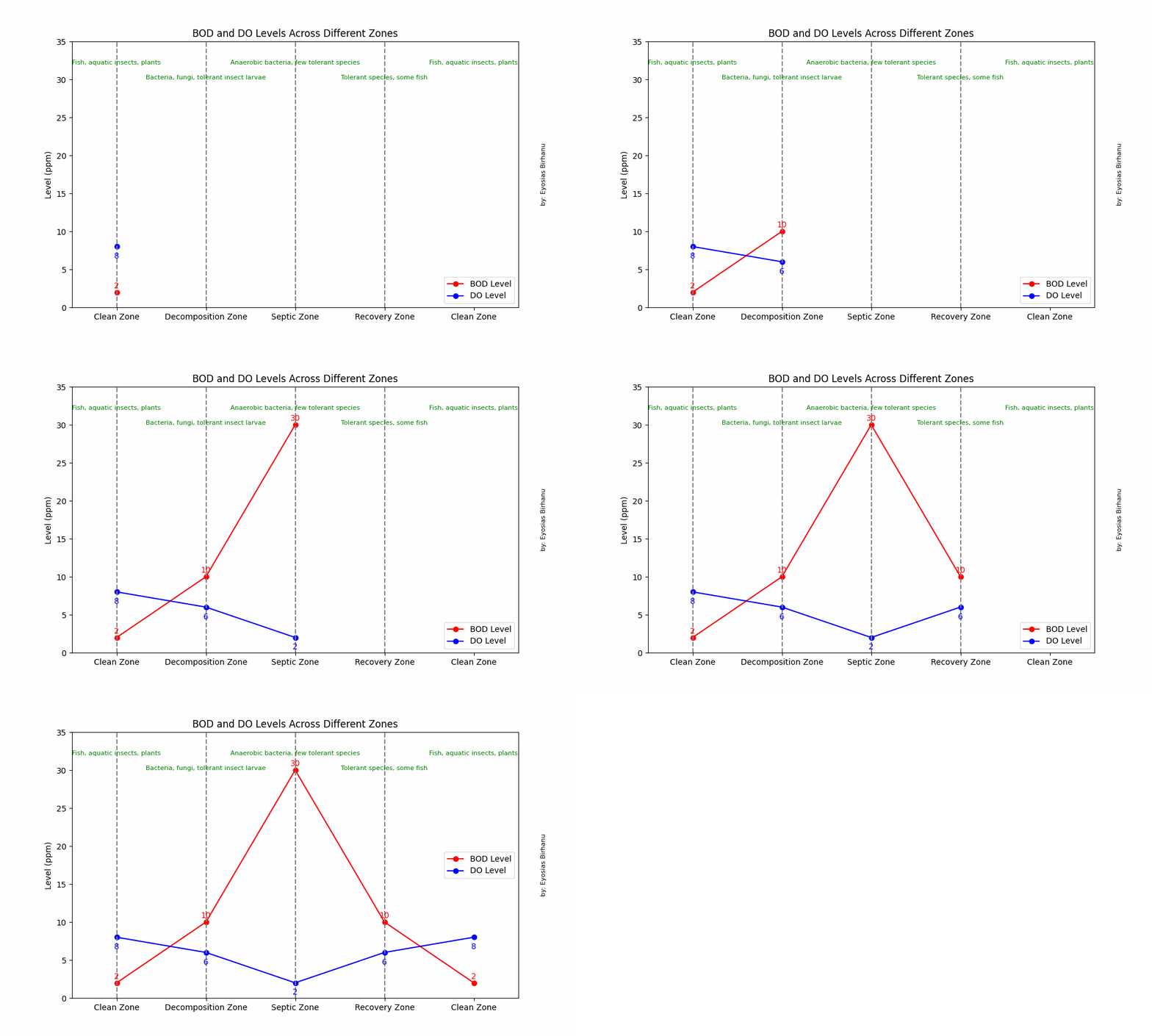
- BOD Level: Low (approximately 2 ppm)
- DO Level: High (approximately 8 ppm)
- Organisms: Fish, aquatic insects, and plants thrive in this zone.
In the clean zone, the water quality is good, with high levels of dissolved oxygen and low levels of organic pollutants. This zone supports a diverse and healthy aquatic ecosystem.
2. Decomposition Zone
- BOD Level: Moderate (approximately 10 ppm)
- DO Level: Moderate (approximately 6 ppm)
- Organisms: Bacteria, fungi, and tolerant insect larvae.
As organic pollutants enter the water, microorganisms begin to break them down, increasing the BOD. This leads to a moderate decrease in DO levels. The decomposition zone is characterized by the presence of bacteria and fungi that decompose organic matter.
3. Septic Zone
- BOD Level: High (approximately 30 ppm)
- DO Level: Low (approximately 2 ppm)
- Organisms: Anaerobic bacteria and few tolerant species.
In the septic zone, the BOD is at its highest, and the DO levels drop significantly due to the high demand for oxygen by microorganisms decomposing the organic pollutants. This zone often has anaerobic conditions, where only the most tolerant species can survive.
4. Recovery Zone
- BOD Level: Decreasing (approximately 10 ppm)
- DO Level: Increasing (approximately 6 ppm)
- Organisms: Tolerant species and some fish.
As the river flows downstream, natural reaeration and the dilution of pollutants help increase DO levels, and the BOD begins to decrease. The recovery zone marks the beginning of the return to better water quality conditions, supporting a more diverse range of organisms.
5. Clean Zone
- BOD Level: Low (approximately 2 ppm)
- DO Level: High (approximately 8 ppm)
- Organisms: Fish, aquatic insects, and plants.
In this final clean zone, the water quality has improved significantly, with low BOD and high DO levels, similar to the initial clean zone. This zone supports a diverse and healthy aquatic ecosystem.
Animation and Visualization
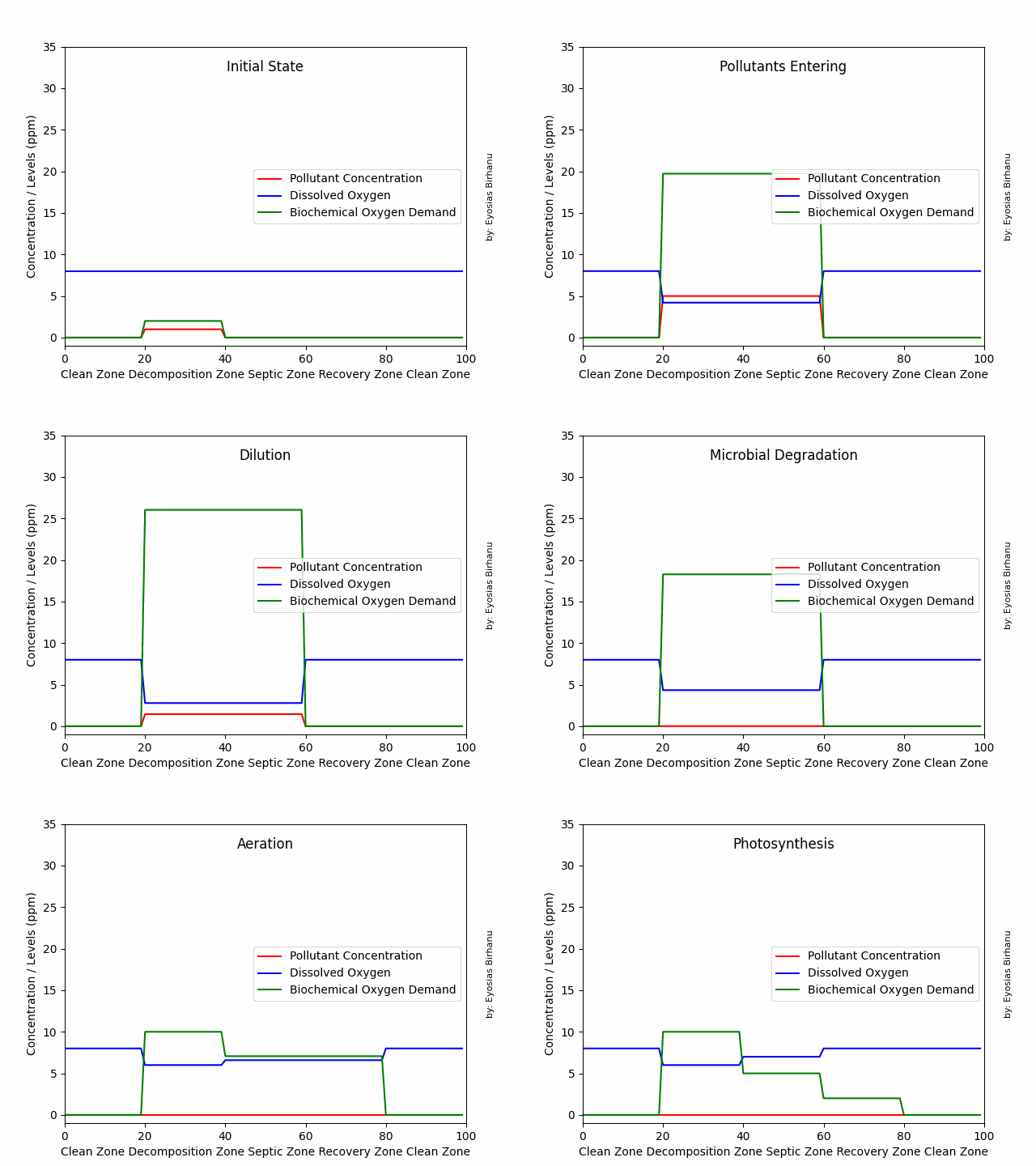
To better understand the dynamics of BOD and DO levels across these zones, we have created an animation that visually represents the changes in these parameters.
Dynamic Simulation of Water Self-Purification Processes
Conclusion
The self-purification process of rivers is a remarkable natural mechanism that helps maintain water quality and support diverse ecosystems. By understanding the roles of BOD and DO levels in different zones, we can better appreciate the resilience of our natural water bodies and the importance of protecting them from pollution.
Further Reading
For those interested in diving deeper into the science behind river self-purification and water quality management, here are some recommended resources:
- "Introduction to Environmental Engineering" by Mackenzie L. Davis and David A. Cornwell: This textbook provides a comprehensive overview of environmental engineering principles, including water quality and treatment processes.
- "Water Quality: An Introduction" by Claude E. Boyd: This book offers a detailed introduction to water quality issues and measurement techniques.
- "Principles of Water Resources: History, Development, Management, and Policy" by Thomas V. Cech: This book covers the broad aspects of water resource management, including policy and sustainability.
By understanding and monitoring BOD and DO levels, we can make informed decisions to protect and restore our vital water resources. Let's work together to preserve the natural beauty and health of our rivers for future generations.
You can view and download the animation here.⇓
Files
What's Your Reaction?