Climate, Vol. 12, Pages 66: Developing a Drought Resilience Matrix to Evaluate Water Supply Alternatives
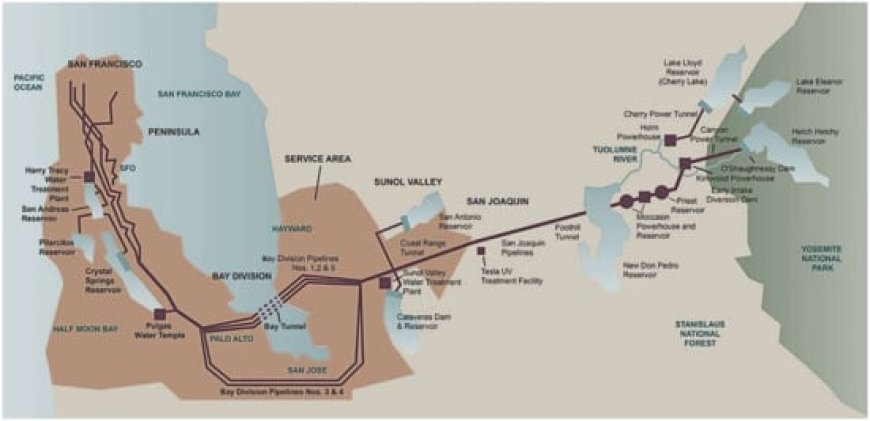
Cities around the world are facing increased sensitivity to drought effects. Climate-change-induced drought affects not only the natural hydrology of the broad macroclimate but also those in the urban microclimates. The increasing frequency and duration of droughts are creating challenges for urban water utilities to convey water through distribution systems to customers reliably and consistently. This has led many urban areas like San Francisco, California, to search for unique alternative water supply projects to help bolster the drought resilience of the coupled human and natural water system. This paper focuses on applying the features of resilience (i.e., plan, adapt, absorb, and recover) through a drought resilience matrix to water supply alternatives to analyze how the addition of these projects would increase the overall water system’s drought resilience. San Francisco, California, was used as the case study to test the use of this matrix. Three portfolios (modifying existing supply, recycling, and desalination, as well as local approaches) were created and tested in the matrix. Each portfolio is composed of various alternative water supply projects that the San Francisco Public Utilities Commission (SFPUC) is considering for implementation. Results concluded that the local approaches portfolio provided the most drought resilience, with the recycling and desalination portfolio providing the least resilience. The study approach and the presented findings will provide guidance to water utility professionals in supply planning to enhance drought resilience.
Climate, Vol. 12, Pages 66: Developing a Drought Resilience Matrix to Evaluate Water Supply Alternatives
Climate doi: 10.3390/cli12050066
Authors: Krystal Okpa Zeinab Farahmandfar Masoud Negahban-Azar
Cities around the world are facing increased sensitivity to drought effects. Climate-change-induced drought affects not only the natural hydrology of the broad macroclimate but also those in the urban microclimates. The increasing frequency and duration of droughts are creating challenges for urban water utilities to convey water through distribution systems to customers reliably and consistently. This has led many urban areas like San Francisco, California, to search for unique alternative water supply projects to help bolster the drought resilience of the coupled human and natural water system. This paper focuses on applying the features of resilience (i.e., plan, adapt, absorb, and recover) through a drought resilience matrix to water supply alternatives to analyze how the addition of these projects would increase the overall water system’s drought resilience. San Francisco, California, was used as the case study to test the use of this matrix. Three portfolios (modifying existing supply, recycling, and desalination, as well as local approaches) were created and tested in the matrix. Each portfolio is composed of various alternative water supply projects that the San Francisco Public Utilities Commission (SFPUC) is considering for implementation. Results concluded that the local approaches portfolio provided the most drought resilience, with the recycling and desalination portfolio providing the least resilience. The study approach and the presented findings will provide guidance to water utility professionals in supply planning to enhance drought resilience.
What's Your Reaction?