AI, Vol. 4, Pages 875-887: Can Artificial Intelligence Aid Diagnosis by Teleguided Point-of-Care Ultrasound? A Pilot Study for Evaluating a Novel Computer Algorithm for COVID-19 Diagnosis Using Lung Ultrasound
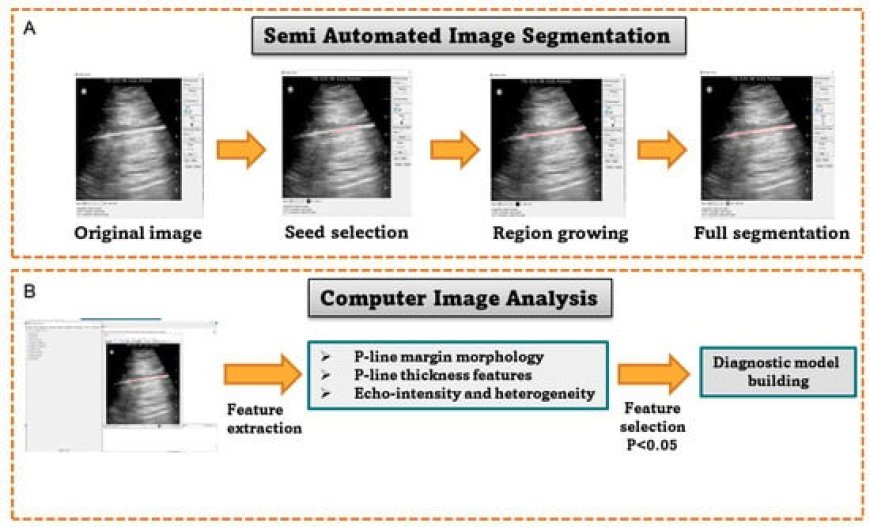
With the 2019 coronavirus disease (COVID-19) pandemic, there is an increasing demand for remote monitoring technologies to reduce patient and provider exposure. One field that has an increasing potential is teleguided ultrasound, where telemedicine and point-of-care ultrasound (POCUS) merge to create this new scope. Teleguided POCUS can minimize staff exposure while preserving patient safety and oversight during bedside procedures. In this paper, we propose the use of teleguided POCUS supported by AI technologies for the remote monitoring of COVID-19 patients by non-experienced personnel including self-monitoring by the patients themselves. Our hypothesis is that AI technologies can facilitate the remote monitoring of COVID-19 patients through the utilization of POCUS devices, even when operated by individuals without formal medical training. In pursuit of this goal, we performed a pilot analysis to evaluate the performance of users with different clinical backgrounds using a computer-based system for COVID-19 detection using lung ultrasound. The purpose of the analysis was to emphasize the potential of the proposed AI technology for improving diagnostic performance, especially for users with less experience.
AI, Vol. 4, Pages 875-887: Can Artificial Intelligence Aid Diagnosis by Teleguided Point-of-Care Ultrasound? A Pilot Study for Evaluating a Novel Computer Algorithm for COVID-19 Diagnosis Using Lung Ultrasound
Authors: Laith R. Sultan Allison Haertter Maryam Al-Hasani George Demiris Theodore W. Cary Yale Tung-Chen Chandra M. Sehgal
With the 2019 coronavirus disease (COVID-19) pandemic, there is an increasing demand for remote monitoring technologies to reduce patient and provider exposure. One field that has an increasing potential is teleguided ultrasound, where telemedicine and point-of-care ultrasound (POCUS) merge to create this new scope. Teleguided POCUS can minimize staff exposure while preserving patient safety and oversight during bedside procedures. In this paper, we propose the use of teleguided POCUS supported by AI technologies for the remote monitoring of COVID-19 patients by non-experienced personnel including self-monitoring by the patients themselves. Our hypothesis is that AI technologies can facilitate the remote monitoring of COVID-19 patients through the utilization of POCUS devices, even when operated by individuals without formal medical training. In pursuit of this goal, we performed a pilot analysis to evaluate the performance of users with different clinical backgrounds using a computer-based system for COVID-19 detection using lung ultrasound. The purpose of the analysis was to emphasize the potential of the proposed AI technology for improving diagnostic performance, especially for users with less experience.
What's Your Reaction?