Climate, Vol. 12, Pages 86: Homogenization of the Long Instrumental Daily-Temperature Series in Padua, Italy (1725–2023)
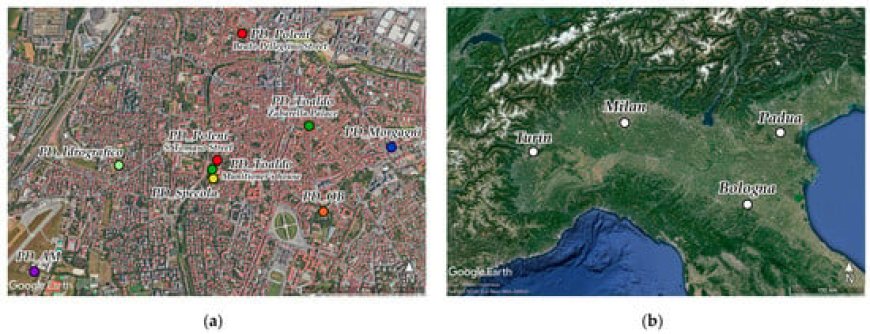
The Padua temperature series is one of the longest in the world, as daily observations started in 1725 and have continued almost unbroken to the present. Previous works recovered readings from the original logs, and digitalized and corrected observations from errors due to instruments, calibrations, sampling times and exposure. However, the series underwent some changes (location, elevation, observing protocols, and different averaging methods) that affected the homogeneity between sub-series. The aim of this work is to produce a homogenized temperature series for Padua, starting from the results of previous works, and connecting all the periods available. The homogenization of the observations has been carried out with respect to the modern era. A newly released paleo-reanalysis dataset, ModE-RA, is exploited to connect the most ancient data to the recent ones. In particular, the following has been carried out: the 1774–2023 daily mean temperature has been homogenized to the modern data; for the first time, the daily values of 1765–1773 have been merged and homogenized; and the daily observations of the 1725–1764 period have been connected and homogenized to the rest of the series. Snowfall observations, extracted from the same logs from which the temperatures were retrieved, help to verify the robustness of the homogenization procedure by looking at the temperature frequency distribution on snowy days, before and after the correction. The possibility of adding new measurements with no need to apply transformations or homogenization procedures makes it very easy to update the time series and make it immediately available for climate change analysis.
Climate, Vol. 12, Pages 86: Homogenization of the Long Instrumental Daily-Temperature Series in Padua, Italy (1725–2023)
Climate doi: 10.3390/cli12060086
Authors: Claudio Stefanini Francesca Becherini Antonio della Valle Dario Camuffo
The Padua temperature series is one of the longest in the world, as daily observations started in 1725 and have continued almost unbroken to the present. Previous works recovered readings from the original logs, and digitalized and corrected observations from errors due to instruments, calibrations, sampling times and exposure. However, the series underwent some changes (location, elevation, observing protocols, and different averaging methods) that affected the homogeneity between sub-series. The aim of this work is to produce a homogenized temperature series for Padua, starting from the results of previous works, and connecting all the periods available. The homogenization of the observations has been carried out with respect to the modern era. A newly released paleo-reanalysis dataset, ModE-RA, is exploited to connect the most ancient data to the recent ones. In particular, the following has been carried out: the 1774–2023 daily mean temperature has been homogenized to the modern data; for the first time, the daily values of 1765–1773 have been merged and homogenized; and the daily observations of the 1725–1764 period have been connected and homogenized to the rest of the series. Snowfall observations, extracted from the same logs from which the temperatures were retrieved, help to verify the robustness of the homogenization procedure by looking at the temperature frequency distribution on snowy days, before and after the correction. The possibility of adding new measurements with no need to apply transformations or homogenization procedures makes it very easy to update the time series and make it immediately available for climate change analysis.
What's Your Reaction?