Hydrology, Vol. 10, Pages 236: Modeling and Simulating Rainfall and Temperature Using Rotated Bivariate Copulas
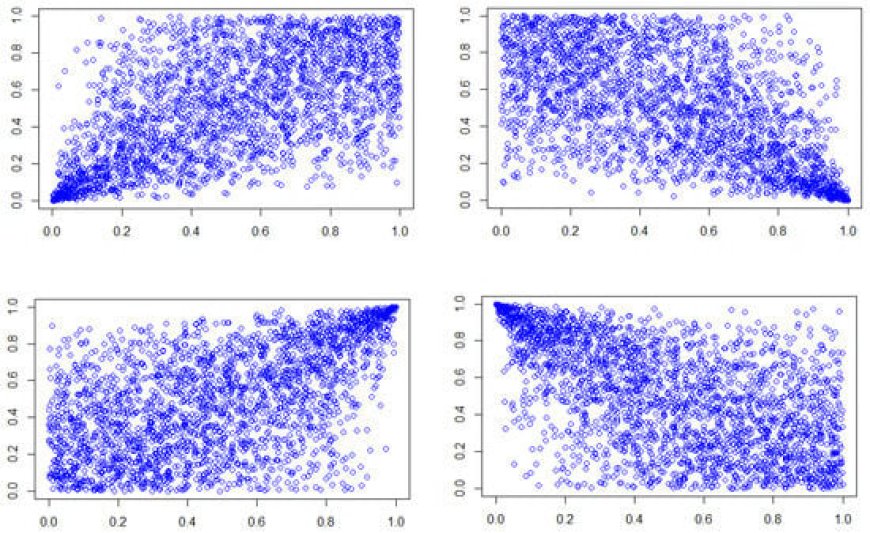
Climate change is a significant environmental challenge that affects water resources, agriculture, health, and other aspects of human life. Bivariate modeling is a statistical method used to analyze the relationship between variables such as rainfall and temperature. The Pearson correlation coefficient, Kendall’s tau, or Spearman’s rank correlation are some measures used for bivariate modeling. However, copula functions can describe the dependence structure between two or more variables and can be effectively used to describe the relationship between rainfall and temperature. Despite the literature on bivariate modeling of rainfalls and temperature being extensive, finding flexible and sophisticated bivariate models is sometimes difficult. In this paper, we use rotated copula functions that can arrange any type of dependence that is empirically detected, especially negative dependence. The methodology is applied to an Italian municipality’s bivariate daily time series of rainfall and temperature. The estimated rotated copula is significant and, therefore, can be used for simulating the effects of extreme events.
Hydrology, Vol. 10, Pages 236: Modeling and Simulating Rainfall and Temperature Using Rotated Bivariate Copulas
Hydrology doi: 10.3390/hydrology10120236
Authors: Giovanni De Luca Giorgia Rivieccio
Climate change is a significant environmental challenge that affects water resources, agriculture, health, and other aspects of human life. Bivariate modeling is a statistical method used to analyze the relationship between variables such as rainfall and temperature. The Pearson correlation coefficient, Kendall’s tau, or Spearman’s rank correlation are some measures used for bivariate modeling. However, copula functions can describe the dependence structure between two or more variables and can be effectively used to describe the relationship between rainfall and temperature. Despite the literature on bivariate modeling of rainfalls and temperature being extensive, finding flexible and sophisticated bivariate models is sometimes difficult. In this paper, we use rotated copula functions that can arrange any type of dependence that is empirically detected, especially negative dependence. The methodology is applied to an Italian municipality’s bivariate daily time series of rainfall and temperature. The estimated rotated copula is significant and, therefore, can be used for simulating the effects of extreme events.
What's Your Reaction?