












Environments, Vol. 11, Pages 44: Biomass Production and Metal Remediation by Salix alba L. and Salix viminalis L. Irrigated with Greywater Treated by Floating Wetlands
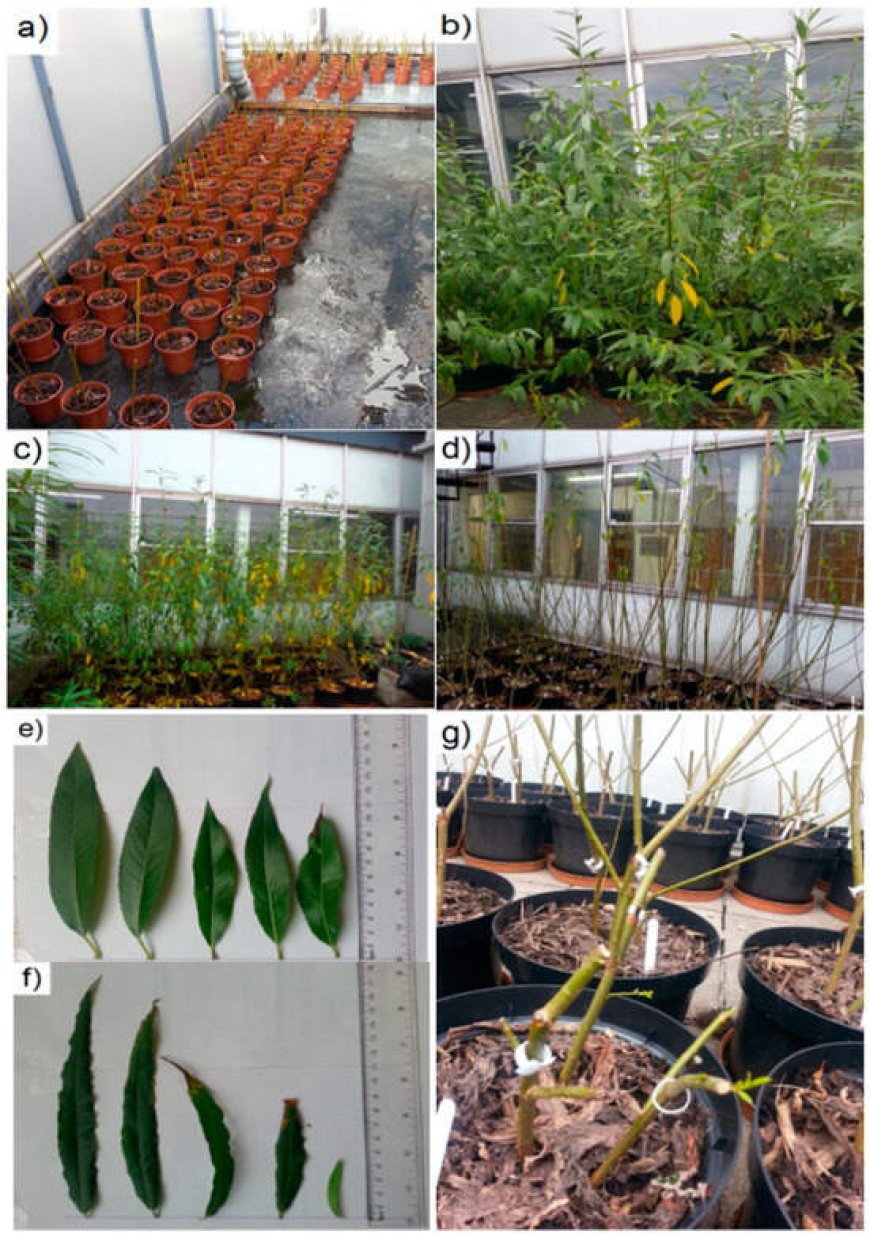
As an alternative wood source for biochar and a cost-effective renewable energy source, sustainable biomass production based on fast-growing willows irrigated with treated wastewater has been explored. Salix alba L. and Salix viminalis L. were selected for assessment of their potentially high woody biomass productivity and phytoremediation efficiency when irrigated with greywater treated by floating treatment wetlands. Both Salix species produced significantly (p < 0.05) high woody biomass in the second harvest, with a significantly higher fresh woody biomass weight with higher water content (53%) for S. viminalis compared to S. alba. The dry biomass weight of S. alba was greater than of S. viminalis at the first harvest. The element accumulations in substrates changed significantly after irrigation, with greywater compared to the raw substrate following this order: Mg > Fe > Al > Cr > Mn > Cd > Cu > B. Element concentrations accumulated in twigs of S. alba following this order: Ca > Mg > Na > Mn > Zn > Fe > Al > Cd > Cu > Cr > Ni > B, but for S. viminalis the order was Ca > Mg > Mn > Zn > Na > Fe > Al > Cd > Cu > Ni > Cr > B. The accumulations of Al, B, Ca, Fe, Mg, Mn, and Ni were significantly greater in S. alba leaves compared to their twigs, which showed significantly high accumulations of Na and Zn. The accumulations of Al, B, Ca, Fe, Mg, Mn, and Na were significantly greater in S. viminalis leaves compared to their twigs.
Environments, Vol. 11, Pages 44: Biomass Production and Metal Remediation by Salix alba L. and Salix viminalis L. Irrigated with Greywater Treated by Floating Wetlands
Environments doi: 10.3390/environments11030044
Authors: Suhad A. A. A. N. Almuktar Suhail N. Abed Miklas Scholz
As an alternative wood source for biochar and a cost-effective renewable energy source, sustainable biomass production based on fast-growing willows irrigated with treated wastewater has been explored. Salix alba L. and Salix viminalis L. were selected for assessment of their potentially high woody biomass productivity and phytoremediation efficiency when irrigated with greywater treated by floating treatment wetlands. Both Salix species produced significantly (p < 0.05) high woody biomass in the second harvest, with a significantly higher fresh woody biomass weight with higher water content (53%) for S. viminalis compared to S. alba. The dry biomass weight of S. alba was greater than of S. viminalis at the first harvest. The element accumulations in substrates changed significantly after irrigation, with greywater compared to the raw substrate following this order: Mg > Fe > Al > Cr > Mn > Cd > Cu > B. Element concentrations accumulated in twigs of S. alba following this order: Ca > Mg > Na > Mn > Zn > Fe > Al > Cd > Cu > Cr > Ni > B, but for S. viminalis the order was Ca > Mg > Mn > Zn > Na > Fe > Al > Cd > Cu > Ni > Cr > B. The accumulations of Al, B, Ca, Fe, Mg, Mn, and Ni were significantly greater in S. alba leaves compared to their twigs, which showed significantly high accumulations of Na and Zn. The accumulations of Al, B, Ca, Fe, Mg, Mn, and Na were significantly greater in S. viminalis leaves compared to their twigs.
What's Your Reaction?