IJERPH, Vol. 21, Pages 492: The Development of an Oral Health Nursing Tool for Patients with a Psychotic Disorder: A Human-Centred Design with a Feasibility Test
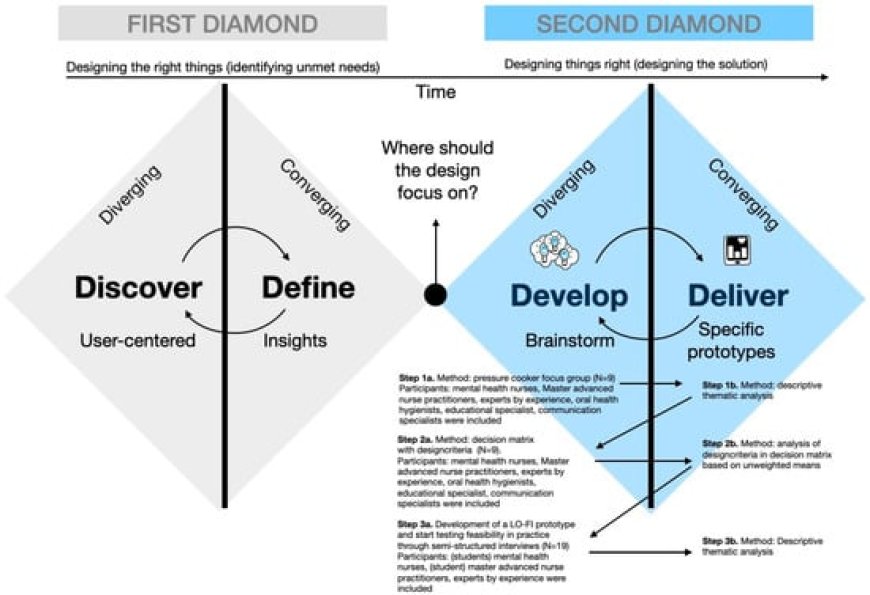
Patients with psychotic disorders frequently report oral health problems, while mental health nurses (MHNs) seem not to be fully aware of these problems and the risk factors. Therefore, this study aimed to develop supportive tools for MHNs regarding oral health to increase sensitisation among MHNs and provide MHNs with the knowledge to recognise (potential) oral health problems in patients with a psychotic disorder. We used a human-centred design in which the user, MHNs and experts by experience were placed at the centre of the research process. Problems and needs in MHNs working with patients with a psychotic disorder were addressed. To identify key issues of problems as well as needs in terms of resources, we started with focus groups (n = 9). We analysed the data thematically based on the context of patients and MHNs in practice regarding oral health, preferred oral health tools focused on MHNs, and the intended outcomes of tools. A multi-criteria decision matrix was developed and analysed (n = 9) to identify the most optimal and viable solution based on established criteria and issues that are prevalent in the work of MHNs. The most promising result was the development of a brochure with an awareness screener. The brochure with the awareness screener was developed as a low-fidelity prototype for MHNs regarding oral health in patients with a psychotic disorder based on the latest scientific evidence. After testing it, the feasibility was tested through semi-structured interviews (n = 19). MHNs and experts by experience were satisfied with the tool and provided recommendations for adjustments to the content. Significant augmentations to the brochure included a clinical lesson and a toothbrush with toothpaste for patients. We can conclude that a brochure with an awareness screener is feasible for MHNs. Future steps aiming to further refine and optimise care processes for oral health tools in MHNs should take refining eligibility criteria for psychiatric populations and the language level of the target group of a tool into account.
IJERPH, Vol. 21, Pages 492: The Development of an Oral Health Nursing Tool for Patients with a Psychotic Disorder: A Human-Centred Design with a Feasibility Test
International Journal of Environmental Research and Public Health doi: 10.3390/ijerph21040492
Authors: Sonja Kuipers Stynke Castelein Linda Kronenberg Job van ’t Veer Nynke Boonstra
Patients with psychotic disorders frequently report oral health problems, while mental health nurses (MHNs) seem not to be fully aware of these problems and the risk factors. Therefore, this study aimed to develop supportive tools for MHNs regarding oral health to increase sensitisation among MHNs and provide MHNs with the knowledge to recognise (potential) oral health problems in patients with a psychotic disorder. We used a human-centred design in which the user, MHNs and experts by experience were placed at the centre of the research process. Problems and needs in MHNs working with patients with a psychotic disorder were addressed. To identify key issues of problems as well as needs in terms of resources, we started with focus groups (n = 9). We analysed the data thematically based on the context of patients and MHNs in practice regarding oral health, preferred oral health tools focused on MHNs, and the intended outcomes of tools. A multi-criteria decision matrix was developed and analysed (n = 9) to identify the most optimal and viable solution based on established criteria and issues that are prevalent in the work of MHNs. The most promising result was the development of a brochure with an awareness screener. The brochure with the awareness screener was developed as a low-fidelity prototype for MHNs regarding oral health in patients with a psychotic disorder based on the latest scientific evidence. After testing it, the feasibility was tested through semi-structured interviews (n = 19). MHNs and experts by experience were satisfied with the tool and provided recommendations for adjustments to the content. Significant augmentations to the brochure included a clinical lesson and a toothbrush with toothpaste for patients. We can conclude that a brochure with an awareness screener is feasible for MHNs. Future steps aiming to further refine and optimise care processes for oral health tools in MHNs should take refining eligibility criteria for psychiatric populations and the language level of the target group of a tool into account.
What's Your Reaction?