CivilEng, Vol. 5, Pages 549-558: Sustainable and Innovative Self-Healing Concrete Technologies to Mitigate Environmental Impacts in Construction
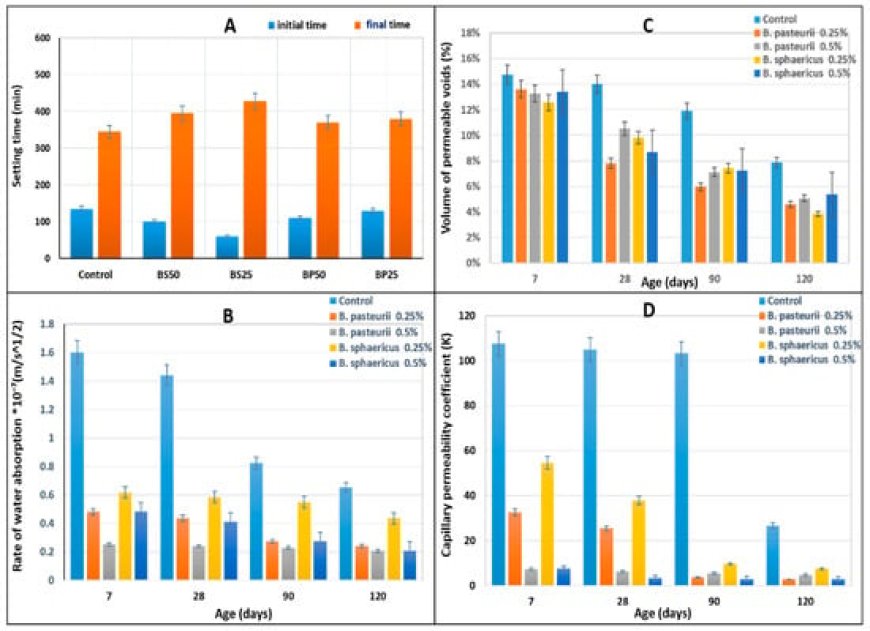
The production of concrete and the manufacturing process of cement result in a significant carbon footprint, contributing to a large portion of global emissions in structures such as buildings, bridges, roads, and tunnels. Although concrete is an ideal building material that is durable and long-lasting, it can be susceptible to micro-cracks. These micro-cracks in concrete can allow water and chlorine ions to penetrate the structure, leading to the degradation of the concrete and corrosion of the reinforcement, posing an unacceptable level of structural risk. Self-healing concrete is not a new material in the construction industry but can be characterized by the capability of concrete to repair its cracks autogenously or autonomously. Recent advancements in concrete research and technology have given us a better understanding of concrete’s healing properties. Self-healing concrete combines durability with sustainability while offsetting the high carbon output of concrete manufacturing and production and associated life-cycle costs. Technologies such as microbially induced calcite (calcium carbonate) precipitation, shape-memory polymers, encapsulation methods, hydration, and swelling agents can potentially reduce carbon emissions while enhancing resilience and longevity. This paper examines these technologies and their applications in the construction industry by comprehensively reviewing the literature and available case studies. This study concluded that there are promising advancements and innovations in concrete, particularly when improving upon its autogenous healing properties. The recommendations for future research include exploring more ways to bring the concrete industry and cement manufacturing toward net-zero carbon emissions.
CivilEng, Vol. 5, Pages 549-558: Sustainable and Innovative Self-Healing Concrete Technologies to Mitigate Environmental Impacts in Construction
CivilEng doi: 10.3390/civileng5030029
Authors: Vinayak Kaushal Elayna Saeed
The production of concrete and the manufacturing process of cement result in a significant carbon footprint, contributing to a large portion of global emissions in structures such as buildings, bridges, roads, and tunnels. Although concrete is an ideal building material that is durable and long-lasting, it can be susceptible to micro-cracks. These micro-cracks in concrete can allow water and chlorine ions to penetrate the structure, leading to the degradation of the concrete and corrosion of the reinforcement, posing an unacceptable level of structural risk. Self-healing concrete is not a new material in the construction industry but can be characterized by the capability of concrete to repair its cracks autogenously or autonomously. Recent advancements in concrete research and technology have given us a better understanding of concrete’s healing properties. Self-healing concrete combines durability with sustainability while offsetting the high carbon output of concrete manufacturing and production and associated life-cycle costs. Technologies such as microbially induced calcite (calcium carbonate) precipitation, shape-memory polymers, encapsulation methods, hydration, and swelling agents can potentially reduce carbon emissions while enhancing resilience and longevity. This paper examines these technologies and their applications in the construction industry by comprehensively reviewing the literature and available case studies. This study concluded that there are promising advancements and innovations in concrete, particularly when improving upon its autogenous healing properties. The recommendations for future research include exploring more ways to bring the concrete industry and cement manufacturing toward net-zero carbon emissions.
What's Your Reaction?