CivilEng, Vol. 5, Pages 537-548: Impact of the Fly Ash/Alkaline Activator Ratio on the Microstructure and Dielectric Properties of Fly Ash KOH-Based Geopolymer
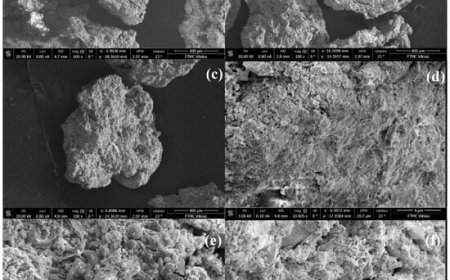
Geopolymer materials, alternatives to cement that are synthesized using industrial byproducts, have emerged as some of the leading champion materials due to their environmentally friendly attributes. They can significantly reduce pollution by utilizing a plethora of waste products and conserving natural resources that would otherwise be used in the production of conventional cement. Much work is being carried out to study geopolymers’ characteristics under different conditions. Here, a geopolymer derived from fly ash (FA) was synthesized using a combination of sodium silicate and potassium hydroxide (KOH) (2.5:1 ratio) as an alkali activator (AA) liquid. The FA/AA ratios were optimized, resulting in distinct geopolymer samples with ratios of 1.00, 1.25, 1.50, and 1.75. By adjusting the contribution of alkaline liquid, we investigated the impacts of subtle changes in the FA/AA ratio on the morphology and microstructure using X-ray diffraction (XRD) and field emission scanning electron microscopy (FESEM) techniques. The FESEM analysis illustrated a mixed matrix and morphology, with the sample with a ratio of 1.00 displaying consistently fused and homogenous morphology. The XRD results revealed the prevalent amorphous nature of geopolymer with a few crystalline phases of quartz, sodalite, hematite, and mullite. An electrical study confirmed the insulating nature of the geopolymer samples. Insulating geopolymers can provide energy-efficient buildings and resistance to fire, hurricanes, and tornadoes. Additionally, using KOH as a part of the alkali activator introduced a less-explored aspect compared to conventional sodium hydroxide-based activators, highlighting the novelty in the synthesis process.
CivilEng, Vol. 5, Pages 537-548: Impact of the Fly Ash/Alkaline Activator Ratio on the Microstructure and Dielectric Properties of Fly Ash KOH-Based Geopolymer
CivilEng doi: 10.3390/civileng5020028
Authors: Meenakshi Yadav Neha Saini Lalit Kumar Vidya Nand Singh Karthikeyan Jagannathan V. Ezhilselvi
Geopolymer materials, alternatives to cement that are synthesized using industrial byproducts, have emerged as some of the leading champion materials due to their environmentally friendly attributes. They can significantly reduce pollution by utilizing a plethora of waste products and conserving natural resources that would otherwise be used in the production of conventional cement. Much work is being carried out to study geopolymers’ characteristics under different conditions. Here, a geopolymer derived from fly ash (FA) was synthesized using a combination of sodium silicate and potassium hydroxide (KOH) (2.5:1 ratio) as an alkali activator (AA) liquid. The FA/AA ratios were optimized, resulting in distinct geopolymer samples with ratios of 1.00, 1.25, 1.50, and 1.75. By adjusting the contribution of alkaline liquid, we investigated the impacts of subtle changes in the FA/AA ratio on the morphology and microstructure using X-ray diffraction (XRD) and field emission scanning electron microscopy (FESEM) techniques. The FESEM analysis illustrated a mixed matrix and morphology, with the sample with a ratio of 1.00 displaying consistently fused and homogenous morphology. The XRD results revealed the prevalent amorphous nature of geopolymer with a few crystalline phases of quartz, sodalite, hematite, and mullite. An electrical study confirmed the insulating nature of the geopolymer samples. Insulating geopolymers can provide energy-efficient buildings and resistance to fire, hurricanes, and tornadoes. Additionally, using KOH as a part of the alkali activator introduced a less-explored aspect compared to conventional sodium hydroxide-based activators, highlighting the novelty in the synthesis process.
What's Your Reaction?