Water, Vol. 16, Pages 1104: The Removal of Phosphorus from Wastewater Using a Sewage Sludge Biochar: A Column Study
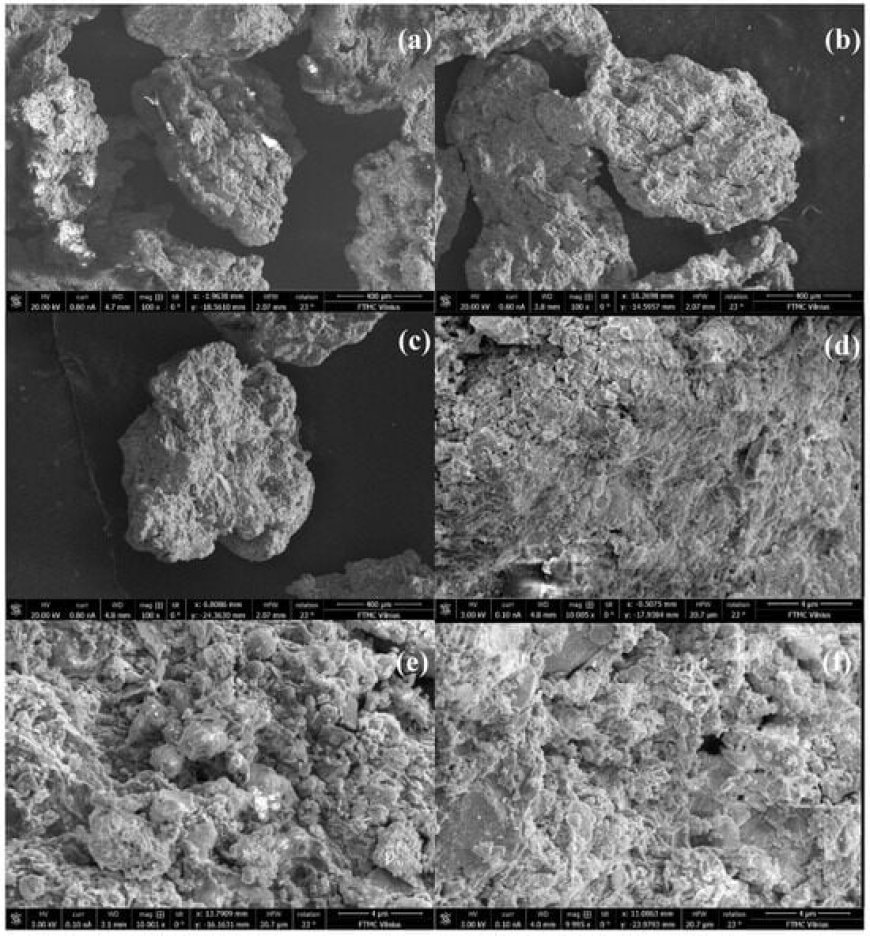
This scientific study investigated the adsorption capabilities of biochar samples derived from municipal sewage sludge pellets. Sewage sludge was pyrolyzed at various temperatures (400, 500, and 600 °C), and the biochar’s properties, including specific surface area, pore volume, and pore size distribution, were assessed. The results indicate that the sewage sludge biochar samples are mesoporous materials with significant potential for good adsorption performance. Despite showing a decrease in specific surface area compared to that achieved with pyrolysis at 400 °C, samples pyrolyzed at 600 °C demonstrated an increase in mesopore surface area, enhancing their adsorption potential. Two filtration experiments, conducted at a flow rate of 8 mL/min, revealed that the column containing sewage sludge pyrolyzed at 600 °C retained phosphorus the most effectively during the first and second experiments (with retention efficiencies of 87% and 78%, respectively). The study concludes that municipal sewage sludge biochar could be a promising material for the removal of phosphorus from wastewater and represents a viable solution for sustainable environmental development.
Water, Vol. 16, Pages 1104: The Removal of Phosphorus from Wastewater Using a Sewage Sludge Biochar: A Column Study
Water doi: 10.3390/w16081104
Authors: Tomas Januševičius Aušra Mažeikienė Kateryna Stepova Vaidotas Danila Dainius Paliulis
This scientific study investigated the adsorption capabilities of biochar samples derived from municipal sewage sludge pellets. Sewage sludge was pyrolyzed at various temperatures (400, 500, and 600 °C), and the biochar’s properties, including specific surface area, pore volume, and pore size distribution, were assessed. The results indicate that the sewage sludge biochar samples are mesoporous materials with significant potential for good adsorption performance. Despite showing a decrease in specific surface area compared to that achieved with pyrolysis at 400 °C, samples pyrolyzed at 600 °C demonstrated an increase in mesopore surface area, enhancing their adsorption potential. Two filtration experiments, conducted at a flow rate of 8 mL/min, revealed that the column containing sewage sludge pyrolyzed at 600 °C retained phosphorus the most effectively during the first and second experiments (with retention efficiencies of 87% and 78%, respectively). The study concludes that municipal sewage sludge biochar could be a promising material for the removal of phosphorus from wastewater and represents a viable solution for sustainable environmental development.
What's Your Reaction?