Environments, Vol. 11, Pages 32: Influence of Blending High-Calcium Additive on Environmental Safety of B, F, and Se: A Case Study from Thermodynamic Calculation
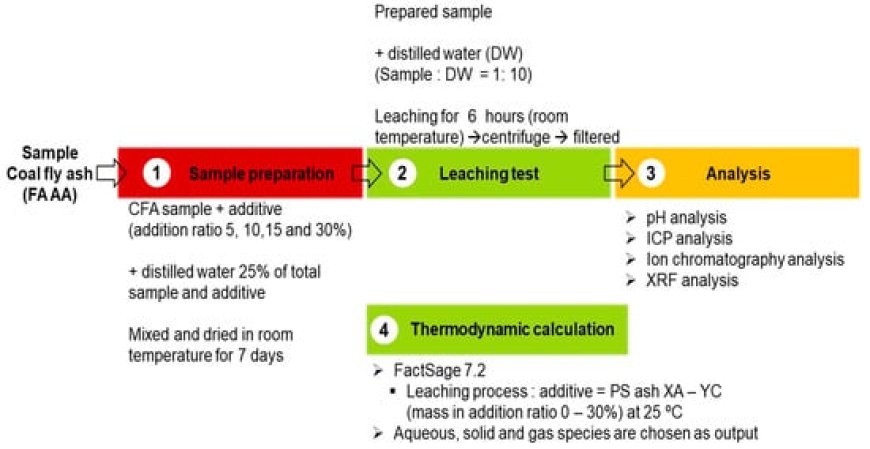
Coal remains an important fuel for use in thermal power plants. However, coal-burning power plants produce large amounts of CFA, which contains TEs such as B, F, and Se, which are leached upon contact with water and act as potential polluters of aquifer systems and soil. To study the transformation of TEs, a thermodynamic calculation (FactSage 7.2) was used. Paper sludge ash was used as a calcium compound additive. The influence of blending a high-calcium additive on the environmental safety of TEs was investigated based on the effect of the mass addition ratio of PS ash. This study’s results confirmed that the leaching processes of TEs, namely (CaO)2(Al2O3), CaF2, Ca10(PO4)F2, and CaSeO4(H2O)2, were caused by the formation of B, F, and Se compounds during the leaching process. Thus, it is clear that calcium has the greatest influence on the transformation of TEs due to their reaction, which, in turn, minimizes the effects of the TEs’ release into the environment. The concentrations of TEs from the sample and addition of PS ash decreased slightly, indicating that the inhibition of TEs was enabled through the addition of PS ash. Although the PS ash YB had the highest calcium content, the PS ash YC gave the best results during the B and Se inhibition processes. The experimental observation was also evaluated for comparison. For the analysis of TEs’ leaching ratios using the thermodynamic calculation and experiment, the experimental results were lower than those initially predicted. These results will help us to choose the best available control technology to minimize the effects of TEs released into the environment.
Environments, Vol. 11, Pages 32: Influence of Blending High-Calcium Additive on Environmental Safety of B, F, and Se: A Case Study from Thermodynamic Calculation
Environments doi: 10.3390/environments11020032
Authors: Ulung Muhammad Sutopo Erda Rahmilaila Desfitri Yukio Hayakawa Shinji Kambara
Coal remains an important fuel for use in thermal power plants. However, coal-burning power plants produce large amounts of CFA, which contains TEs such as B, F, and Se, which are leached upon contact with water and act as potential polluters of aquifer systems and soil. To study the transformation of TEs, a thermodynamic calculation (FactSage 7.2) was used. Paper sludge ash was used as a calcium compound additive. The influence of blending a high-calcium additive on the environmental safety of TEs was investigated based on the effect of the mass addition ratio of PS ash. This study’s results confirmed that the leaching processes of TEs, namely (CaO)2(Al2O3), CaF2, Ca10(PO4)F2, and CaSeO4(H2O)2, were caused by the formation of B, F, and Se compounds during the leaching process. Thus, it is clear that calcium has the greatest influence on the transformation of TEs due to their reaction, which, in turn, minimizes the effects of the TEs’ release into the environment. The concentrations of TEs from the sample and addition of PS ash decreased slightly, indicating that the inhibition of TEs was enabled through the addition of PS ash. Although the PS ash YB had the highest calcium content, the PS ash YC gave the best results during the B and Se inhibition processes. The experimental observation was also evaluated for comparison. For the analysis of TEs’ leaching ratios using the thermodynamic calculation and experiment, the experimental results were lower than those initially predicted. These results will help us to choose the best available control technology to minimize the effects of TEs released into the environment.
What's Your Reaction?