Hydrology, Vol. 11, Pages 16: Vulnerability to Aquifer Pollution in the Mexican Wine Producing Valley of Guadalupe, México
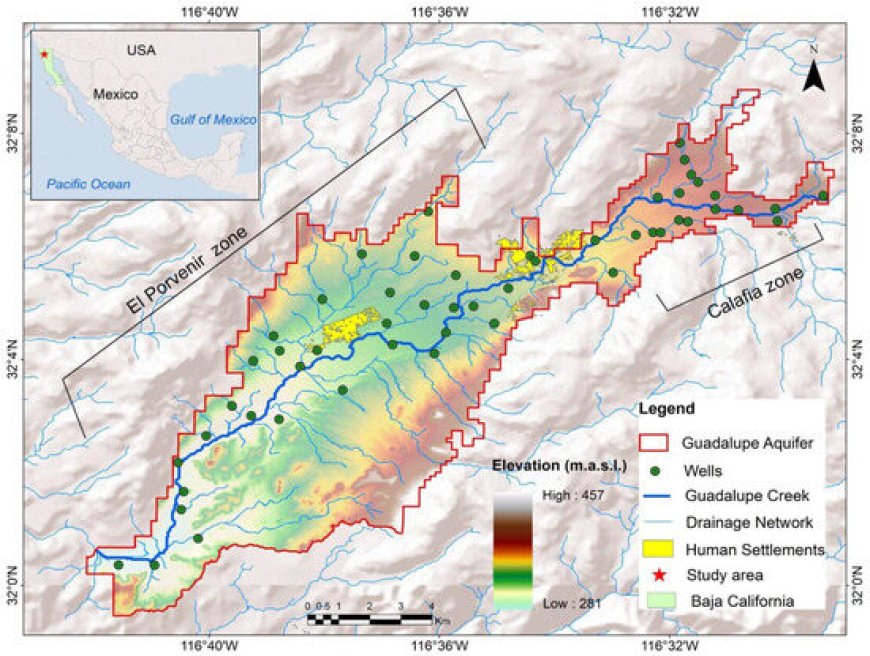
Groundwater pollution is one of the main challenges in our society, especially in semi-arid Mediterranean regions. This issue becomes especially critical in predominantly agricultural areas that lack comprehensive knowledge about the characteristics and functioning of their aquifer system. Vulnerability to groundwater pollution is defined as the sensitivity of the aquifer to being adversely affected by an imposed pollution load. For the Guadalupe aquifer, various indicators including water level depth, level variation, aquifer properties, soil composition, topography, impact on the vadose zone, and hydraulic conductivity were evaluated to establish spatial vulnerability categories ranging from very low to very high. Two pollution vulnerability scenarios (wet and dry) were studied. The results were compared with the analysis of nitrate concentration and distribution (2001, 2020, and 2021) from samples collected in the field. In the Calafia area, which predominantly relies on viticulture, the primary recharge inputs were identified in areas with a high vulnerability to pollution. Surprisingly, these vulnerable areas exhibited lower nitrate concentrations. This scenario underscores the need for effective management measures to safeguard aquifers in agricultural regions.
Hydrology, Vol. 11, Pages 16: Vulnerability to Aquifer Pollution in the Mexican Wine Producing Valley of Guadalupe, México
Hydrology doi: 10.3390/hydrology11020016
Authors: Guadalupe Díaz-Gutiérrez Luis Walter Daesslé Francisco José Del-Toro-Guerrero Mariana Villada-Canela Georges Seingier
Groundwater pollution is one of the main challenges in our society, especially in semi-arid Mediterranean regions. This issue becomes especially critical in predominantly agricultural areas that lack comprehensive knowledge about the characteristics and functioning of their aquifer system. Vulnerability to groundwater pollution is defined as the sensitivity of the aquifer to being adversely affected by an imposed pollution load. For the Guadalupe aquifer, various indicators including water level depth, level variation, aquifer properties, soil composition, topography, impact on the vadose zone, and hydraulic conductivity were evaluated to establish spatial vulnerability categories ranging from very low to very high. Two pollution vulnerability scenarios (wet and dry) were studied. The results were compared with the analysis of nitrate concentration and distribution (2001, 2020, and 2021) from samples collected in the field. In the Calafia area, which predominantly relies on viticulture, the primary recharge inputs were identified in areas with a high vulnerability to pollution. Surprisingly, these vulnerable areas exhibited lower nitrate concentrations. This scenario underscores the need for effective management measures to safeguard aquifers in agricultural regions.
What's Your Reaction?