Water, Vol. 16, Pages 1119: Using the Periodic Dynamics of Well Water Levels to Estimate Time Series Changes in Aquifer Parameters
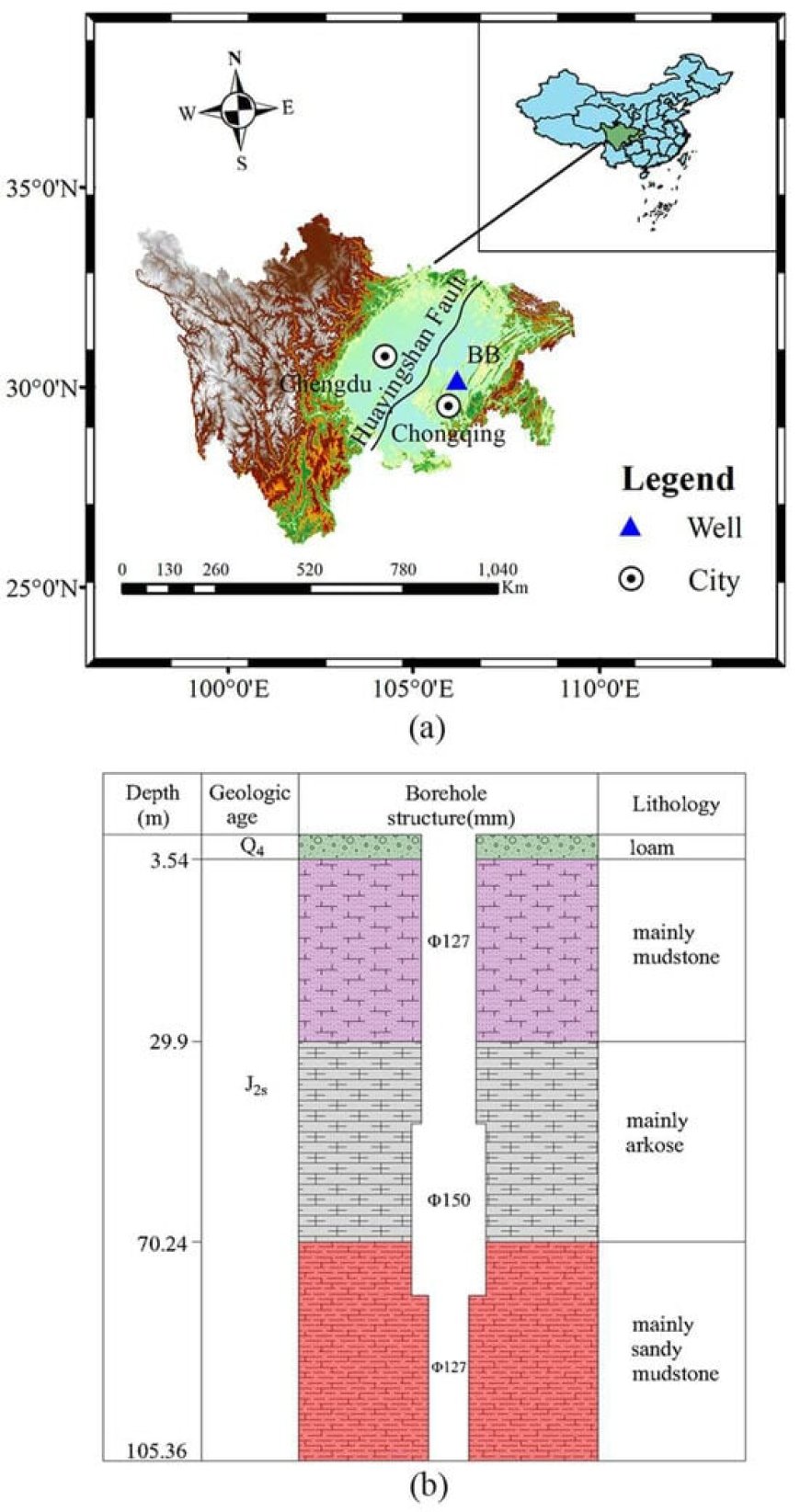
Due to the long duration and high cost of traditional pumping tests, the response of well water levels to seismic waves, earth tides, and barometric pressure provides a feasible method for determining continuous changes in aquifer hydraulic parameters. Aimed at the problem that the response phase shift of well BB water levels to tide M2 is greater than that of tide O1, this paper preferentially calculated the time series changes in S, Be, n, and BKu based on the response mechanism of well water levels to barometric pressure and earth tides with the help of the smooth moving method. Then, by using the mixed flow model, the variation in the transmissivity and leakage coefficient over time was simultaneously obtained, and the evolution process and characteristics of aquifer parameters near well BB caused by the Wenchuan earthquake are ultimately discussed. The calculation results are basically consistent with the previous pumping test, and have been verified and compared by using other scholars’ methods. This solving process avoids problems such as excessive dependence on initial values, multiple solutions, and unstable tide O1, which has a promoting effect on the study of the impact of seismic activity on aquifer systems.
Water, Vol. 16, Pages 1119: Using the Periodic Dynamics of Well Water Levels to Estimate Time Series Changes in Aquifer Parameters
Water doi: 10.3390/w16081119
Authors: Peng Qiao Shuangshuang Lan Hongbiao Gu Zhengtan Mao
Due to the long duration and high cost of traditional pumping tests, the response of well water levels to seismic waves, earth tides, and barometric pressure provides a feasible method for determining continuous changes in aquifer hydraulic parameters. Aimed at the problem that the response phase shift of well BB water levels to tide M2 is greater than that of tide O1, this paper preferentially calculated the time series changes in S, Be, n, and BKu based on the response mechanism of well water levels to barometric pressure and earth tides with the help of the smooth moving method. Then, by using the mixed flow model, the variation in the transmissivity and leakage coefficient over time was simultaneously obtained, and the evolution process and characteristics of aquifer parameters near well BB caused by the Wenchuan earthquake are ultimately discussed. The calculation results are basically consistent with the previous pumping test, and have been verified and compared by using other scholars’ methods. This solving process avoids problems such as excessive dependence on initial values, multiple solutions, and unstable tide O1, which has a promoting effect on the study of the impact of seismic activity on aquifer systems.
What's Your Reaction?