Water, Vol. 16, Pages 1171: Ecotoxicological Assays with the Calanoid Copepod Acartia tonsa: A Comparison between Mediterranean and Baltic Strains
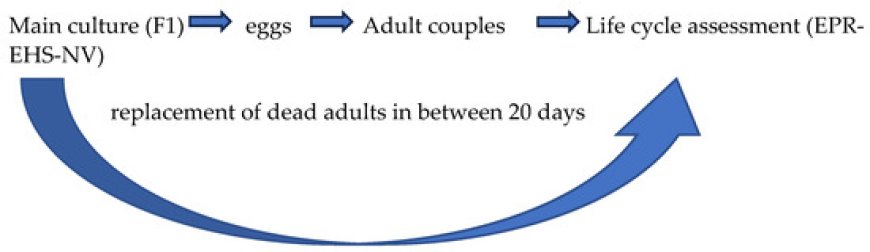
The use of marine invertebrates in ecotoxicology is important for an integrated approach which takes into consideration physiological responses and chemical levels in environmental matrices. Standard protocols have been developed and organisms belonging to different trophic levels are needed as model organisms to evaluate toxicant bioavailability and assess their impact on marine biota. The calanoid copepod Acartia tonsa is commonly used in ecotoxicology due to its widespread distribution and well-studied biology. However, different strains coming from various geographical areas are available, and possible variations in physiological characteristics raise concerns about the comparability of ecotoxicological results. This study compares the life cycle assessment and sensitivity of Adriatic and Baltic strains of A. tonsa exposed to nickel (Ni2+) in standardized acute and semi-chronic tests. Life cycle assessments revealed differences in egg production, egg-hatching success, and naupliar viability between the strains. The acute toxicity test demonstrated the significantly higher sensitivity of Adriatic strain nauplii to Ni2+ compared to the Baltic strain, whereas the semi-chronic test showed no significant difference in sensitivity between the strains. These findings suggest that while strain-specific differences exist in different geographical populations, responses to toxicants are not significantly different. Particularly, the semi-chronic assessments with both A. tonsa strains emphasized the robustness of this species as a model organism in ecotoxicology.
Water, Vol. 16, Pages 1171: Ecotoxicological Assays with the Calanoid Copepod Acartia tonsa: A Comparison between Mediterranean and Baltic Strains
Water doi: 10.3390/w16081171
Authors: Valentina Vitiello Matteo Oliva Monia Renzi Alessia Cuccaro Giorgia Fumagalli Serena Anselmi Tecla Bentivoglio Iliana Matarazzi Valeria Sanna David Pellegrini Carlo Pretti Isabella Buttino
The use of marine invertebrates in ecotoxicology is important for an integrated approach which takes into consideration physiological responses and chemical levels in environmental matrices. Standard protocols have been developed and organisms belonging to different trophic levels are needed as model organisms to evaluate toxicant bioavailability and assess their impact on marine biota. The calanoid copepod Acartia tonsa is commonly used in ecotoxicology due to its widespread distribution and well-studied biology. However, different strains coming from various geographical areas are available, and possible variations in physiological characteristics raise concerns about the comparability of ecotoxicological results. This study compares the life cycle assessment and sensitivity of Adriatic and Baltic strains of A. tonsa exposed to nickel (Ni2+) in standardized acute and semi-chronic tests. Life cycle assessments revealed differences in egg production, egg-hatching success, and naupliar viability between the strains. The acute toxicity test demonstrated the significantly higher sensitivity of Adriatic strain nauplii to Ni2+ compared to the Baltic strain, whereas the semi-chronic test showed no significant difference in sensitivity between the strains. These findings suggest that while strain-specific differences exist in different geographical populations, responses to toxicants are not significantly different. Particularly, the semi-chronic assessments with both A. tonsa strains emphasized the robustness of this species as a model organism in ecotoxicology.
What's Your Reaction?