Hydrology, Vol. 11, Pages 40: A Thermal Regime and a Water Circulation in a Very Deep Lake: Lake Tazawa, Japan
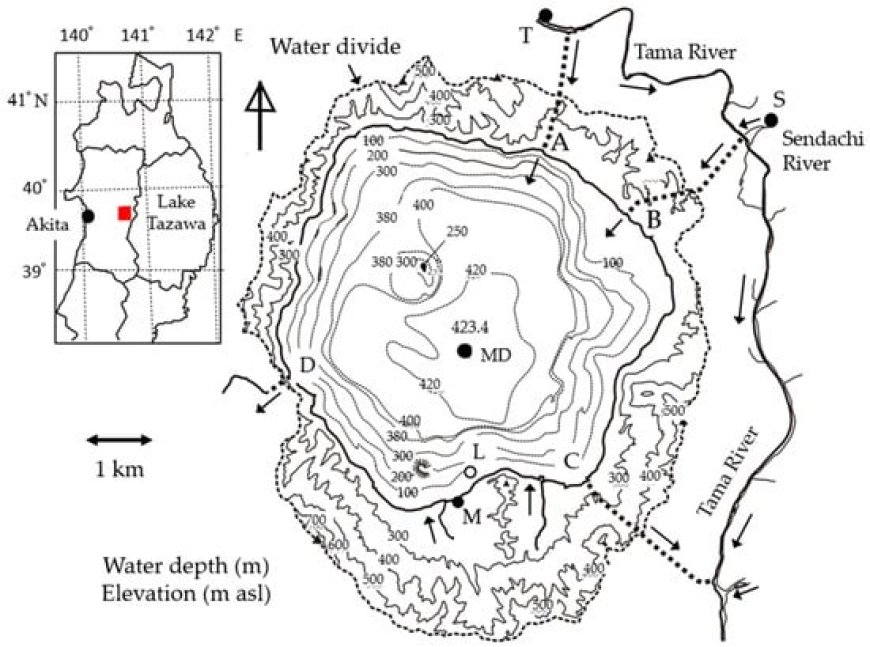
A thermal system in the very deep Lake Tazawa (maximum depth, 423 m) was investigated by estimating the heat budget. In the heat budget estimate, the net heat input at the lake’s surface and the heat input by river inflow and groundwater inflow were considered. Then, the heat loss by snowfall onto the lake’s surface was taken into account. Meanwhile, the lake water temperature was monitored at 0.2 m to the bottom by mooring temperature loggers for more than two years. The heat storage change of the lake from the loggers was calibrated by frequent vertical measurements of water temperature at every 0.1 m pitch by a profiler with high accuracy (±0.01 °C). The heat storage change (W/m2) obtained by the temperature loggers reasonably accorded to that from the heat budget estimate. In the heat budget, the net heat input at lake surface dominated the heat storage change, but significant heat loss by river inflow sporadically occurred, caused by the relatively large discharge from a reservoir in the upper region. How deeply the vertical water circulation in the lake occurs in winter was judged according to the differences between water temperatures at 0.2 m depth and at the bottom and between vertical profiles of dissolved oxygen over winter. It is strongly suggested that the whole water circulation process does not occur every winter, and if it does, it is very weak. A consistent increase in the water temperature at the bottom is probably due to the conservation of geothermal heat by high frequency of incomplete vertical water circulation.
Hydrology, Vol. 11, Pages 40: A Thermal Regime and a Water Circulation in a Very Deep Lake: Lake Tazawa, Japan
Hydrology doi: 10.3390/hydrology11030040
Authors: Kazuhisa A. Chikita Hideo Oyagi Kazuhiro Amita
A thermal system in the very deep Lake Tazawa (maximum depth, 423 m) was investigated by estimating the heat budget. In the heat budget estimate, the net heat input at the lake’s surface and the heat input by river inflow and groundwater inflow were considered. Then, the heat loss by snowfall onto the lake’s surface was taken into account. Meanwhile, the lake water temperature was monitored at 0.2 m to the bottom by mooring temperature loggers for more than two years. The heat storage change of the lake from the loggers was calibrated by frequent vertical measurements of water temperature at every 0.1 m pitch by a profiler with high accuracy (±0.01 °C). The heat storage change (W/m2) obtained by the temperature loggers reasonably accorded to that from the heat budget estimate. In the heat budget, the net heat input at lake surface dominated the heat storage change, but significant heat loss by river inflow sporadically occurred, caused by the relatively large discharge from a reservoir in the upper region. How deeply the vertical water circulation in the lake occurs in winter was judged according to the differences between water temperatures at 0.2 m depth and at the bottom and between vertical profiles of dissolved oxygen over winter. It is strongly suggested that the whole water circulation process does not occur every winter, and if it does, it is very weak. A consistent increase in the water temperature at the bottom is probably due to the conservation of geothermal heat by high frequency of incomplete vertical water circulation.
What's Your Reaction?