Climate, Vol. 12, Pages 6: Microclimate Analysis of Outdoor Showcases in Tropical Climate—Two Case Studies in Al Ain, Abu Dhabi, United Arab Emirates
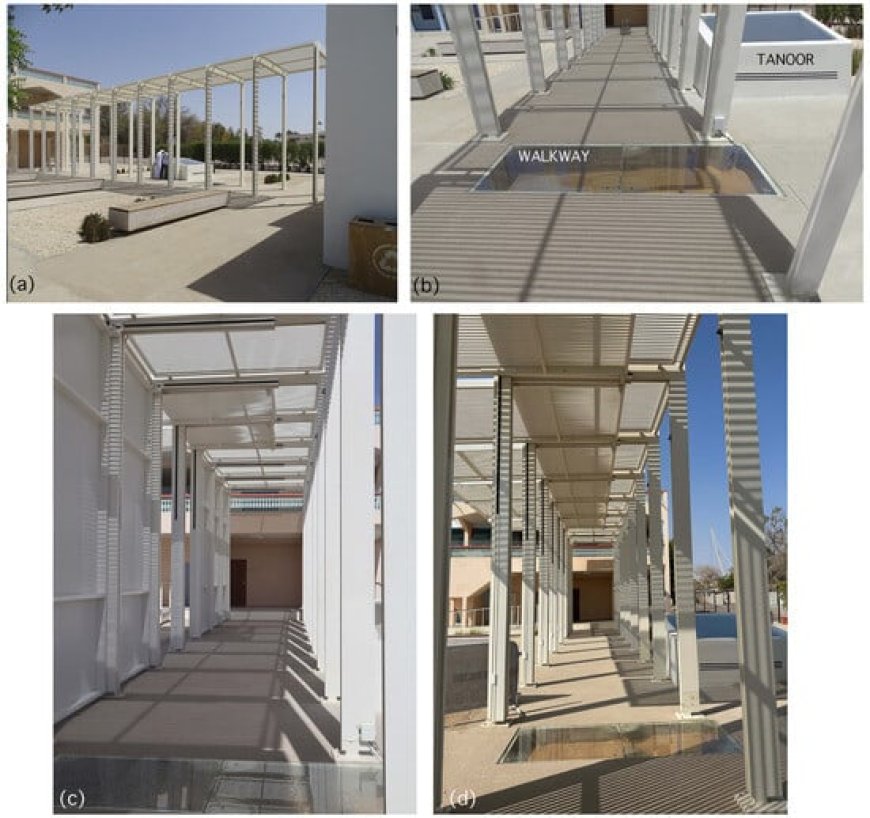
Al Ain, near Abu Dhabi, United Arab Emirates, is characterized by hot desert climate with high temperatures, aridity, and almost no rain. Several truncated earthen walls were discovered at the historic house of Sheikh Mohammed Bin Khalifa, a component of the World Heritage Cultural Sites. These remains are preserved in situ, outdoors, protected in glass showcases for public display. As this situation is not documented in the literature, the local Authority has requested to study the showcase environment to optimize conservation. The solar radiation and the projected shades have been modeled over one year; the temperature and humidity inside and outside the showcases, as well as the moisture content, have been measured to assess the potential preservation risks. The paper presents the results, i.e., the direct solar radiation generates extreme conditions of greenhouse effect with extremely high temperatures and forces evaporation from the remains. During the night, the excess moisture condenses on the inner surface of the glass panes, forming large drops that affect viewing and are dangerous for conservation. The repetition of evaporation–condensation cycles accumulates soluble salts on the remains. The paper discusses mitigation strategies (e.g., shading, ventilation, and cooling, to reduce the greenhouse effect) to improve conservation and fruition.
Climate, Vol. 12, Pages 6: Microclimate Analysis of Outdoor Showcases in Tropical Climate—Two Case Studies in Al Ain, Abu Dhabi, United Arab Emirates
Climate doi: 10.3390/cli12010006
Authors: Dario Camuffo Antonio della Valle Roberta Giorio Francesco Rizzi Patrizia Barucco Marivita Suma Jalal Ahmed Amel Chabbi Ola Shaker Peter Sheehan
Al Ain, near Abu Dhabi, United Arab Emirates, is characterized by hot desert climate with high temperatures, aridity, and almost no rain. Several truncated earthen walls were discovered at the historic house of Sheikh Mohammed Bin Khalifa, a component of the World Heritage Cultural Sites. These remains are preserved in situ, outdoors, protected in glass showcases for public display. As this situation is not documented in the literature, the local Authority has requested to study the showcase environment to optimize conservation. The solar radiation and the projected shades have been modeled over one year; the temperature and humidity inside and outside the showcases, as well as the moisture content, have been measured to assess the potential preservation risks. The paper presents the results, i.e., the direct solar radiation generates extreme conditions of greenhouse effect with extremely high temperatures and forces evaporation from the remains. During the night, the excess moisture condenses on the inner surface of the glass panes, forming large drops that affect viewing and are dangerous for conservation. The repetition of evaporation–condensation cycles accumulates soluble salts on the remains. The paper discusses mitigation strategies (e.g., shading, ventilation, and cooling, to reduce the greenhouse effect) to improve conservation and fruition.
What's Your Reaction?