Climate, Vol. 12, Pages 107: Combining E-Scores with Scenario Analysis to Evaluate the Impact of Transition Risk on Corporate Client Performance
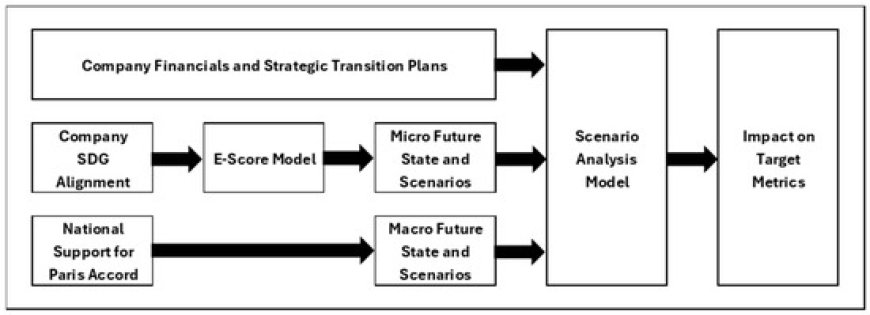
Scenario analysis is a comprehensive approach to assess the impact of climate-related transition risk on businesses. Environmental, social, and governance (ESG) scores are popular tools with financial institutions (FI’s) for green-scoring practices and since they characterise a company’s performance from an ESG perspective, they have been criticised for enabling “greenwashing” when used within the context of climate risk. Commercially available ESG scores are also available for listed entities, while FI counterparties are often unlisted. This study develops a methodology for creating in-house environmental scores (E-scores), which are then used to effectively choose appropriate transition pathways to be used in company-specific forward-looking scenario analysis. Such scenario analysis can be used to forecast the company’s financial position, including the cost of its greenhouse gas (GHG) emissions, and quantify the impact of transition climate risk on specified metrics. The choice of metrics depends on what the results of the analysis are used for. Two metrics are identified for being useful for risk management and credit decisions: future profitability and weighted average carbon intensity. Finally, the study demonstrates how this process can be implemented with a practical worked example, using only publicly available data.
Climate, Vol. 12, Pages 107: Combining E-Scores with Scenario Analysis to Evaluate the Impact of Transition Risk on Corporate Client Performance
Climate doi: 10.3390/cli12070107
Authors: Rudolf van der Walt Gary van Vuuren Janette Larney Tanja Verster Helgard Raubenheimer
Scenario analysis is a comprehensive approach to assess the impact of climate-related transition risk on businesses. Environmental, social, and governance (ESG) scores are popular tools with financial institutions (FI’s) for green-scoring practices and since they characterise a company’s performance from an ESG perspective, they have been criticised for enabling “greenwashing” when used within the context of climate risk. Commercially available ESG scores are also available for listed entities, while FI counterparties are often unlisted. This study develops a methodology for creating in-house environmental scores (E-scores), which are then used to effectively choose appropriate transition pathways to be used in company-specific forward-looking scenario analysis. Such scenario analysis can be used to forecast the company’s financial position, including the cost of its greenhouse gas (GHG) emissions, and quantify the impact of transition climate risk on specified metrics. The choice of metrics depends on what the results of the analysis are used for. Two metrics are identified for being useful for risk management and credit decisions: future profitability and weighted average carbon intensity. Finally, the study demonstrates how this process can be implemented with a practical worked example, using only publicly available data.
What's Your Reaction?