CivilEng, Vol. 5, Pages 591-608: The Mechanical Behavior of High-Strength Concrete-Filled Steel Tubes: A Review
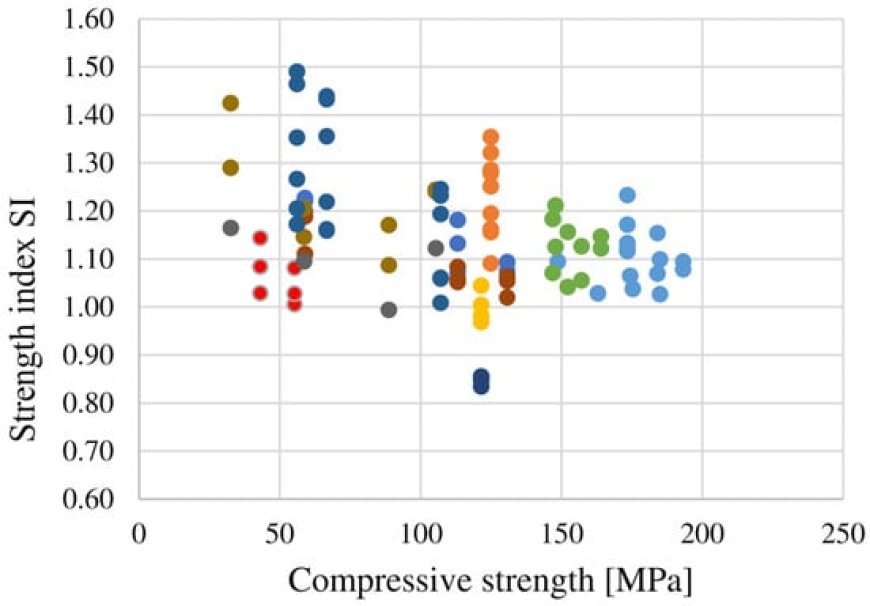
This review explores the mechanical behavior of high-strength concrete-filled steel tubes (CFSTs), focusing on their structural integrity and failure mechanisms. This study highlights the crucial role of the steel tube in providing passive confinement, which limits crack progression and enhances the ductility of the concrete. The concept of concrete as a structural system composed of micro- and mini-pillars, derived from rock mechanics, can be a useful approach to understanding CFST behavior. The review identifies that the strength index (SI) can, in some cases, decrease with an increase in the confinement factor (ξ), particularly in high-strength and ultrahigh-strength concrete (HSC and UHSC), which seems to be different to the common understanding of confinement. The experimental results show that different crack patterns and concrete compositions significantly impact the CFST performance. For example, silica fume in concrete mixtures can reduce the strength enhancement despite increasing the unconfined compressive strength. This work advocates for a mechanistic approach to better comprehend the interaction between concrete and steel tubes, emphasizing the need for optimized concrete mixtures and improved mechanical interaction. Future research should focus on the potential of HSC and UHSC in CFST, addressing factors such as crack progression, confinement effects, and concrete–steel interaction.
CivilEng, Vol. 5, Pages 591-608: The Mechanical Behavior of High-Strength Concrete-Filled Steel Tubes: A Review
CivilEng doi: 10.3390/civileng5030032
Authors: Clemente Pinto João Fonseca
This review explores the mechanical behavior of high-strength concrete-filled steel tubes (CFSTs), focusing on their structural integrity and failure mechanisms. This study highlights the crucial role of the steel tube in providing passive confinement, which limits crack progression and enhances the ductility of the concrete. The concept of concrete as a structural system composed of micro- and mini-pillars, derived from rock mechanics, can be a useful approach to understanding CFST behavior. The review identifies that the strength index (SI) can, in some cases, decrease with an increase in the confinement factor (ξ), particularly in high-strength and ultrahigh-strength concrete (HSC and UHSC), which seems to be different to the common understanding of confinement. The experimental results show that different crack patterns and concrete compositions significantly impact the CFST performance. For example, silica fume in concrete mixtures can reduce the strength enhancement despite increasing the unconfined compressive strength. This work advocates for a mechanistic approach to better comprehend the interaction between concrete and steel tubes, emphasizing the need for optimized concrete mixtures and improved mechanical interaction. Future research should focus on the potential of HSC and UHSC in CFST, addressing factors such as crack progression, confinement effects, and concrete–steel interaction.
What's Your Reaction?