CivilEng, Vol. 5, Pages 629-645: Promoting the Application of Big Data in Construction through Stakeholder Collaboration Based on a Two-Mode Network
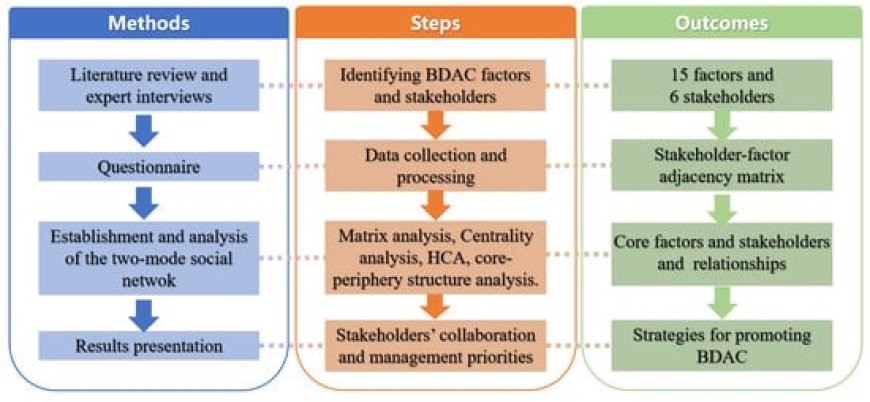
Presently, the application of big data in the construction industry encounters numerous obstacles and involves diverse stakeholders, with the intricate network of relationships between these factors and stakeholders remaining unclear. Investigating stakeholders’ management priorities and collaborative patterns can facilitate the development of BDAC. Therefore, this study employs a two-mode social network analysis to explore stakeholders’ power and attitudes toward the factors of BDAC. Firstly, the initial list of stakeholders and factors is identified based on the literature and expert interviews, followed by a questionnaire to establish stakeholder–factor relationships and construct the network. Subsequently, the adjacency matrix, centrality, core–periphery structure, and hierarchical cluster are adopted to analyze the network. The results found that (1) technical factors need to be addressed by all stakeholders due to complexity; (2) due to the low resource similarity of factors and low power similarity of stakeholders, all stakeholders should be involved in the collaboration; and (3) government, developers, and consultants, as core stakeholders, exhibit a proactive inclination towards collaborative efforts in addressing central factors, and can coordinate with peripheral stakeholders. Consequently, this study establishes a stakeholder collaboration model centered on the government–developer–consultant trio, which provides clear responsibility allocation and strategic guidance for fostering long-term, effective collaboration in BDAC.
CivilEng, Vol. 5, Pages 629-645: Promoting the Application of Big Data in Construction through Stakeholder Collaboration Based on a Two-Mode Network
CivilEng doi: 10.3390/civileng5030034
Authors: Yali Wang Youxi Zhang Hao Wang Qinglin Meng Yuwei Zhai Na Dong
Presently, the application of big data in the construction industry encounters numerous obstacles and involves diverse stakeholders, with the intricate network of relationships between these factors and stakeholders remaining unclear. Investigating stakeholders’ management priorities and collaborative patterns can facilitate the development of BDAC. Therefore, this study employs a two-mode social network analysis to explore stakeholders’ power and attitudes toward the factors of BDAC. Firstly, the initial list of stakeholders and factors is identified based on the literature and expert interviews, followed by a questionnaire to establish stakeholder–factor relationships and construct the network. Subsequently, the adjacency matrix, centrality, core–periphery structure, and hierarchical cluster are adopted to analyze the network. The results found that (1) technical factors need to be addressed by all stakeholders due to complexity; (2) due to the low resource similarity of factors and low power similarity of stakeholders, all stakeholders should be involved in the collaboration; and (3) government, developers, and consultants, as core stakeholders, exhibit a proactive inclination towards collaborative efforts in addressing central factors, and can coordinate with peripheral stakeholders. Consequently, this study establishes a stakeholder collaboration model centered on the government–developer–consultant trio, which provides clear responsibility allocation and strategic guidance for fostering long-term, effective collaboration in BDAC.
What's Your Reaction?