IJERPH, Vol. 21, Pages 450: Hemodynamic and Metabolic Responses to Moderate and Vigorous Cycle Ergometry in Men Who Have Had Transtibial Amputation
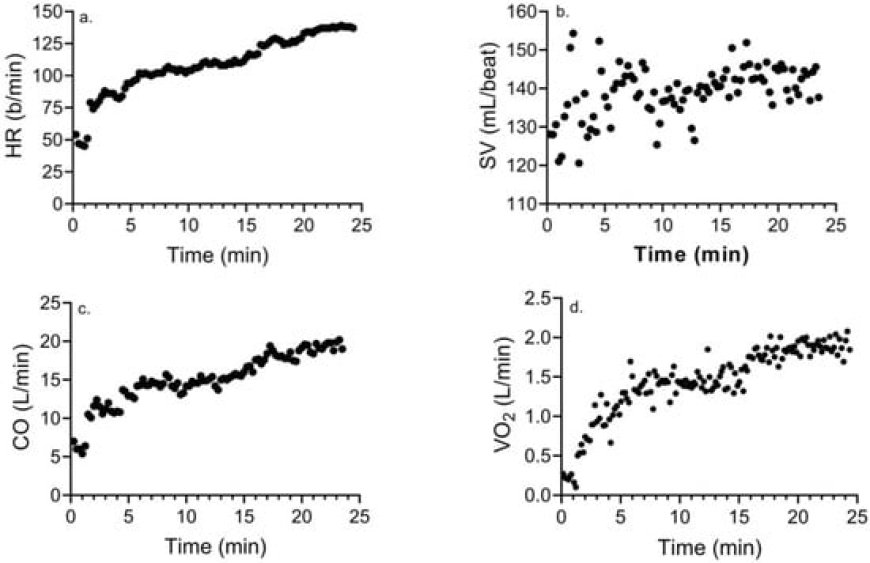
Adults who have had an amputation face barriers to having an active lifestyle which attenuates cardiorespiratory fitness. Prior studies in amputees typically involve treadmill walking or arm ergometry, yet physiological responses to bilateral leg cycling are less understood. This study assessed the hemodynamic and metabolic responses to moderate and vigorous cycle ergometry in men who have had a transtibial amputation (TTA). Five men who had had a unilateral TTA (age = 39 ± 15 yr) and six controls (CONs) without an amputation (age = 31 ± 11 yr) performed two 20 min bouts of cycling differing in intensity. Cardiac output (CO), stroke volume (SV), and oxygen consumption (VO2) were measured during moderate intensity continuous exercise (MICE) and high intensity interval exercise (HIIE) using thoracic impedance and indirect calorimetry. In response to MICE and HIIE, the HR and VO2 levels were similar (p > 0.05) between groups. Stroke volume and CO were higher (p < 0.05) in the CONs, which was attributed to their higher body mass. In men with TTAs, HIIE elicited a peak HR = 88%HRmax and substantial blood lactate accumulation, representing vigorous exercise intensity. No adverse events were exhibited in the men with TTAs. The men with TTAs show similar responses to MICE and HIIE versus the CONs.
IJERPH, Vol. 21, Pages 450: Hemodynamic and Metabolic Responses to Moderate and Vigorous Cycle Ergometry in Men Who Have Had Transtibial Amputation
International Journal of Environmental Research and Public Health doi: 10.3390/ijerph21040450
Authors: Kionte K. Storey Adam Geschwindt Todd A. Astorino
Adults who have had an amputation face barriers to having an active lifestyle which attenuates cardiorespiratory fitness. Prior studies in amputees typically involve treadmill walking or arm ergometry, yet physiological responses to bilateral leg cycling are less understood. This study assessed the hemodynamic and metabolic responses to moderate and vigorous cycle ergometry in men who have had a transtibial amputation (TTA). Five men who had had a unilateral TTA (age = 39 ± 15 yr) and six controls (CONs) without an amputation (age = 31 ± 11 yr) performed two 20 min bouts of cycling differing in intensity. Cardiac output (CO), stroke volume (SV), and oxygen consumption (VO2) were measured during moderate intensity continuous exercise (MICE) and high intensity interval exercise (HIIE) using thoracic impedance and indirect calorimetry. In response to MICE and HIIE, the HR and VO2 levels were similar (p > 0.05) between groups. Stroke volume and CO were higher (p < 0.05) in the CONs, which was attributed to their higher body mass. In men with TTAs, HIIE elicited a peak HR = 88%HRmax and substantial blood lactate accumulation, representing vigorous exercise intensity. No adverse events were exhibited in the men with TTAs. The men with TTAs show similar responses to MICE and HIIE versus the CONs.
What's Your Reaction?