


























CivilEng, Vol. 4, Pages 679-701: Priority Criteria (PC) Based Particle Swarm Optimization of Reinforced Concrete Frames (PCPSO)
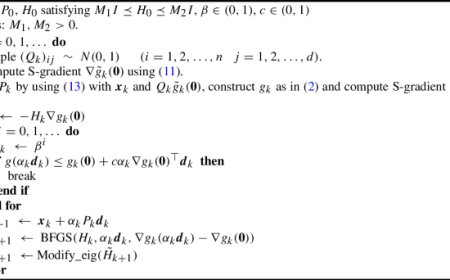
Simplicity and optimality are commonly associated with the particle swarm optimization (PSO) algorithm. As a result, numerous variants and hybrids of PSO have been developed and implemented to address structural optimization problems. The undeniable importance of the initialization technique in determining the overall performance of a given optimization algorithm cannot be overstated. Optimization algorithms, such as PSO, typically rely on a random, uniformly distributed initialization. Through multiple iterations and updates, these algorithms aim to achieve optimal results. The underlying assumption behind such an initialization approach is that a fair or reasonable arrangement of particles is best accomplished through randomization, and thus the entire optimization process is iterated based on this assumption. However, this initialization technique raises concerns regarding the attainment of optimality and convergence, leaving room for further examination. In this paper, we challenge this assumption by introducing a priority concept. The key idea is that particles should not be initialized randomly since randomness alone does not guarantee a reasonable allocation of design variable values in iterative optimization. This can lead to misguided velocity updates and ultimately, a time-consuming pursuit of optimality. To address this issue, we formulate priority criteria (PC) and propose an enhanced PSO variant called Priority Criteria PSO (PCPSO). The PC can be incorporated into any PSO variant or hybrid without impacting the parameter settings, constraints, and penalty approaches of the respective algorithms. A case study involving 2D reinforced concrete frames was conducted to compare the performance of the ordinary PSO algorithm with the PCPSO. The results clearly demonstrate that the introduction of the PC leads to a significant cost reduction when compared to PSO with an inertia damping factor. Additionally, the PCPSO algorithm exhibits accelerated convergence. Furthermore, to alleviate the computational burden associated with structural analysis at each iteration, a reanalysis approach called Combined Approximations (CA) is mathematically formulated and implemented.
CivilEng, Vol. 4, Pages 679-701: Priority Criteria (PC) Based Particle Swarm Optimization of Reinforced Concrete Frames (PCPSO)
CivilEng doi: 10.3390/civileng4020039
Authors: Yohannes L. Alemu Bedilu Habte Tom Lahmer Girum Urgessa
Simplicity and optimality are commonly associated with the particle swarm optimization (PSO) algorithm. As a result, numerous variants and hybrids of PSO have been developed and implemented to address structural optimization problems. The undeniable importance of the initialization technique in determining the overall performance of a given optimization algorithm cannot be overstated. Optimization algorithms, such as PSO, typically rely on a random, uniformly distributed initialization. Through multiple iterations and updates, these algorithms aim to achieve optimal results. The underlying assumption behind such an initialization approach is that a fair or reasonable arrangement of particles is best accomplished through randomization, and thus the entire optimization process is iterated based on this assumption. However, this initialization technique raises concerns regarding the attainment of optimality and convergence, leaving room for further examination. In this paper, we challenge this assumption by introducing a priority concept. The key idea is that particles should not be initialized randomly since randomness alone does not guarantee a reasonable allocation of design variable values in iterative optimization. This can lead to misguided velocity updates and ultimately, a time-consuming pursuit of optimality. To address this issue, we formulate priority criteria (PC) and propose an enhanced PSO variant called Priority Criteria PSO (PCPSO). The PC can be incorporated into any PSO variant or hybrid without impacting the parameter settings, constraints, and penalty approaches of the respective algorithms. A case study involving 2D reinforced concrete frames was conducted to compare the performance of the ordinary PSO algorithm with the PCPSO. The results clearly demonstrate that the introduction of the PC leads to a significant cost reduction when compared to PSO with an inertia damping factor. Additionally, the PCPSO algorithm exhibits accelerated convergence. Furthermore, to alleviate the computational burden associated with structural analysis at each iteration, a reanalysis approach called Combined Approximations (CA) is mathematically formulated and implemented.
What's Your Reaction?