CivilEng, Vol. 4, Pages 657-678: Report on Existing Fireproof Construction Guidelines for Dwellings against Wildfires
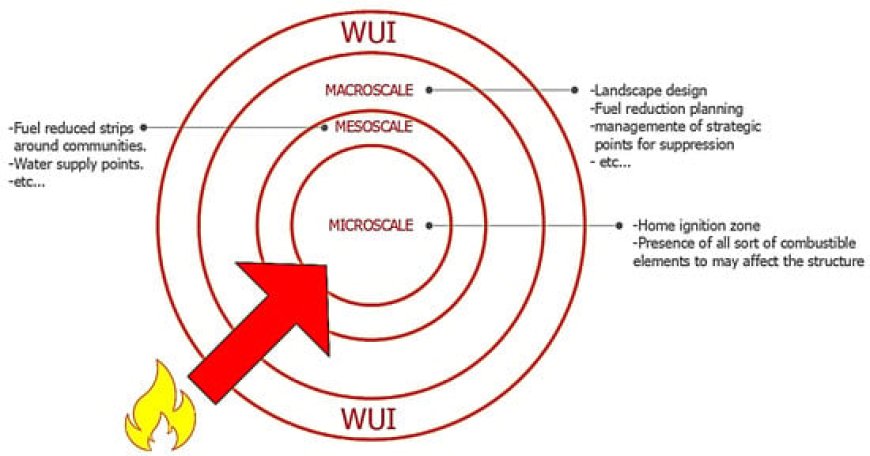
This work presents a state-of-the-art review of existing fireproof construction guidelines for dwellings against wildfires. The most important wildfire-proof construction guidelines and codes for dwellings are presented, and these are later associated with existing fire engineering chapters associated with building codes. It was concluded that the variability in this subject is very high, and the approach to classifying the thermal effects in construction still lags behind scientific consensus. Moreover, the constructive requirements depend severally on the country’s building code when assessing the fireproof requirements for wildfire. Moreover, the thermal actions of wildfires in dwellings are presented and compared with classical ISO-834 standard fire curves, in which the maximum equivalent fire exposure time can range from 2 to 4 h depending on the country’s code. The key contributions of this work consist of (i) thoroughly disseminating codes and guidelines to promote scientific discussion in order to advance the wildfire fireproof standards dedicated to WUI; (ii) emphasizing the void in current codes in order to promote conversation between future researchers.
CivilEng, Vol. 4, Pages 657-678: Report on Existing Fireproof Construction Guidelines for Dwellings against Wildfires
CivilEng doi: 10.3390/civileng4020038
Authors: Pedro Cantor António Renato Bicelli Ellon Bernardes de Assis Mário Rui Arruda Fernando Branco
This work presents a state-of-the-art review of existing fireproof construction guidelines for dwellings against wildfires. The most important wildfire-proof construction guidelines and codes for dwellings are presented, and these are later associated with existing fire engineering chapters associated with building codes. It was concluded that the variability in this subject is very high, and the approach to classifying the thermal effects in construction still lags behind scientific consensus. Moreover, the constructive requirements depend severally on the country’s building code when assessing the fireproof requirements for wildfire. Moreover, the thermal actions of wildfires in dwellings are presented and compared with classical ISO-834 standard fire curves, in which the maximum equivalent fire exposure time can range from 2 to 4 h depending on the country’s code. The key contributions of this work consist of (i) thoroughly disseminating codes and guidelines to promote scientific discussion in order to advance the wildfire fireproof standards dedicated to WUI; (ii) emphasizing the void in current codes in order to promote conversation between future researchers.
What's Your Reaction?