AI, Vol. 4, Pages 706-720: Privacy-Preserving Convolutional Bi-LSTM Network for Robust Analysis of Encrypted Time-Series Medical Images
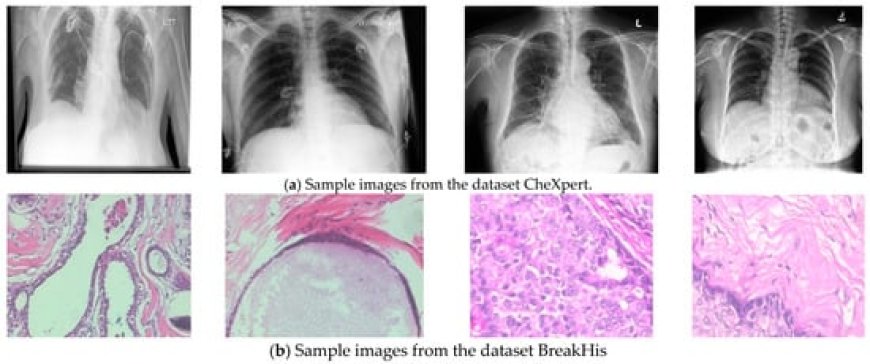
Deep learning (DL) algorithms can improve healthcare applications. DL has improved medical imaging diagnosis, therapy, and illness management. The use of deep learning algorithms on sensitive medical images presents privacy and data security problems. Improving medical imaging while protecting patient anonymity is difficult. Thus, privacy-preserving approaches for deep learning model training and inference are gaining popularity. These picture sequences are analyzed using state-of-the-art computer aided detection/diagnosis techniques (CAD). Algorithms that upload medical photos to servers pose privacy issues. This article presents a convolutional Bi-LSTM network to assess completely homomorphic-encrypted (HE) time-series medical images. From secret image sequences, convolutional blocks learn to extract selective spatial features and Bi-LSTM-based analytical sequence layers learn to encode time data. A weighted unit and sequence voting layer uses geographical with varying weights to boost efficiency and reduce incorrect diagnoses. Two rigid benchmarks—the CheXpert, and the BreaKHis public datasets—illustrate the framework’s efficacy. The technique outperforms numerous rival methods with an accuracy above 0.99 for both datasets. These results demonstrate that the proposed outline can extract visual representations and sequential dynamics from encrypted medical picture sequences, protecting privacy while attaining good medical image analysis performance.
AI, Vol. 4, Pages 706-720: Privacy-Preserving Convolutional Bi-LSTM Network for Robust Analysis of Encrypted Time-Series Medical Images
Authors: Manjur Kolhar Sultan Mesfer Aldossary
Deep learning (DL) algorithms can improve healthcare applications. DL has improved medical imaging diagnosis, therapy, and illness management. The use of deep learning algorithms on sensitive medical images presents privacy and data security problems. Improving medical imaging while protecting patient anonymity is difficult. Thus, privacy-preserving approaches for deep learning model training and inference are gaining popularity. These picture sequences are analyzed using state-of-the-art computer aided detection/diagnosis techniques (CAD). Algorithms that upload medical photos to servers pose privacy issues. This article presents a convolutional Bi-LSTM network to assess completely homomorphic-encrypted (HE) time-series medical images. From secret image sequences, convolutional blocks learn to extract selective spatial features and Bi-LSTM-based analytical sequence layers learn to encode time data. A weighted unit and sequence voting layer uses geographical with varying weights to boost efficiency and reduce incorrect diagnoses. Two rigid benchmarks—the CheXpert, and the BreaKHis public datasets—illustrate the framework’s efficacy. The technique outperforms numerous rival methods with an accuracy above 0.99 for both datasets. These results demonstrate that the proposed outline can extract visual representations and sequential dynamics from encrypted medical picture sequences, protecting privacy while attaining good medical image analysis performance.
What's Your Reaction?