AI, Vol. 4, Pages 1059-1078: Adapting the Parameters of RBF Networks Using Grammatical Evolution
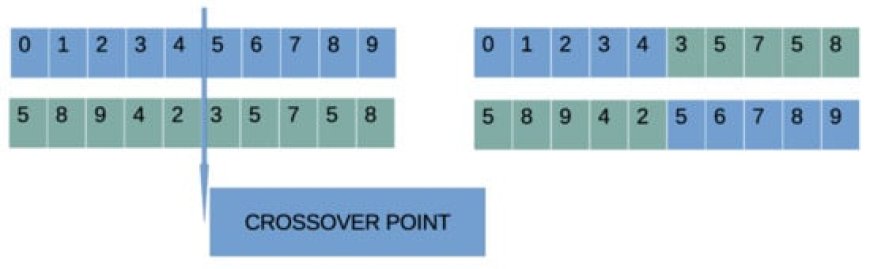
Radial basis function networks are widely used in a multitude of applications in various scientific areas in both classification and data fitting problems. These networks deal with the above problems by adjusting their parameters through various optimization techniques. However, an important issue to address is the need to locate a satisfactory interval for the parameters of a network before adjusting these parameters. This paper proposes a two-stage method. In the first stage, via the incorporation of grammatical evolution, rules are generated to create the optimal value interval of the network parameters. During the second stage of the technique, the mentioned parameters are fine-tuned with a genetic algorithm. The current work was tested on a number of datasets from the recent literature and found to reduce the classification or data fitting error by over 40% on most datasets. In addition, the proposed method appears in the experiments to be robust, as the fluctuation of the number of network parameters does not significantly affect its performance.
AI, Vol. 4, Pages 1059-1078: Adapting the Parameters of RBF Networks Using Grammatical Evolution
Authors: Ioannis G. Tsoulos Alexandros Tzallas Evangelos Karvounis
Radial basis function networks are widely used in a multitude of applications in various scientific areas in both classification and data fitting problems. These networks deal with the above problems by adjusting their parameters through various optimization techniques. However, an important issue to address is the need to locate a satisfactory interval for the parameters of a network before adjusting these parameters. This paper proposes a two-stage method. In the first stage, via the incorporation of grammatical evolution, rules are generated to create the optimal value interval of the network parameters. During the second stage of the technique, the mentioned parameters are fine-tuned with a genetic algorithm. The current work was tested on a number of datasets from the recent literature and found to reduce the classification or data fitting error by over 40% on most datasets. In addition, the proposed method appears in the experiments to be robust, as the fluctuation of the number of network parameters does not significantly affect its performance.
What's Your Reaction?