AI, Vol. 5, Pages 1-16: A Time Window Analysis for Time-Critical Decision Systems with Applications on Sports Climbing
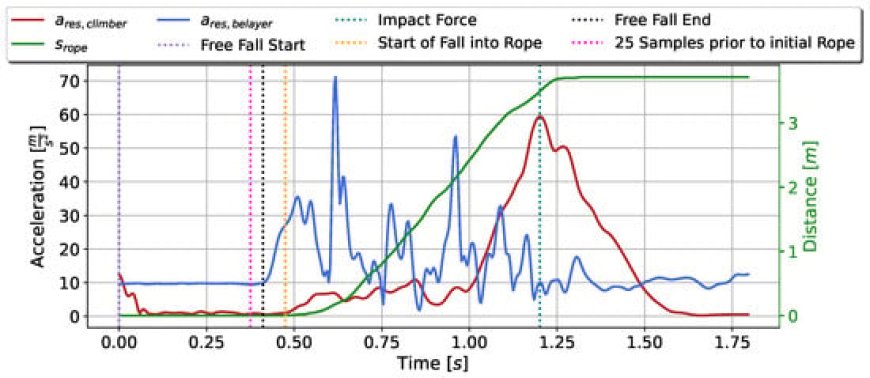
Human monitoring systems are already utilized in various fields like assisted living, healthcare or sport and fitness. They are able to support in everyday life or act as a pre-warning system. We developed a system to monitor the ascent of a sport climber. It is integrated in a belay device. This paper presents the first time series analysis regarding the fall of a climber utilizing such a system. A Convolutional Neural Network handles the feature engineering part of the sensor information as well as the classification of the task at hand. In this way, the time is implicitly considered by the network. An analysis regarding the size of the time window was carried out with a focus on exploring the respective results. The neural network models were then tested against an already-existing principle based on a mechanical mechanism. We show that the size of the time window is a decisive factor in a time critical system. Depending on the size of the window, the mechanical principle was able to outperform the neural network. Nevertheless, most of our models outperformed the basic principle and returned promising results in predicting the fall of a climber within up to 91.8 ms.
AI, Vol. 5, Pages 1-16: A Time Window Analysis for Time-Critical Decision Systems with Applications on Sports Climbing
Authors: Heiko Oppel Michael Munz
Human monitoring systems are already utilized in various fields like assisted living, healthcare or sport and fitness. They are able to support in everyday life or act as a pre-warning system. We developed a system to monitor the ascent of a sport climber. It is integrated in a belay device. This paper presents the first time series analysis regarding the fall of a climber utilizing such a system. A Convolutional Neural Network handles the feature engineering part of the sensor information as well as the classification of the task at hand. In this way, the time is implicitly considered by the network. An analysis regarding the size of the time window was carried out with a focus on exploring the respective results. The neural network models were then tested against an already-existing principle based on a mechanical mechanism. We show that the size of the time window is a decisive factor in a time critical system. Depending on the size of the window, the mechanical principle was able to outperform the neural network. Nevertheless, most of our models outperformed the basic principle and returned promising results in predicting the fall of a climber within up to 91.8 ms.
What's Your Reaction?