Water, Vol. 16, Pages 1143: Study on the Influence of Vegetation Restoration on Evapotranspiration in Mountainous Areas of the Luan River Basin
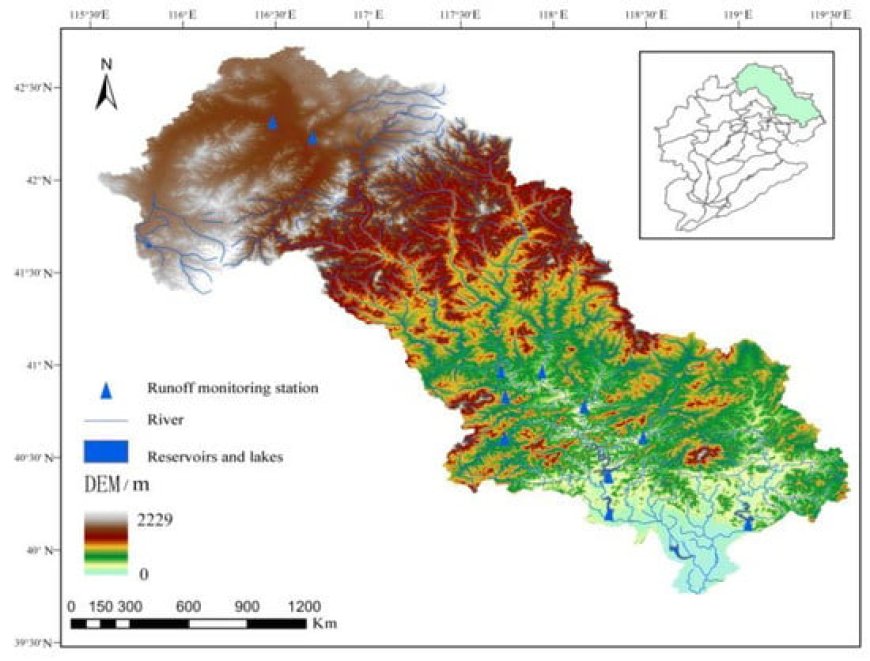
The study employed the PML (Penman–Monteith–Leuning) model to simulate the evolution law of long-sequence evapotranspiration in the mountainous region of the Luan River basin. Additionally, this study conducted a quantitative analysis to determine the effect of restoration on evapotranspiration water consumption. From 1981 to 2020, the results indicated that there were significantly less fluctuations in precipitation in the mountainous region of the Luan River basin than there were fluctuations in discharge. The restoration of vegetation in the mountainous region of the Luan River basin caused a mean annual growth rate of 3.47 mm in evapotranspiration. A linear positive correlation was observed between the evapotranspiration and vegetation NDVIs (normalized difference vegetation indexes) in mountainous regions. Specifically, for each 0.01 increase in the NDVI, there was an approximate 8.3 mm increase in evapotranspiration. When comparing the time periods of 1995–2001 and 2002–2020, it was observed that evapotranspiration increased by 70 mm. Furthermore, the evapotranspiration rate in the southeastern region exhibits significant variation, peaking at over 50 mm per year. In contrast, the northwest experiences variations of less than 10 mm per year. A quantitative analysis of the relationship between the evolution of mountain evapotranspiration and the response law of vegetation restoration is presented in this study; this information can be used as a guide when developing practical vegetation restoration strategies.
Water, Vol. 16, Pages 1143: Study on the Influence of Vegetation Restoration on Evapotranspiration in Mountainous Areas of the Luan River Basin
Water doi: 10.3390/w16081143
Authors: Ziyuan Zhang Lichao Wang Peng Dou Qingming Wang Jiansheng Cao
The study employed the PML (Penman–Monteith–Leuning) model to simulate the evolution law of long-sequence evapotranspiration in the mountainous region of the Luan River basin. Additionally, this study conducted a quantitative analysis to determine the effect of restoration on evapotranspiration water consumption. From 1981 to 2020, the results indicated that there were significantly less fluctuations in precipitation in the mountainous region of the Luan River basin than there were fluctuations in discharge. The restoration of vegetation in the mountainous region of the Luan River basin caused a mean annual growth rate of 3.47 mm in evapotranspiration. A linear positive correlation was observed between the evapotranspiration and vegetation NDVIs (normalized difference vegetation indexes) in mountainous regions. Specifically, for each 0.01 increase in the NDVI, there was an approximate 8.3 mm increase in evapotranspiration. When comparing the time periods of 1995–2001 and 2002–2020, it was observed that evapotranspiration increased by 70 mm. Furthermore, the evapotranspiration rate in the southeastern region exhibits significant variation, peaking at over 50 mm per year. In contrast, the northwest experiences variations of less than 10 mm per year. A quantitative analysis of the relationship between the evolution of mountain evapotranspiration and the response law of vegetation restoration is presented in this study; this information can be used as a guide when developing practical vegetation restoration strategies.
What's Your Reaction?