Water, Vol. 16, Pages 1125: The Forecast of Streamflow through Göksu Stream Using Machine Learning and Statistical Methods
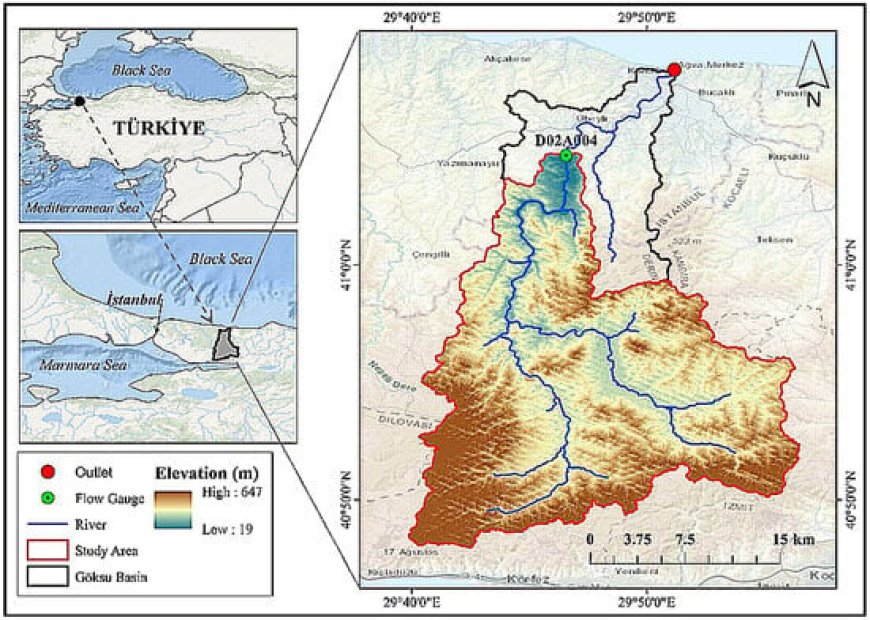
Forecasting streamflow in stream basin systems plays a crucial role in facilitating effective urban planning to mitigate floods. In addition to employing intricate hydrological modeling systems, machine learning and statistical techniques offer an alternative means for streamflow forecasts. Nonetheless, the precision and dependability of these methods are subjects of paramount importance. This study rigorously investigates the effectiveness of three distinct machine learning techniques and two statistical approaches when applied to streamflow data from the Göksu Stream in the Marmara Region of Turkey, spanning from 1984 to 2022. Through a comparative analysis of these methodologies, this examination aims to contribute innovative advancements to the existing methodologies used in the prediction of streamflow data. The methodologies employed include machine learning methods such as Extreme Gradient Boosting (XGBoost), Random Forest (RF), and Support Vector Machine (SVM) and statistical methods such as Simple Exponential Smoothing (SES) and Autoregressive Integrated Moving Average (ARIMA) model. In the study, 444 data points between 1984 and 2020 were used as training data, and the remaining data points for the period 2021–2022 were used for streamflow forecasting in the test validation period. The results were evaluated using various metrics, such as the correlation coefficient (r), mean absolute error (MAE), root mean square error (RMSE), mean absolute percentage error (MAPE), coefficient of determination (R2), and Nash–Sutcliffe efficiency (NSE). Upon analyzing the results, it was found that the model generated using the XGBoost algorithm outperformed other machine learning and statistical techniques. Consequently, the models implemented in this study demonstrate a high level of accuracy in predicting potential streamflow in the river basin system.
Water, Vol. 16, Pages 1125: The Forecast of Streamflow through Göksu Stream Using Machine Learning and Statistical Methods
Water doi: 10.3390/w16081125
Authors: Mirac Nur Ciner Mustafa Güler Ersin Namlı Mesut Samastı Mesut Ulu İsmail Bilal Peker Sezar Gülbaz
Forecasting streamflow in stream basin systems plays a crucial role in facilitating effective urban planning to mitigate floods. In addition to employing intricate hydrological modeling systems, machine learning and statistical techniques offer an alternative means for streamflow forecasts. Nonetheless, the precision and dependability of these methods are subjects of paramount importance. This study rigorously investigates the effectiveness of three distinct machine learning techniques and two statistical approaches when applied to streamflow data from the Göksu Stream in the Marmara Region of Turkey, spanning from 1984 to 2022. Through a comparative analysis of these methodologies, this examination aims to contribute innovative advancements to the existing methodologies used in the prediction of streamflow data. The methodologies employed include machine learning methods such as Extreme Gradient Boosting (XGBoost), Random Forest (RF), and Support Vector Machine (SVM) and statistical methods such as Simple Exponential Smoothing (SES) and Autoregressive Integrated Moving Average (ARIMA) model. In the study, 444 data points between 1984 and 2020 were used as training data, and the remaining data points for the period 2021–2022 were used for streamflow forecasting in the test validation period. The results were evaluated using various metrics, such as the correlation coefficient (r), mean absolute error (MAE), root mean square error (RMSE), mean absolute percentage error (MAPE), coefficient of determination (R2), and Nash–Sutcliffe efficiency (NSE). Upon analyzing the results, it was found that the model generated using the XGBoost algorithm outperformed other machine learning and statistical techniques. Consequently, the models implemented in this study demonstrate a high level of accuracy in predicting potential streamflow in the river basin system.
What's Your Reaction?