Water, Vol. 16, Pages 1109: Archaeozoology Supports a Holistic View on Fish Assessments in Large Rivers—A Case Study from the Volga River: From Quantitative Data and Ancient DNA to Biodiversity Analysis
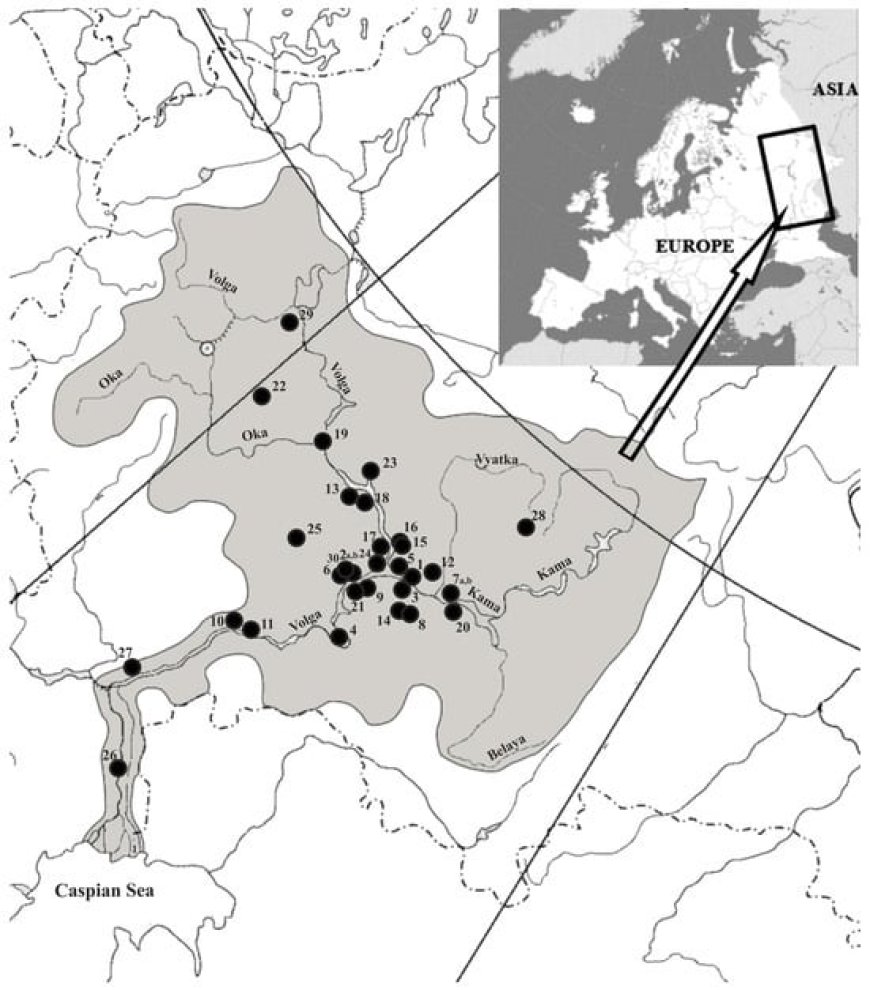
Knowledge of the historical and present dynamics of populations of migratory fish can promote our understanding of factors affecting their recruitment and abundance. Taxonomic identification of 23,802 bone remains and 13,539 scales of fish from 30 archaeological sites along Volga River revealed that they belonged to 41 different fish species. These data allow for retrospective comparisons and highlight the potential of archaeozoology in conservation biology. Sturgeons and salmonids are vulnerable to the impacts of fishery and climatic change. The sharp decline in the numbers of Starry sturgeon (Acipenser stellatus), Caspian trout (Salmo caspius), and Caspian Inconnu (Stenodus leucichthys) from the Volga in the 17th and 18th centuries was likely related to a cooling period (“Little Ice Age”). At present, the population numbers of all anadromous sturgeons and salmonids of the Volga River are critically low. In the Volga basin over the past two millennia, the sterlet (Acipenser ruthenus) has had a very large population number, high genetic (haplogroups and haplotypes) diversity, and large body sizes. Genetic analysis (aDNA and eDNA) have great potential to expand the knowledge of fish populations along large rivers and to improve long-term biomonitoring. Therefore, analyses of historical data, conventional surveys, as well as the inclusion of genetic approaches complement each other in the development of effective conservation strategies.
Water, Vol. 16, Pages 1109: Archaeozoology Supports a Holistic View on Fish Assessments in Large Rivers—A Case Study from the Volga River: From Quantitative Data and Ancient DNA to Biodiversity Analysis
Water doi: 10.3390/w16081109
Authors: Igor V. Askeyev Oleg V. Askeyev Arthur O. Askeyev Dilyara N. Shaymuratova Sergey P. Monakhov Maria A. Pobedintseva Vladimir A. Trifonov Konrad Górski Martin Schletterer
Knowledge of the historical and present dynamics of populations of migratory fish can promote our understanding of factors affecting their recruitment and abundance. Taxonomic identification of 23,802 bone remains and 13,539 scales of fish from 30 archaeological sites along Volga River revealed that they belonged to 41 different fish species. These data allow for retrospective comparisons and highlight the potential of archaeozoology in conservation biology. Sturgeons and salmonids are vulnerable to the impacts of fishery and climatic change. The sharp decline in the numbers of Starry sturgeon (Acipenser stellatus), Caspian trout (Salmo caspius), and Caspian Inconnu (Stenodus leucichthys) from the Volga in the 17th and 18th centuries was likely related to a cooling period (“Little Ice Age”). At present, the population numbers of all anadromous sturgeons and salmonids of the Volga River are critically low. In the Volga basin over the past two millennia, the sterlet (Acipenser ruthenus) has had a very large population number, high genetic (haplogroups and haplotypes) diversity, and large body sizes. Genetic analysis (aDNA and eDNA) have great potential to expand the knowledge of fish populations along large rivers and to improve long-term biomonitoring. Therefore, analyses of historical data, conventional surveys, as well as the inclusion of genetic approaches complement each other in the development of effective conservation strategies.
What's Your Reaction?