IJERPH, Vol. 21, Pages 532: Assessing the Vulnerability and Adaptation Needs of Mozambique’s Health Sector to Climate: A Comprehensive Study
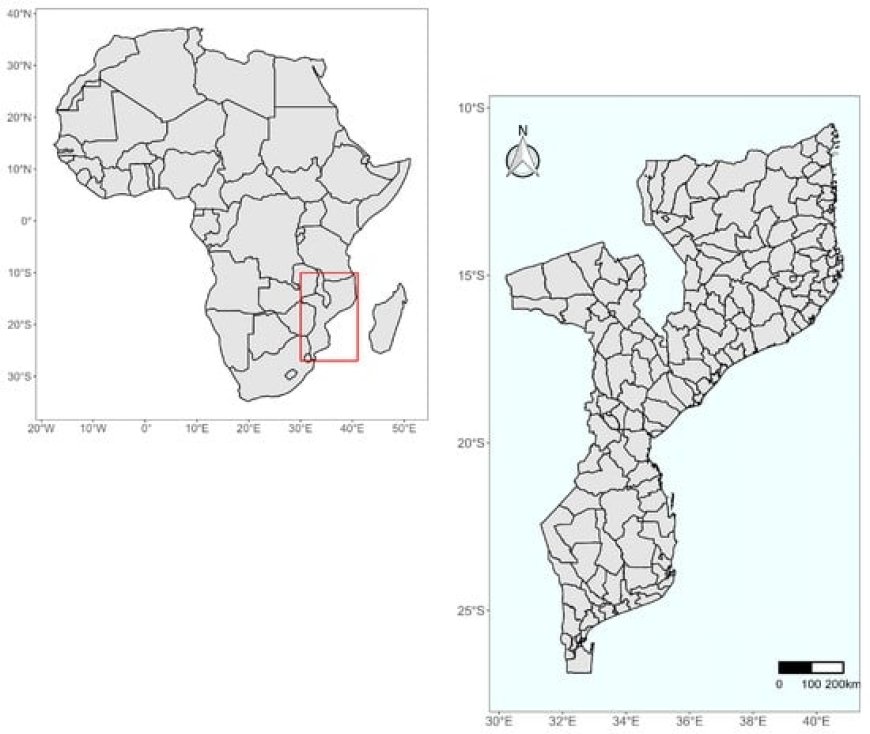
Climate change poses severe consequences, particularly in sub-Saharan Africa, where poverty rates may escalate by 2050 without significant climate and development action. The health impacts are diverse, encompassing communicable and non-communicable diseases. Mozambique, a climate-vulnerable nation, has experienced significant natural disasters in the past 42 years, impacting its health system. This study aims to assess Mozambique’s health sector’s vulnerability and adaptation needs to climate change. Following a methodology proposed by the World Health Organization and the Intergovernmental Panel for Climate Change, a six-step vulnerability and adaptation assessment was conducted to conduct the Health Vulnerability Index (HVI) for Mozambique’s regions (n=161). The HVI integrates historical climate, epidemiological, and socio-economic data at the district level, and was computed using exposure, sensitivity, and adaptive capacity dimensions. The results revealed spatial patterns in exposure to climate variables, extreme weather events, and variations in sensitivity and adaptive capacity across the country. The HVI mirrored the exposure findings. Notably, high vulnerability was observed in several districts, while major urban centers displayed lower vulnerability. These findings highlight the country’s vulnerability to climate change and underscore the potential for adverse impacts on livelihoods, the economy, and human health. The study provides a foundation for developing strategies and adaptation actions.
IJERPH, Vol. 21, Pages 532: Assessing the Vulnerability and Adaptation Needs of Mozambique’s Health Sector to Climate: A Comprehensive Study
International Journal of Environmental Research and Public Health doi: 10.3390/ijerph21050532
Authors: Rachid Muleia Genito Maúre Américo José Plácida Maholela Isaac Akpor Adjei Md. Rezaul Karim Sónia Trigo Waltaji Kutane Osvaldo Inlamea Lawrence N. Kazembe Tatiana Marrufo
Climate change poses severe consequences, particularly in sub-Saharan Africa, where poverty rates may escalate by 2050 without significant climate and development action. The health impacts are diverse, encompassing communicable and non-communicable diseases. Mozambique, a climate-vulnerable nation, has experienced significant natural disasters in the past 42 years, impacting its health system. This study aims to assess Mozambique’s health sector’s vulnerability and adaptation needs to climate change. Following a methodology proposed by the World Health Organization and the Intergovernmental Panel for Climate Change, a six-step vulnerability and adaptation assessment was conducted to conduct the Health Vulnerability Index (HVI) for Mozambique’s regions (n=161). The HVI integrates historical climate, epidemiological, and socio-economic data at the district level, and was computed using exposure, sensitivity, and adaptive capacity dimensions. The results revealed spatial patterns in exposure to climate variables, extreme weather events, and variations in sensitivity and adaptive capacity across the country. The HVI mirrored the exposure findings. Notably, high vulnerability was observed in several districts, while major urban centers displayed lower vulnerability. These findings highlight the country’s vulnerability to climate change and underscore the potential for adverse impacts on livelihoods, the economy, and human health. The study provides a foundation for developing strategies and adaptation actions.
What's Your Reaction?