IJERPH, Vol. 21, Pages 515: Effects of Standardized Patient Simulation and Mobile Applications on Nursing Students’ Clinical Competence, Self-Efficacy, and Cultural Competence: A Quasi-Experimental Study
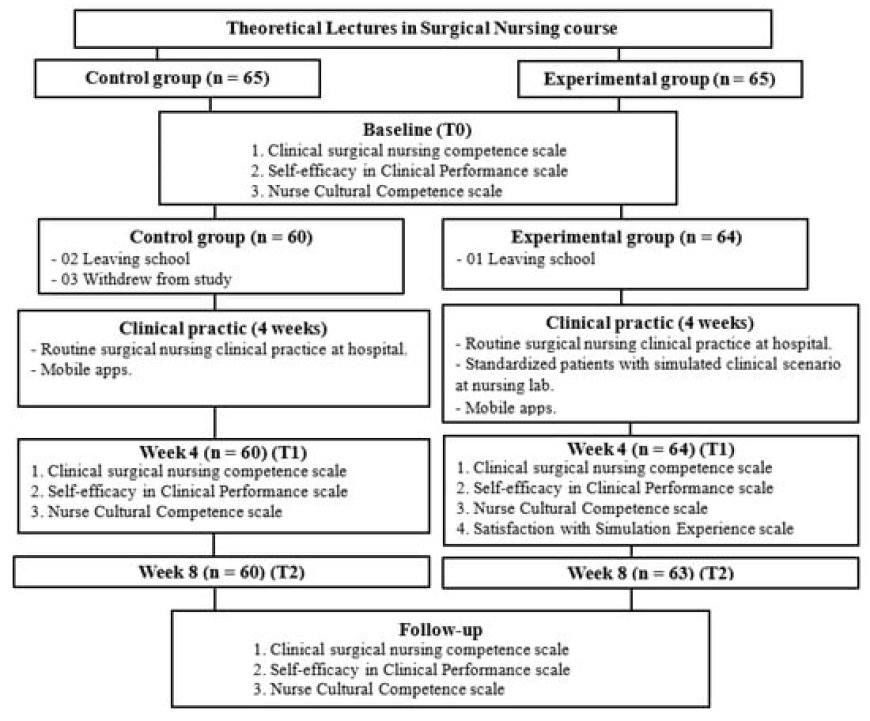
Background: Simulation-based education has emerged as an effective approach in nursing education worldwide. We aimed to evaluate the effectiveness of a surgical nursing education program based on a simulation using standardized patients and mobile applications among nursing students. Methods: A mixed-methods design with a quasi-experimental longitudinal approach and focus group interviews was employed. The data were collected from 130 third-year nursing students at three different time points who were equally divided into experimental and control groups. This study measured the level of clinical surgical nursing competence, self-efficacy in clinical performance, cultural competence, and satisfaction with simulation experience. Four focus group interviews were conducted using open-ended questions to explore the participants’ perspectives on the course’s efficacy and satisfaction. Results: There were statistically significant differences in clinical surgical nursing competence (F = 8.68, p < 0.001), self-efficacy in clinical performance (F = 13.56, p < 0.001), and cultural competence (F = 10.35, p < 0.001) across time between the intervention and control groups. Student satisfaction with the simulation-based training was high, particularly regarding debriefing and reflection, with an overall mean satisfaction level of 4.25 (0.40). Students’ perspectives regarding integrated hybrid training are categorized into three themes: educational achievement, dynamic learning experiences, and satisfaction and suggestion. Conclusion: Simulation-based learning provides a dynamic and immersive educational experience that enables undergraduate nursing students to develop and refine essential clinical skills while also fostering confidence and cultural competence.
IJERPH, Vol. 21, Pages 515: Effects of Standardized Patient Simulation and Mobile Applications on Nursing Students’ Clinical Competence, Self-Efficacy, and Cultural Competence: A Quasi-Experimental Study
International Journal of Environmental Research and Public Health doi: 10.3390/ijerph21040515
Authors: Duc Nu Minh Ton Trang Thi Kieu Duong Hang Thi Tran Thanh Thi Thanh Nguyen Hai Ba Mai Phuong Thi Anh Nguyen Binh Duy Ho Trang Thi Thuy Ho
Background: Simulation-based education has emerged as an effective approach in nursing education worldwide. We aimed to evaluate the effectiveness of a surgical nursing education program based on a simulation using standardized patients and mobile applications among nursing students. Methods: A mixed-methods design with a quasi-experimental longitudinal approach and focus group interviews was employed. The data were collected from 130 third-year nursing students at three different time points who were equally divided into experimental and control groups. This study measured the level of clinical surgical nursing competence, self-efficacy in clinical performance, cultural competence, and satisfaction with simulation experience. Four focus group interviews were conducted using open-ended questions to explore the participants’ perspectives on the course’s efficacy and satisfaction. Results: There were statistically significant differences in clinical surgical nursing competence (F = 8.68, p < 0.001), self-efficacy in clinical performance (F = 13.56, p < 0.001), and cultural competence (F = 10.35, p < 0.001) across time between the intervention and control groups. Student satisfaction with the simulation-based training was high, particularly regarding debriefing and reflection, with an overall mean satisfaction level of 4.25 (0.40). Students’ perspectives regarding integrated hybrid training are categorized into three themes: educational achievement, dynamic learning experiences, and satisfaction and suggestion. Conclusion: Simulation-based learning provides a dynamic and immersive educational experience that enables undergraduate nursing students to develop and refine essential clinical skills while also fostering confidence and cultural competence.
What's Your Reaction?