IJERPH, Vol. 21, Pages 503: Intersectional Mentorship in Academic Medicine: A Conceptual Review
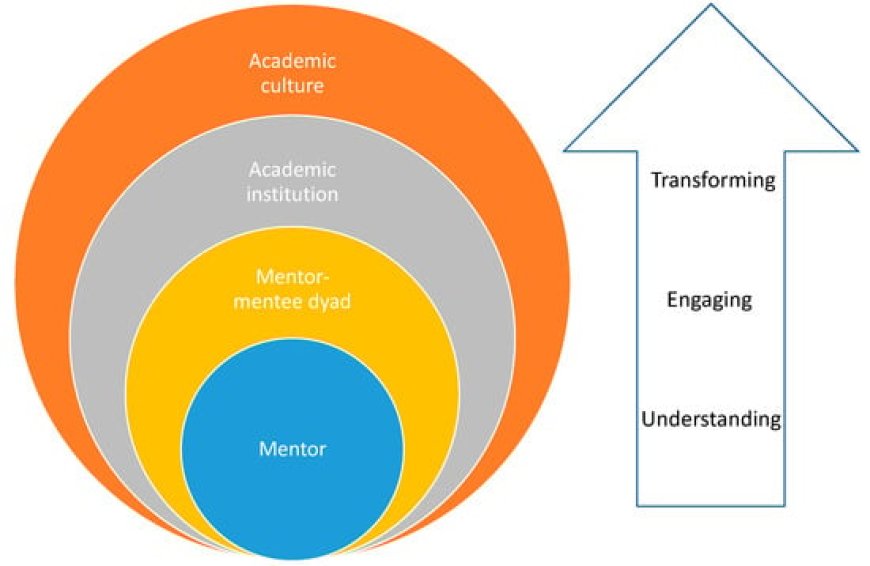
Academic medical institutions seek to recruit and retain a diverse workforce to foster equitable, supportive environments in which early-stage investigators, especially those who are underrepresented in medicine, can thrive. Intersectionality is a critical theoretical framework rooted in Black feminist activism and scholarship that elucidates how power and privilege are differentially structured for groups at different intersectional sociodemographic positions. As a dynamic method of analyzing multiple axes of power and inequality, intersectionality has the potential to offer a critical lens through which to view the mentor–mentee relationship. In this article, we seek to elaborate upon and extend the concept of intersectional mentoring, elucidate its essential components, and explore its application in the context of mentoring early-stage investigators in academic medicine. We propose that intersectional mentorship requires an orientation toward deep cultural humility, lifetime learning about the impact of systemic oppressions on present-day opportunities and experiences of mentees, and changing systems that perpetuate inequities by centering praxis—the application of principles of intersectionality through action to transform power dynamics in academic culture and institutions. Intersectional mentorship can help build a more equitable and representative workforce to advance intersectionally relevant and innovative approaches to achieving health equity.
IJERPH, Vol. 21, Pages 503: Intersectional Mentorship in Academic Medicine: A Conceptual Review
International Journal of Environmental Research and Public Health doi: 10.3390/ijerph21040503
Authors: Jae M. Sevelius Orlando O. Harris Lisa Bowleg
Academic medical institutions seek to recruit and retain a diverse workforce to foster equitable, supportive environments in which early-stage investigators, especially those who are underrepresented in medicine, can thrive. Intersectionality is a critical theoretical framework rooted in Black feminist activism and scholarship that elucidates how power and privilege are differentially structured for groups at different intersectional sociodemographic positions. As a dynamic method of analyzing multiple axes of power and inequality, intersectionality has the potential to offer a critical lens through which to view the mentor–mentee relationship. In this article, we seek to elaborate upon and extend the concept of intersectional mentoring, elucidate its essential components, and explore its application in the context of mentoring early-stage investigators in academic medicine. We propose that intersectional mentorship requires an orientation toward deep cultural humility, lifetime learning about the impact of systemic oppressions on present-day opportunities and experiences of mentees, and changing systems that perpetuate inequities by centering praxis—the application of principles of intersectionality through action to transform power dynamics in academic culture and institutions. Intersectional mentorship can help build a more equitable and representative workforce to advance intersectionally relevant and innovative approaches to achieving health equity.
What's Your Reaction?