IJERPH, Vol. 21, Pages 466: Is the Invisibility of Dementia a Super-Power or a Curse? A Reflection on the SUNshiners’ Questionnaire into the Public Understanding of Dementia as an Invisible Disability: A User-Led Research Project
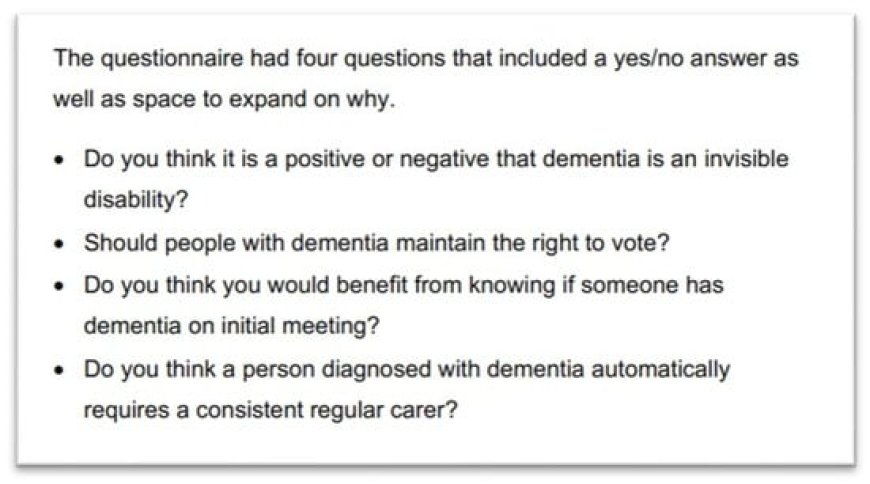
The SUNshiners group includes people in the early stages of dementia with an interest in dementia activism and research. The group found that despite the growing awareness of invisible disabilities, there is very limited research into the pros and cons of the invisibility of dementia. Our paper explores the SUNshiners research which stemmed from varied individual experiences of disclosing diagnoses. The group designed and developed a short survey to explore what the public knew about dementia and what they thought about the invisibility of dementia. A mixture of open- and closed-ended questions were used to gain meaningful data. A total of 347 people completed the survey (315 online and 32 paper-based), which was then co-analysed. The findings suggest that the majority of the public felt that the invisibility of dementia was negative; that knowing someone had dementia when first meeting them would be beneficial; that people living with dementia should maintain the right to vote; and that people living with dementia do not automatically require a consistent, regular carer. Common themes from the open-ended answers included capacity, severity of dementia, and access to support. The findings support the disclosure of dementia diagnosis; however, more action is needed to tackle stigmatised views, particularly as the SUNshiners felt that people do not have enough dementia education to support a positive disclosure experience. They shared their experiences of the group and the project’s benefits, but also the losses they have faced. Our paper aims to be as accessible as possible.
IJERPH, Vol. 21, Pages 466: Is the Invisibility of Dementia a Super-Power or a Curse? A Reflection on the SUNshiners’ Questionnaire into the Public Understanding of Dementia as an Invisible Disability: A User-Led Research Project
International Journal of Environmental Research and Public Health doi: 10.3390/ijerph21040466
Authors: Danielle Tingley Rosalie Ashworth Dalia Torres Sanchez Grace Hayes Mac Mahon Yvette Kusel Brigitta Maria Rae Tracey Shorthouse Alan Bartley Gabrielle Howell Joanne Hurley
The SUNshiners group includes people in the early stages of dementia with an interest in dementia activism and research. The group found that despite the growing awareness of invisible disabilities, there is very limited research into the pros and cons of the invisibility of dementia. Our paper explores the SUNshiners research which stemmed from varied individual experiences of disclosing diagnoses. The group designed and developed a short survey to explore what the public knew about dementia and what they thought about the invisibility of dementia. A mixture of open- and closed-ended questions were used to gain meaningful data. A total of 347 people completed the survey (315 online and 32 paper-based), which was then co-analysed. The findings suggest that the majority of the public felt that the invisibility of dementia was negative; that knowing someone had dementia when first meeting them would be beneficial; that people living with dementia should maintain the right to vote; and that people living with dementia do not automatically require a consistent, regular carer. Common themes from the open-ended answers included capacity, severity of dementia, and access to support. The findings support the disclosure of dementia diagnosis; however, more action is needed to tackle stigmatised views, particularly as the SUNshiners felt that people do not have enough dementia education to support a positive disclosure experience. They shared their experiences of the group and the project’s benefits, but also the losses they have faced. Our paper aims to be as accessible as possible.
What's Your Reaction?