IJERPH, Vol. 21, Pages 460: Supporting the Development of Grassroots Maternal and Childhood Health Leaders through a Public-Health-Informed Training Program
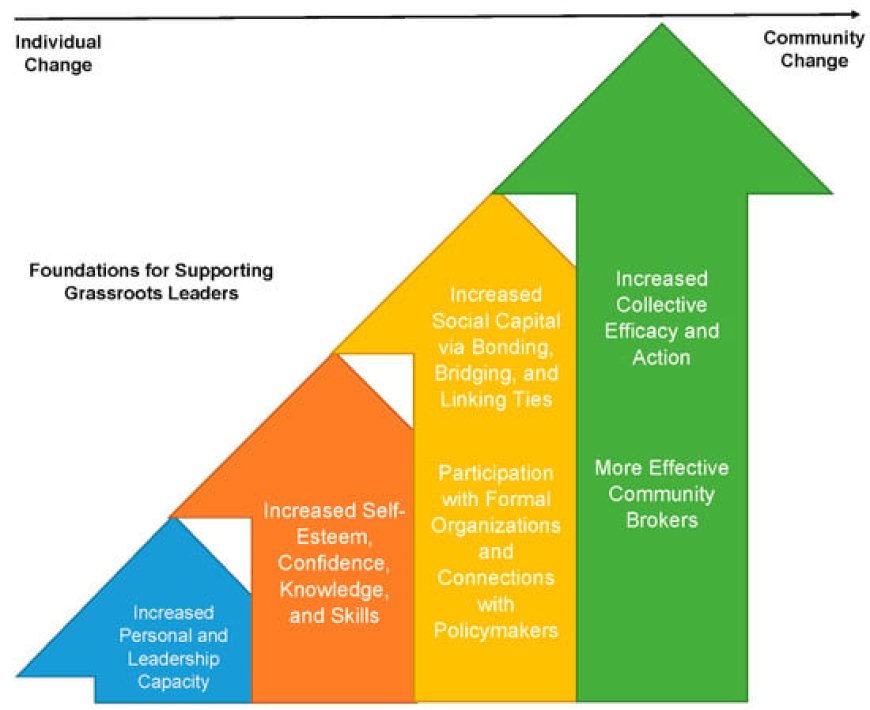
The purpose of this research was to assess leadership growth (i.e., changes in personal capacity and social capital) among women living in high-risk infant mortality zip codes who completed a grassroots maternal and childhood health leadership (GMCHL) training program. We used semi-structured qualitative interviews and thematic analysis. Three major themes associated with the training program experience were identified: (1) building personal capacity and becoming community brokers; (2) linking and leveraging through formal organizations; and (3) how individual change becomes community change. Although many of the grassroots leaders were already brokers (i.e., connecting individuals to information/services), they were able to become community brokers by gaining new skills and knowledge about strategies to reduce adverse birth outcomes in their community. In particular, joining and participation in formal organizations aimed at improving community health led to the development of linking or vertical ties (e.g., “people in high places”). The grassroots leaders gained access to people in power, such as policymakers, which enabled leaders to access more resources and opportunities for themselves and their social networks. We outline the building blocks for supporting potential grassroots leaders by enhancing personal capacity and social capital, thus leading to increases in collective efficacy and collective action.
IJERPH, Vol. 21, Pages 460: Supporting the Development of Grassroots Maternal and Childhood Health Leaders through a Public-Health-Informed Training Program
International Journal of Environmental Research and Public Health doi: 10.3390/ijerph21040460
Authors: Kenzie Latham-Mintus Brittney Ortiz Ashley Irby Jack Turman
The purpose of this research was to assess leadership growth (i.e., changes in personal capacity and social capital) among women living in high-risk infant mortality zip codes who completed a grassroots maternal and childhood health leadership (GMCHL) training program. We used semi-structured qualitative interviews and thematic analysis. Three major themes associated with the training program experience were identified: (1) building personal capacity and becoming community brokers; (2) linking and leveraging through formal organizations; and (3) how individual change becomes community change. Although many of the grassroots leaders were already brokers (i.e., connecting individuals to information/services), they were able to become community brokers by gaining new skills and knowledge about strategies to reduce adverse birth outcomes in their community. In particular, joining and participation in formal organizations aimed at improving community health led to the development of linking or vertical ties (e.g., “people in high places”). The grassroots leaders gained access to people in power, such as policymakers, which enabled leaders to access more resources and opportunities for themselves and their social networks. We outline the building blocks for supporting potential grassroots leaders by enhancing personal capacity and social capital, thus leading to increases in collective efficacy and collective action.
What's Your Reaction?