Environments, Vol. 11, Pages 14: Co-Valorisation Energy Potential of Wastewater Treatment Sludge and Agroforestry Waste
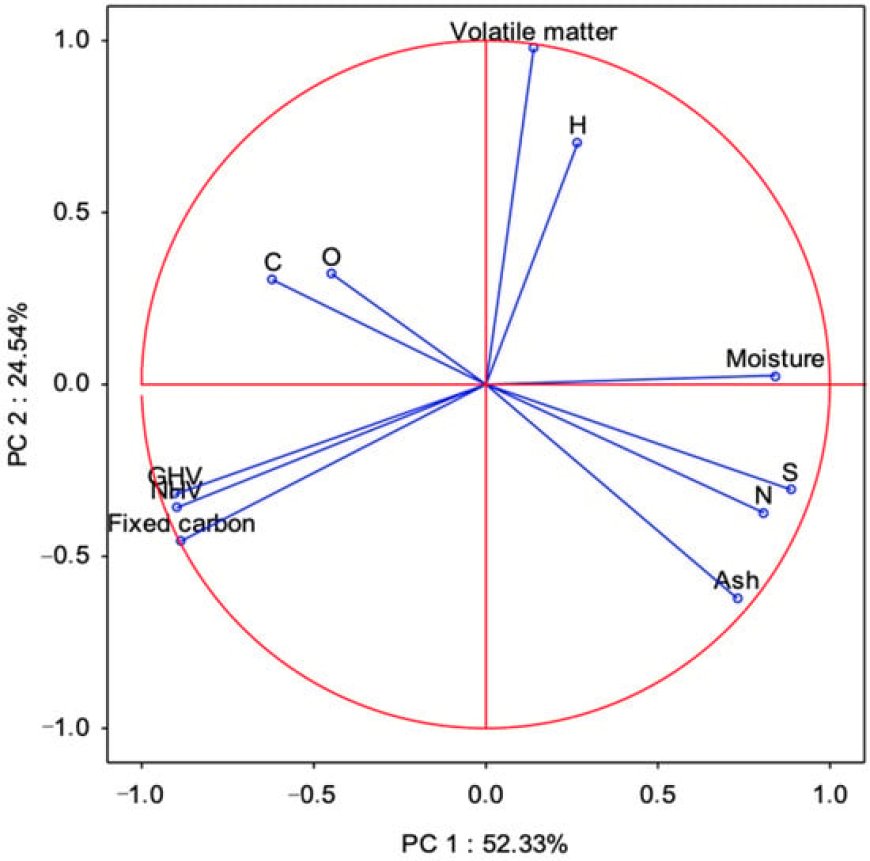
The growing demand for sustainable and environment-friendly energy sources resulted in extensive research in the field of renewable energy. Biomass, derived from organic materials such as agricultural waste, forestry products, and wastewater treatment plant (WWTP) sludge, holds great potential as a renewable energy resource that can reduce greenhouse gas emissions and offer sustainable solutions for energy production. This study focused on diverse biomass materials, including sludge from WWTPs, forest biomass, swine waste, cork powder, and biochar. Chemical and physicochemical characterizations were performed to understand their energy potential, highlighting their elemental composition, proximate analysis, and calorific values. Results showed that different biomasses have varying energy content, with biochar and cork powder emerging as high-energy materials with net heating values of 32.56 MJ/kg and 25.73 MJ/kg, respectively. WWTP sludge also demonstrated considerable potential with net heating values of around 14.87 MJ/kg to 17.44 MJ/kg. The relationships between biomass compositions and their heating values were explored, indicating the significance of low nitrogen and sulphur content and favourable carbon, hydrogen, and moisture balances for energy production. Additionally, this study looked into the possibility of mixing different biomasses to optimize their use and overcome limitations like high ash and moisture contents. Mixtures, such as “75% Santo Emilião WWTP Sludge + 25% Biochar,” showed impressive net heating values of approximately 21.032 MJ/kg and demonstrated reduced emissions during combustion. The study’s findings contribute to renewable energy research, offering insights into efficient and sustainable energy production processes and emphasizing the environmental benefits of biomass energy sources with low nitrogen and sulphur content.
Environments, Vol. 11, Pages 14: Co-Valorisation Energy Potential of Wastewater Treatment Sludge and Agroforestry Waste
Environments doi: 10.3390/environments11010014
Authors: Amadeu D. S. Borges Miguel Oliveira Bruno M. M. Teixeira Frederico Branco
The growing demand for sustainable and environment-friendly energy sources resulted in extensive research in the field of renewable energy. Biomass, derived from organic materials such as agricultural waste, forestry products, and wastewater treatment plant (WWTP) sludge, holds great potential as a renewable energy resource that can reduce greenhouse gas emissions and offer sustainable solutions for energy production. This study focused on diverse biomass materials, including sludge from WWTPs, forest biomass, swine waste, cork powder, and biochar. Chemical and physicochemical characterizations were performed to understand their energy potential, highlighting their elemental composition, proximate analysis, and calorific values. Results showed that different biomasses have varying energy content, with biochar and cork powder emerging as high-energy materials with net heating values of 32.56 MJ/kg and 25.73 MJ/kg, respectively. WWTP sludge also demonstrated considerable potential with net heating values of around 14.87 MJ/kg to 17.44 MJ/kg. The relationships between biomass compositions and their heating values were explored, indicating the significance of low nitrogen and sulphur content and favourable carbon, hydrogen, and moisture balances for energy production. Additionally, this study looked into the possibility of mixing different biomasses to optimize their use and overcome limitations like high ash and moisture contents. Mixtures, such as “75% Santo Emilião WWTP Sludge + 25% Biochar,” showed impressive net heating values of approximately 21.032 MJ/kg and demonstrated reduced emissions during combustion. The study’s findings contribute to renewable energy research, offering insights into efficient and sustainable energy production processes and emphasizing the environmental benefits of biomass energy sources with low nitrogen and sulphur content.
What's Your Reaction?