Hydrology, Vol. 11, Pages 35: Enhancing Low-Flow Forecasts: A Multi-Model Approach for Rainfall–Runoff Models
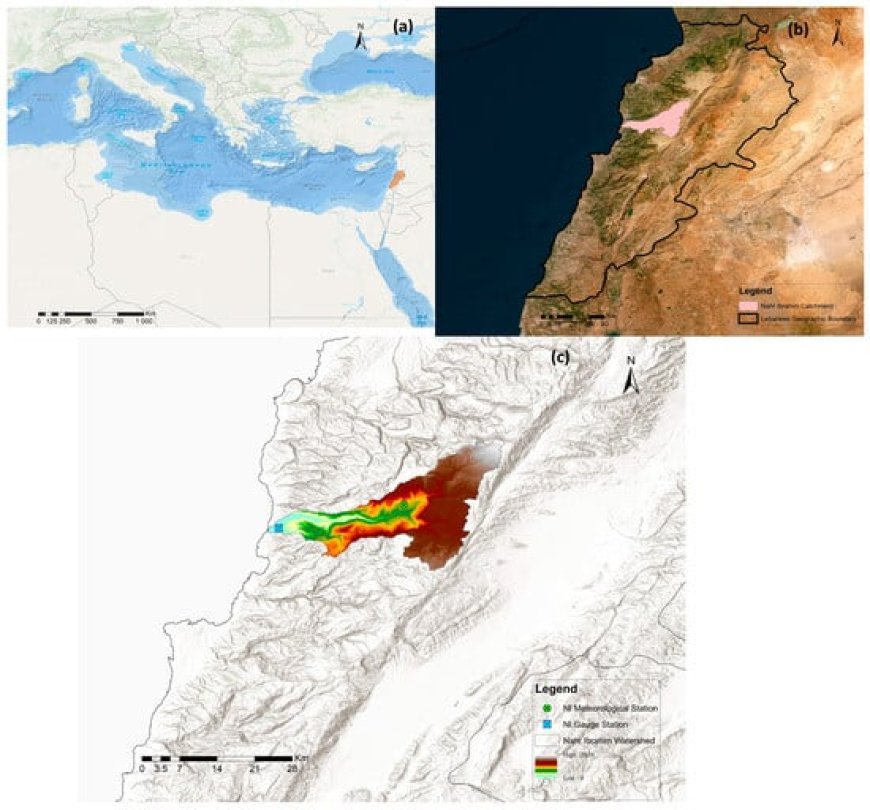
The expected change in rainfall patterns and the increase in evapotranspiration due to climate change leads to earlier droughts, which aggravate water shortages. To ensure the sustainable management of water resources in these conditions, it is necessary to forecast their evolution. The use of hydrological models is essential for monitoring the water crisis. The conceptual hydrological models used in this study are MEDOR, GR4J, and HBV. They are applied in the Nahr Ibrahim watershed, which is a typical Lebanese Mediterranean basin. While these models simplify complex natural systems, concerns persist about their reliability in addressing drought challenges. In order to reduce the uncertainties, this study develops new robust methods that can improve model simulations. First, a particular series concerning low flows is constructed with the use of hydrological low-flow indices. The multi-model approach is utilized to reach a more accurate unique series while combining the low-flow series generated from the models. This combination is accomplished by using the simple average method, weighted average, artificial neural networks, and genetic algorithms. Better results are generated with the use of these methods. Accordingly, this study led to an improvement in model performances while increasing the reliability of low-flow forecasts.
Hydrology, Vol. 11, Pages 35: Enhancing Low-Flow Forecasts: A Multi-Model Approach for Rainfall–Runoff Models
Hydrology doi: 10.3390/hydrology11030035
Authors: Cynthia Andraos
The expected change in rainfall patterns and the increase in evapotranspiration due to climate change leads to earlier droughts, which aggravate water shortages. To ensure the sustainable management of water resources in these conditions, it is necessary to forecast their evolution. The use of hydrological models is essential for monitoring the water crisis. The conceptual hydrological models used in this study are MEDOR, GR4J, and HBV. They are applied in the Nahr Ibrahim watershed, which is a typical Lebanese Mediterranean basin. While these models simplify complex natural systems, concerns persist about their reliability in addressing drought challenges. In order to reduce the uncertainties, this study develops new robust methods that can improve model simulations. First, a particular series concerning low flows is constructed with the use of hydrological low-flow indices. The multi-model approach is utilized to reach a more accurate unique series while combining the low-flow series generated from the models. This combination is accomplished by using the simple average method, weighted average, artificial neural networks, and genetic algorithms. Better results are generated with the use of these methods. Accordingly, this study led to an improvement in model performances while increasing the reliability of low-flow forecasts.
What's Your Reaction?