Hydrology, Vol. 11, Pages 23: Expanding Karst Groundwater Tracing Techniques: Incorporating Population Genetic and Isotopic Data to Enhance Flow-Path Characterization
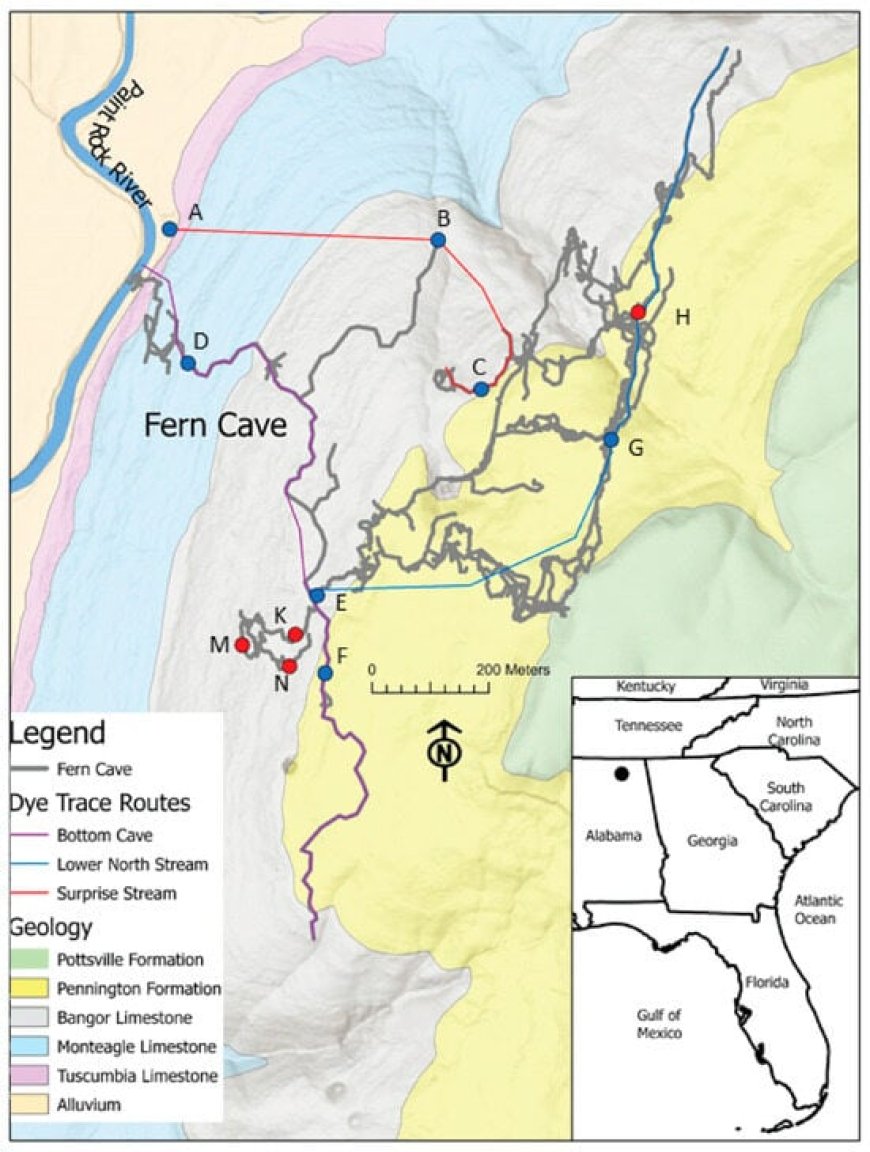
Karst aquifers are unique among groundwater systems because of variable permeability and flow-path organization changes resulting from dissolution processes. Over time, changes in flow-path connectivity complicate interpretations of conduit network evolution in karst hydrogeology. Natural and artificial tracer techniques have long provided critical information for protecting karst aquifers and understanding the potential impacts on ecosystems and human populations. Conventional tracer methods are useful in karst hydrogeologic studies for delineating flow paths and defining recharge, storage, and discharge properties. However, these methods only provide snapshots of the current conditions and do not provide sufficient information to understand the changes in interconnection or larger-scale evolution of flow paths in the aquifer over time. With advances in population genetics, it is possible to assess population connectivity, which may provide greater insights into complex groundwater flow paths. To assess this potential, we combined the more traditional approaches collected in this and associated studies, including artificial (dye) and natural (geochemistry, isotopes, and discharge) tracers, with the population genetic data of a groundwater crustacean to determine whether these data can provide insights into seasonal or longer changes in connections between conduits. The data collected included dye trace, hydrographs, geochemistry, and asellid isopod (Caecidotea bicrenenta) population genetics in Fern Cave, AL, USA, a 25 km-long cave system. Combined, these data show the connections between two separate flow paths during flood events as the downstream populations of isopods belonging to the same subpopulation were measured in both systems. Additionally, the sub-populations found in higher elevations of the cave suggest a highly interconnected unsaturated zone that allows for genetic movement in the vadose zone. Although upstream populations show some similarities in genetics, hydrologic barriers, in the form of large waterfalls, likely separate populations within the same stream.
Hydrology, Vol. 11, Pages 23: Expanding Karst Groundwater Tracing Techniques: Incorporating Population Genetic and Isotopic Data to Enhance Flow-Path Characterization
Hydrology doi: 10.3390/hydrology11020023
Authors: Benjamin W. Tobin Benjamin V. Miller Matthew L. Niemiller Andrea M. Erhardt
Karst aquifers are unique among groundwater systems because of variable permeability and flow-path organization changes resulting from dissolution processes. Over time, changes in flow-path connectivity complicate interpretations of conduit network evolution in karst hydrogeology. Natural and artificial tracer techniques have long provided critical information for protecting karst aquifers and understanding the potential impacts on ecosystems and human populations. Conventional tracer methods are useful in karst hydrogeologic studies for delineating flow paths and defining recharge, storage, and discharge properties. However, these methods only provide snapshots of the current conditions and do not provide sufficient information to understand the changes in interconnection or larger-scale evolution of flow paths in the aquifer over time. With advances in population genetics, it is possible to assess population connectivity, which may provide greater insights into complex groundwater flow paths. To assess this potential, we combined the more traditional approaches collected in this and associated studies, including artificial (dye) and natural (geochemistry, isotopes, and discharge) tracers, with the population genetic data of a groundwater crustacean to determine whether these data can provide insights into seasonal or longer changes in connections between conduits. The data collected included dye trace, hydrographs, geochemistry, and asellid isopod (Caecidotea bicrenenta) population genetics in Fern Cave, AL, USA, a 25 km-long cave system. Combined, these data show the connections between two separate flow paths during flood events as the downstream populations of isopods belonging to the same subpopulation were measured in both systems. Additionally, the sub-populations found in higher elevations of the cave suggest a highly interconnected unsaturated zone that allows for genetic movement in the vadose zone. Although upstream populations show some similarities in genetics, hydrologic barriers, in the form of large waterfalls, likely separate populations within the same stream.
What's Your Reaction?