Hydrology, Vol. 11, Pages 13: Detection of Strobilurin Fungicides in Trout Streams within an Agricultural Watershed
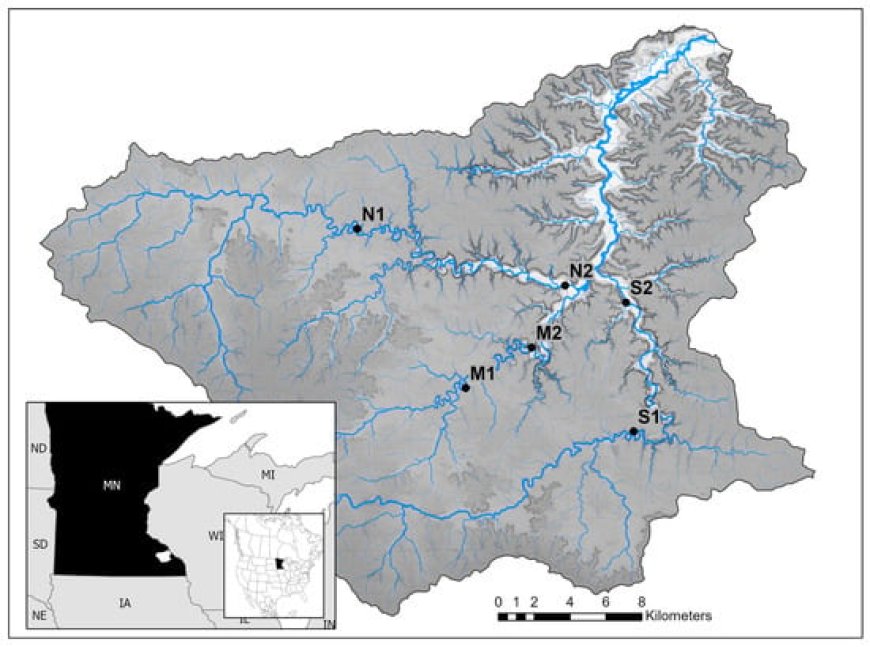
The use of strobilurin fungicides in agriculture has increased steadily during the past 25 years, and although strobilurins have minimal water solubility, they regularly appear in surface waters, at times in concentrations approaching toxic levels for aquatic life. The present study examined concentrations of strobilurin fungicides in designated trout streams draining an agricultural watershed in southeastern Minnesota, USA, where fungicides may have contributed to a recent fish kill. Water samples (n = 131) were analyzed for the presence of five different strobilurin fungicides (azoxystrobin, fluoxastrobin, picoxystrobin, pyraclostrobin, trifloxystrobin). Samples were collected via grab and automated sampling during baseflow and stormflow events throughout an entire crop-growing season from sites on each of the three forks of the Whitewater River. Detection frequencies for the five strobilurins ranged from 44 to 82%. Fluoxastrobin and pyraclostrobin concentrations were above known toxic levels in 3% and 15% of total samples analyzed, respectively. The highest concentrations were detected in mid-summer (mid-June to mid-August) samples, coincident with likely strobilurin applications. Lower concentrations were present in water samples collected during the nonapplication periods in spring and fall, suggesting groundwater–stream interactions or steady leaching of fungicides from watershed soils or stream sediments. Further study is required to determine strobilurin concentrations in sediments, soils, and groundwater. Better tracking and guidance regarding strobilurin use is necessary to adequately protect aquatic life as fungicide use continues to increase.
Hydrology, Vol. 11, Pages 13: Detection of Strobilurin Fungicides in Trout Streams within an Agricultural Watershed
Hydrology doi: 10.3390/hydrology11020013
Authors: Cole R. Weaver Meghan Brockman Neal D. Mundahl William A. Arnold Dylan Blumentritt Will L. Varela Jeanne L. Franz
The use of strobilurin fungicides in agriculture has increased steadily during the past 25 years, and although strobilurins have minimal water solubility, they regularly appear in surface waters, at times in concentrations approaching toxic levels for aquatic life. The present study examined concentrations of strobilurin fungicides in designated trout streams draining an agricultural watershed in southeastern Minnesota, USA, where fungicides may have contributed to a recent fish kill. Water samples (n = 131) were analyzed for the presence of five different strobilurin fungicides (azoxystrobin, fluoxastrobin, picoxystrobin, pyraclostrobin, trifloxystrobin). Samples were collected via grab and automated sampling during baseflow and stormflow events throughout an entire crop-growing season from sites on each of the three forks of the Whitewater River. Detection frequencies for the five strobilurins ranged from 44 to 82%. Fluoxastrobin and pyraclostrobin concentrations were above known toxic levels in 3% and 15% of total samples analyzed, respectively. The highest concentrations were detected in mid-summer (mid-June to mid-August) samples, coincident with likely strobilurin applications. Lower concentrations were present in water samples collected during the nonapplication periods in spring and fall, suggesting groundwater–stream interactions or steady leaching of fungicides from watershed soils or stream sediments. Further study is required to determine strobilurin concentrations in sediments, soils, and groundwater. Better tracking and guidance regarding strobilurin use is necessary to adequately protect aquatic life as fungicide use continues to increase.
What's Your Reaction?