Environments, Vol. 11, Pages 83: Anthropogenic Microparticles Abundance in Sandy Beach Sediments along the Tetouan Coast (Morocco Mediterranean)
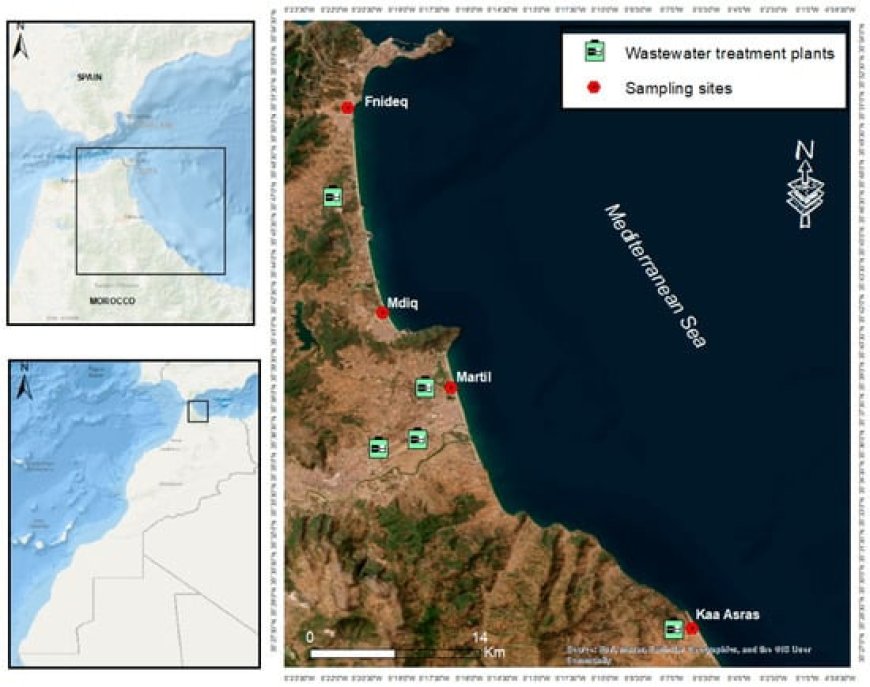
Despite the widespread presence of anthropogenic microparticles (AMs) in beach sediments, research on their occurrence on Moroccan Mediterranean beaches is still limited. This study is the first report on AM pollution in four sandy beaches along the Tetouan coast (Morocco Mediterranean). The findings reveal an average AM concentration of 483.12 ± 157.04 AMs/kg of beach sediment. The most common AM types were fibers (75.54%) and fragments (24.06%). AMs were predominantly black, red, and blue, measuring between 0.1 and 1 mm. The evaluation of the anthropogenic microparticles pollution index (AMPI) and the coefficient of anthropogenic microparticles impact (CAMI) for the study area indicated a “very high abundance” of AMs and an “extreme” level of impact. The polymers identified in these areas included PS, PE, PP, and PET. Tourism, fishing, domestic activities, and poor solid waste management practices are the primary sources of AM pollution in this region. To protect Moroccan beaches, the implementation of a consistent plastic waste management strategy is recommended.
Environments, Vol. 11, Pages 83: Anthropogenic Microparticles Abundance in Sandy Beach Sediments along the Tetouan Coast (Morocco Mediterranean)
Environments doi: 10.3390/environments11040083
Authors: Assia Bouzekry Bilal Mghili Monique Mancuso Oumayma Bouadil Teresa Bottari Mustapha Aksissou
Despite the widespread presence of anthropogenic microparticles (AMs) in beach sediments, research on their occurrence on Moroccan Mediterranean beaches is still limited. This study is the first report on AM pollution in four sandy beaches along the Tetouan coast (Morocco Mediterranean). The findings reveal an average AM concentration of 483.12 ± 157.04 AMs/kg of beach sediment. The most common AM types were fibers (75.54%) and fragments (24.06%). AMs were predominantly black, red, and blue, measuring between 0.1 and 1 mm. The evaluation of the anthropogenic microparticles pollution index (AMPI) and the coefficient of anthropogenic microparticles impact (CAMI) for the study area indicated a “very high abundance” of AMs and an “extreme” level of impact. The polymers identified in these areas included PS, PE, PP, and PET. Tourism, fishing, domestic activities, and poor solid waste management practices are the primary sources of AM pollution in this region. To protect Moroccan beaches, the implementation of a consistent plastic waste management strategy is recommended.
What's Your Reaction?