Climate, Vol. 12, Pages 40: Multifaceted Linkages among Eco-Climatic Factors, Plankton Abundance, and Gonadal Maturation of Hilsa Shad, Tenualosa ilisha, Populations in Bangladesh
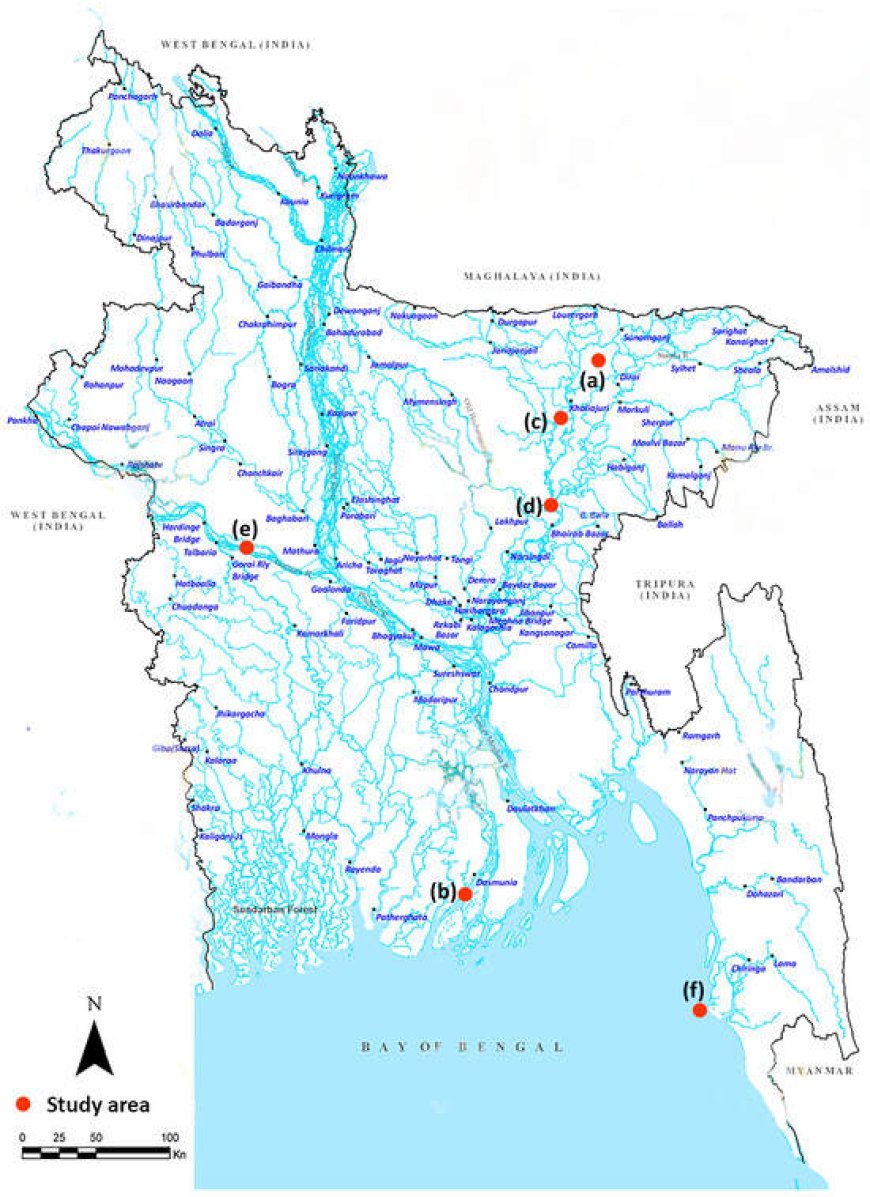
An integrated multivariate approach was applied to gain a deeper understanding of the feeding biology of hilsa shad, Tenualosa ilisha, collected from six different aquatic habitats across Bangladesh. This approach involved linking climatic factors, ecological factors, plankton abundance in water, reproductive traits, and plankton ingestion data. Climatic data were obtained from the National Oceanic and Atmospheric Administration (NOAA) and Climate Data Online (CDO) databases on a monthly basis. Water quality parameters were observed on-site at various sampling sites. Plankton data from water bodies and hilsa guts were collected monthly from the study areas and analyzed in the laboratory. The results obtained were averaged for each month. The correlation tests, multivariate approaches, cluster analyses, and regression analyses revealed that the gonadosomatic index was primarily influenced by climatic factors, the abundance of ingested gut plankton, and heir compositions. The analysis of selectivity indices confirmed that plankton preferentially ingested selective taxa. Thirteen plankton groups were identified in the water column of six different hilsa habitats. The dominant phytoplankton groups were Bacillariophyceae (34–53%), Chlorophyceae (31–50%), Cyanophyceae (4–8%), and Euglenophyceae (1–3%). Additionally, Copepoda, Rotifera, and Cladocera were the most numerous zooplankton groups. Hilsa shad primarily consumed Bacillariophyceae (38–57%), Chlorophyceae (35–53%), and Cyanophyceae (4–6%). However, they also exhibited selective ingestion of higher quantities of Bacillariophyceae and Chlorophyceae to fulfill specific and unique metabolic needs. Cluster analysis revealed the variability of phytoplankton and zooplankton abundance in water and gut in relation to diverse locations. Combining all the datasets, a principal component analysis (PCA) was applied. The first two principal components explained more than 54% of the variability. The first component explained the association between the gonadosomatic index and eco-climatic factors, while the second component extracted the cluster of ingested gut plankton in relation to salinity and pH. Pearson’s correlations and linear regression analyses showed that the number of gut plankton had a positive influence on the gonadosomatic index (GSI). Finally, the outcomes from these extensive datasets have provided a better understanding of the selective feeding behavior and the influence of feeding biology on the gonadal maturation of T. ilisha. This understanding is likely to be useful for maintaining and improving the growth and productivity of the existing production systems for this transboundary species.
Climate, Vol. 12, Pages 40: Multifaceted Linkages among Eco-Climatic Factors, Plankton Abundance, and Gonadal Maturation of Hilsa Shad, Tenualosa ilisha, Populations in Bangladesh
Climate doi: 10.3390/cli12030040
Authors: Mobin Hossain Shohan Mohammad Abu Baker Siddique Balaram Mahalder Mohammad Mahfujul Haque Chayon Goswami Md. Borhan Uddin Ahmed Mohammad Ashraful Alam Md. Abul Bashar Yahia Mahmud Mahamudul Alam Chowdhury Md. Mahmudul Hasan A. K. Shakur Ahammad
An integrated multivariate approach was applied to gain a deeper understanding of the feeding biology of hilsa shad, Tenualosa ilisha, collected from six different aquatic habitats across Bangladesh. This approach involved linking climatic factors, ecological factors, plankton abundance in water, reproductive traits, and plankton ingestion data. Climatic data were obtained from the National Oceanic and Atmospheric Administration (NOAA) and Climate Data Online (CDO) databases on a monthly basis. Water quality parameters were observed on-site at various sampling sites. Plankton data from water bodies and hilsa guts were collected monthly from the study areas and analyzed in the laboratory. The results obtained were averaged for each month. The correlation tests, multivariate approaches, cluster analyses, and regression analyses revealed that the gonadosomatic index was primarily influenced by climatic factors, the abundance of ingested gut plankton, and heir compositions. The analysis of selectivity indices confirmed that plankton preferentially ingested selective taxa. Thirteen plankton groups were identified in the water column of six different hilsa habitats. The dominant phytoplankton groups were Bacillariophyceae (34–53%), Chlorophyceae (31–50%), Cyanophyceae (4–8%), and Euglenophyceae (1–3%). Additionally, Copepoda, Rotifera, and Cladocera were the most numerous zooplankton groups. Hilsa shad primarily consumed Bacillariophyceae (38–57%), Chlorophyceae (35–53%), and Cyanophyceae (4–6%). However, they also exhibited selective ingestion of higher quantities of Bacillariophyceae and Chlorophyceae to fulfill specific and unique metabolic needs. Cluster analysis revealed the variability of phytoplankton and zooplankton abundance in water and gut in relation to diverse locations. Combining all the datasets, a principal component analysis (PCA) was applied. The first two principal components explained more than 54% of the variability. The first component explained the association between the gonadosomatic index and eco-climatic factors, while the second component extracted the cluster of ingested gut plankton in relation to salinity and pH. Pearson’s correlations and linear regression analyses showed that the number of gut plankton had a positive influence on the gonadosomatic index (GSI). Finally, the outcomes from these extensive datasets have provided a better understanding of the selective feeding behavior and the influence of feeding biology on the gonadal maturation of T. ilisha. This understanding is likely to be useful for maintaining and improving the growth and productivity of the existing production systems for this transboundary species.
What's Your Reaction?