Environments, Vol. 11, Pages 76: Assessing Ecological Gains: A Review of How Arthropods, Bats and Birds Benefit from Green Roofs and Walls
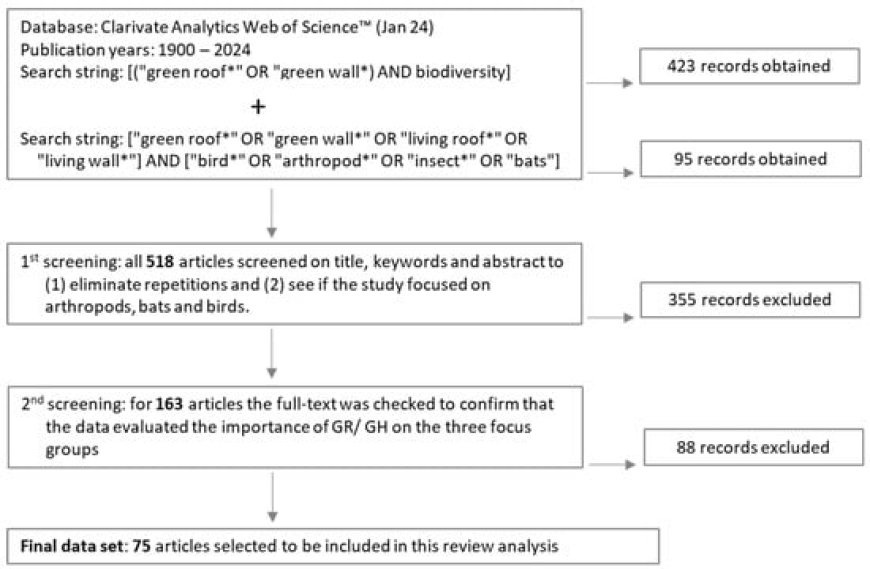
Because of the immense amount of infrastructure in cities, the introduction of vegetation into these constructions is expected to play a critical role in reducing the heat island effect, in mitigating the effects of climate change, and in supporting habitat connectivity and associated biodiversity. Although there is the perception that these solutions can improve the biodiversity of cities, their real value is still unclear. This paper focuses on two aspects of urban greening: green roofs and green walls. It provides a systematic review on biodiversity present in green roofs and walls, through an exhaustive worldwide literature analysis. Arthropods, bats, and birds were the three taxonomic groups analyzed in the papers included in our review. We observed a strong increase in the number of recent publications, thus demonstrating a growing interest in this topic. In summary, we found that green roofs/walls offered additional opportunities for plants and animals to thrive in urban environments because of habitat creation and greater spatial connectivity. In addition, the enhancement of other ecosystem services such as stormwater management and heat island mitigation was noted. By incorporating green features into urban design and planning, cities can support biodiversity while also improving the overall sustainability and livability of urban spaces.
Environments, Vol. 11, Pages 76: Assessing Ecological Gains: A Review of How Arthropods, Bats and Birds Benefit from Green Roofs and Walls
Environments doi: 10.3390/environments11040076
Authors: Patrícia Tiago Ana I. Leal Cristina Matos Silva
Because of the immense amount of infrastructure in cities, the introduction of vegetation into these constructions is expected to play a critical role in reducing the heat island effect, in mitigating the effects of climate change, and in supporting habitat connectivity and associated biodiversity. Although there is the perception that these solutions can improve the biodiversity of cities, their real value is still unclear. This paper focuses on two aspects of urban greening: green roofs and green walls. It provides a systematic review on biodiversity present in green roofs and walls, through an exhaustive worldwide literature analysis. Arthropods, bats, and birds were the three taxonomic groups analyzed in the papers included in our review. We observed a strong increase in the number of recent publications, thus demonstrating a growing interest in this topic. In summary, we found that green roofs/walls offered additional opportunities for plants and animals to thrive in urban environments because of habitat creation and greater spatial connectivity. In addition, the enhancement of other ecosystem services such as stormwater management and heat island mitigation was noted. By incorporating green features into urban design and planning, cities can support biodiversity while also improving the overall sustainability and livability of urban spaces.
What's Your Reaction?