Environments, Vol. 11, Pages 67: Assessment of the Quality of Agricultural Soils in Manica Province (Mozambique)
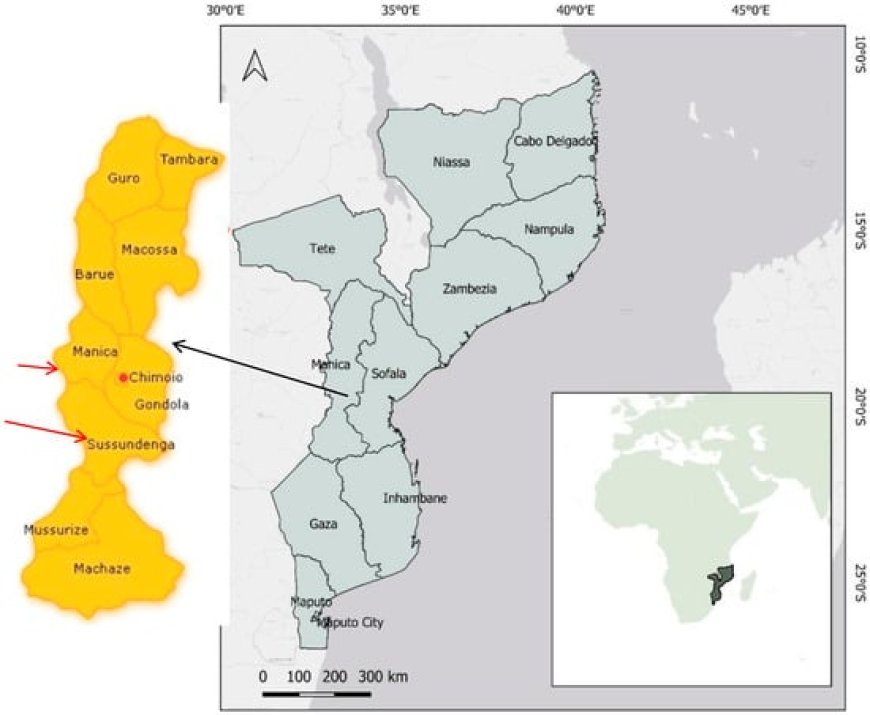
Agriculture is the main economic activity of Mozambique and there is a lack of information about the quality of agricultural soils. In this paper, five soils from the Manica and Sussundenga districts (Manica province) sampled in the years 2021/2022 and 2022/2023 (before and after the rainy seasons) were subjected to an agronomical and environmental chemical analysis to assess their quality, from the fertility and environmental contamination points of view. Standard analytical methodologies from external certified laboratories and local X-ray fluorescence measurements were used. All the studied soils were acidic (pH ranging from 4.5 to 5.4), had no salinity problems (conductivity ranging from 4.2 to 11.8 mS/m), and had a low amount of soil organic matter (0.90% to 1.81%). Soils from the Sussundenga district had a very low cation exchange capacity (CEC) (average of 3.33 cmolc/kg), while that of those from the Manica district ranged from very low to average CEC (3.59 to 13.11 cmolc/kg). Sussundenga soils also had a phosphorous deficiency (values ranging from
Environments, Vol. 11, Pages 67: Assessment of the Quality of Agricultural Soils in Manica Province (Mozambique)
Environments doi: 10.3390/environments11040067
Authors: Mário J. S. L. Pereira Joaquim Esteves da Silva
Agriculture is the main economic activity of Mozambique and there is a lack of information about the quality of agricultural soils. In this paper, five soils from the Manica and Sussundenga districts (Manica province) sampled in the years 2021/2022 and 2022/2023 (before and after the rainy seasons) were subjected to an agronomical and environmental chemical analysis to assess their quality, from the fertility and environmental contamination points of view. Standard analytical methodologies from external certified laboratories and local X-ray fluorescence measurements were used. All the studied soils were acidic (pH ranging from 4.5 to 5.4), had no salinity problems (conductivity ranging from 4.2 to 11.8 mS/m), and had a low amount of soil organic matter (0.90% to 1.81%). Soils from the Sussundenga district had a very low cation exchange capacity (CEC) (average of 3.33 cmolc/kg), while that of those from the Manica district ranged from very low to average CEC (3.59 to 13.11 cmolc/kg). Sussundenga soils also had a phosphorous deficiency (values ranging from <20 to 38.5 mg/kg) and there were deficiencies and/or excesses of some macro and micronutrients in all soil samples. Manica soils were contaminated, apparently from geogenic origin, with Cr (280 to 1400 mg/kg), Co (80 mg/kg), Ni (78 to 680 mg/kg) and V (86 mg/kg). Agricultural soil monitoring must be fostered in Mozambique in order to improve food quality and quantity to ensure economic and environmental sustainability.
What's Your Reaction?