Environments, Vol. 11, Pages 17: Potential Use of Biochar as a Mitigation Strategy for Salinity-Related Issues in Tomato Plants (Solanum lycopersicum L.)
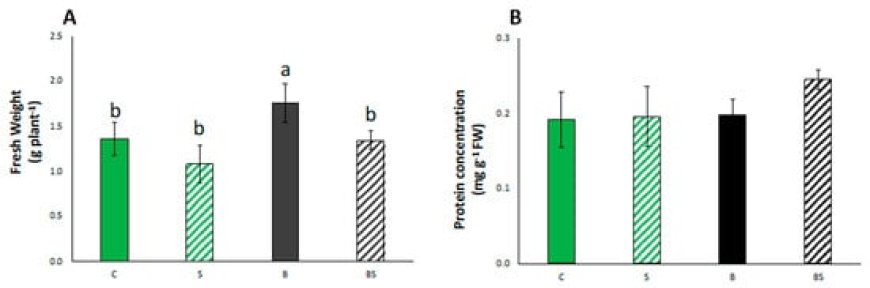
The continuous growth of the population, along with climate change and the resulting surge in food demand, requires the development of alternative crop cultivation strategies that reduce the excessive use of freshwater for agricultural purposes. Biochar, which is a carbon-rich material made from organic waste through pyrolysis, has been recommended as a potential soil amendment to mitigate the negative effects of salinity. Biochar has unique properties such as high porosity, an ion exchange capacity, and the ability to retain water and nutrients. The purpose of this study was to evaluate the feasibility and effectiveness of using saline water for the cultivation of tomato plants (Solanum lycopersicum L.) and to investigate the potential use of biochar as a mitigation strategy for salinity-related issues in tomato cultivation. The concentration of NaCl during the experiment was 100 mM. We examined the impact of salt stress on plant growth, protein and chlorophyll content, the activation of the antioxidant response, and nutritional status. Our results indicated that salt treatments led to a significant accumulation of Na and Cl in shoots (regardless of the biochar addition) but did not result in a corresponding reduction in plant growth. However, the degree of oxidative damage caused by NaCl treatment, measured as malondialdehyde (MDA) accumulation, was reduced by biochar addition to the growth medium, most likely because of an increased guaiacol peroxidase (GPX) activity, which led to lower MDA accumulation. The strong positive effect of biochar on GPX activity could be reasonably attributed to increased Mo accumulation. In conclusion, the findings of this study represent a valuable starting point for developing crop management strategies based on biochar application to enhance plant performance under unfavorable conditions and reduce freshwater dependence in agriculture.
Environments, Vol. 11, Pages 17: Potential Use of Biochar as a Mitigation Strategy for Salinity-Related Issues in Tomato Plants (Solanum lycopersicum L.)
Environments doi: 10.3390/environments11010017
Authors: Eleonora Coppa Giulia Quagliata Rachele Venanzi Alessandro Bruschini Leonardo Bianchini Rodolfo Picchio Stefania Astolfi
The continuous growth of the population, along with climate change and the resulting surge in food demand, requires the development of alternative crop cultivation strategies that reduce the excessive use of freshwater for agricultural purposes. Biochar, which is a carbon-rich material made from organic waste through pyrolysis, has been recommended as a potential soil amendment to mitigate the negative effects of salinity. Biochar has unique properties such as high porosity, an ion exchange capacity, and the ability to retain water and nutrients. The purpose of this study was to evaluate the feasibility and effectiveness of using saline water for the cultivation of tomato plants (Solanum lycopersicum L.) and to investigate the potential use of biochar as a mitigation strategy for salinity-related issues in tomato cultivation. The concentration of NaCl during the experiment was 100 mM. We examined the impact of salt stress on plant growth, protein and chlorophyll content, the activation of the antioxidant response, and nutritional status. Our results indicated that salt treatments led to a significant accumulation of Na and Cl in shoots (regardless of the biochar addition) but did not result in a corresponding reduction in plant growth. However, the degree of oxidative damage caused by NaCl treatment, measured as malondialdehyde (MDA) accumulation, was reduced by biochar addition to the growth medium, most likely because of an increased guaiacol peroxidase (GPX) activity, which led to lower MDA accumulation. The strong positive effect of biochar on GPX activity could be reasonably attributed to increased Mo accumulation. In conclusion, the findings of this study represent a valuable starting point for developing crop management strategies based on biochar application to enhance plant performance under unfavorable conditions and reduce freshwater dependence in agriculture.
What's Your Reaction?