Climate, Vol. 12, Pages 80: Assessment of Rural Flood Risk and Factors Influencing Household Flood Risk Perception in the Haut-Bassins Region of Burkina Faso, West Africa
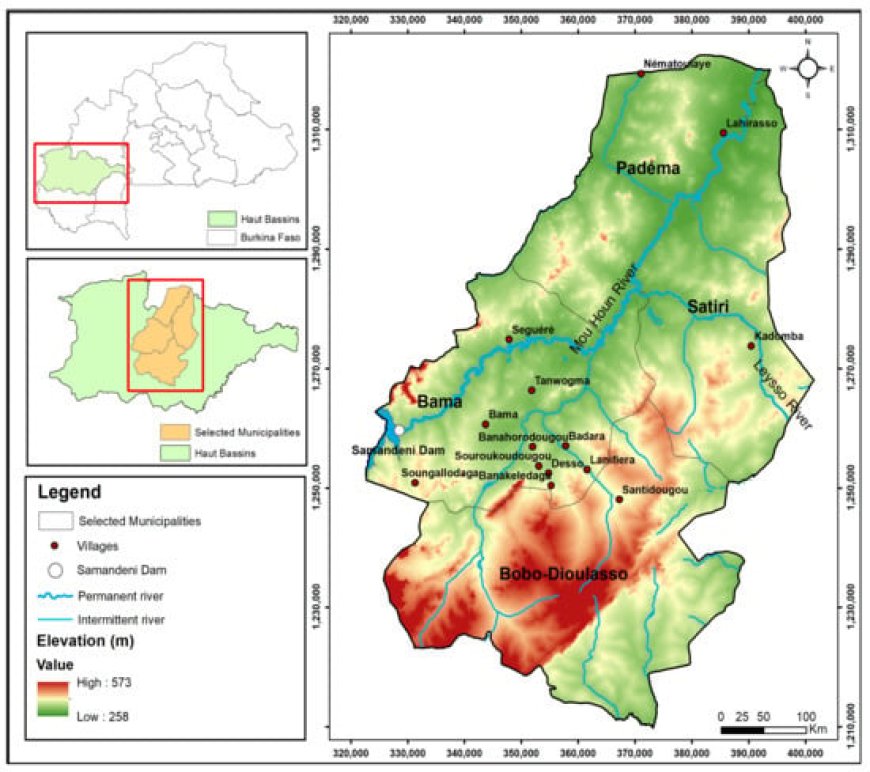
In the past two decades, several floods have affected people and their properties in Burkina Faso, with unprecedented flooding occurring in Ouagadougou in September 2009. So far, most studies have focused on Ouagadougou and surrounding localities and have paid little attention to other flood-prone regions in Burkina Faso. Consequently, there is a data and knowledge gap regarding flood risk in the Haut-Bassins region, which in turn hinders the development of mitigation strategies and risk reduction measures in affected communities. This study demonstrates how data collected at the household level can be used to understand flood risk and its components at the village level in this data-scarce region. Using an indicator-based method, we analyzed both flood risk and flood risk perception at the village level. Moreover, we determined the factors influencing flood risk perception at the household level using an ordered logit model. We found that 12 out of the 14 villages in our sample group had experienced high levels of flood risk. The management of runoff from the nearest urban areas as well as poorly designed civil engineering infrastructures, such as roads, were highlighted by households as significant factors that increased their vulnerability. Additionally, we found that the perceived flood risk consistently exceeds the estimated flood risk, with an insignificant positive correlation between both risk indices. Regression results indicate that flood risk perception is mainly influenced by informational and behavioral factors of households. The findings of this study can provide valuable information to municipal and regional authorities involved in disaster risk management within the study area. Moreover, our/this method is transferable to other data-scarce regions.
Climate, Vol. 12, Pages 80: Assessment of Rural Flood Risk and Factors Influencing Household Flood Risk Perception in the Haut-Bassins Region of Burkina Faso, West Africa
Climate doi: 10.3390/cli12060080
Authors: Madou Sougué Bruno Merz Amadé Nacanabo Gnibga Issoufou Yangouliba Ibrahima Pouye Jean Mianikpo Sogbedji François Zougmoré
In the past two decades, several floods have affected people and their properties in Burkina Faso, with unprecedented flooding occurring in Ouagadougou in September 2009. So far, most studies have focused on Ouagadougou and surrounding localities and have paid little attention to other flood-prone regions in Burkina Faso. Consequently, there is a data and knowledge gap regarding flood risk in the Haut-Bassins region, which in turn hinders the development of mitigation strategies and risk reduction measures in affected communities. This study demonstrates how data collected at the household level can be used to understand flood risk and its components at the village level in this data-scarce region. Using an indicator-based method, we analyzed both flood risk and flood risk perception at the village level. Moreover, we determined the factors influencing flood risk perception at the household level using an ordered logit model. We found that 12 out of the 14 villages in our sample group had experienced high levels of flood risk. The management of runoff from the nearest urban areas as well as poorly designed civil engineering infrastructures, such as roads, were highlighted by households as significant factors that increased their vulnerability. Additionally, we found that the perceived flood risk consistently exceeds the estimated flood risk, with an insignificant positive correlation between both risk indices. Regression results indicate that flood risk perception is mainly influenced by informational and behavioral factors of households. The findings of this study can provide valuable information to municipal and regional authorities involved in disaster risk management within the study area. Moreover, our/this method is transferable to other data-scarce regions.
What's Your Reaction?