Climate, Vol. 12, Pages 56: Characteristics of Foehn Wind in Urumqi, China, and Their Relationship with EI Niño and Extreme Heat Events in the Last 15 Years
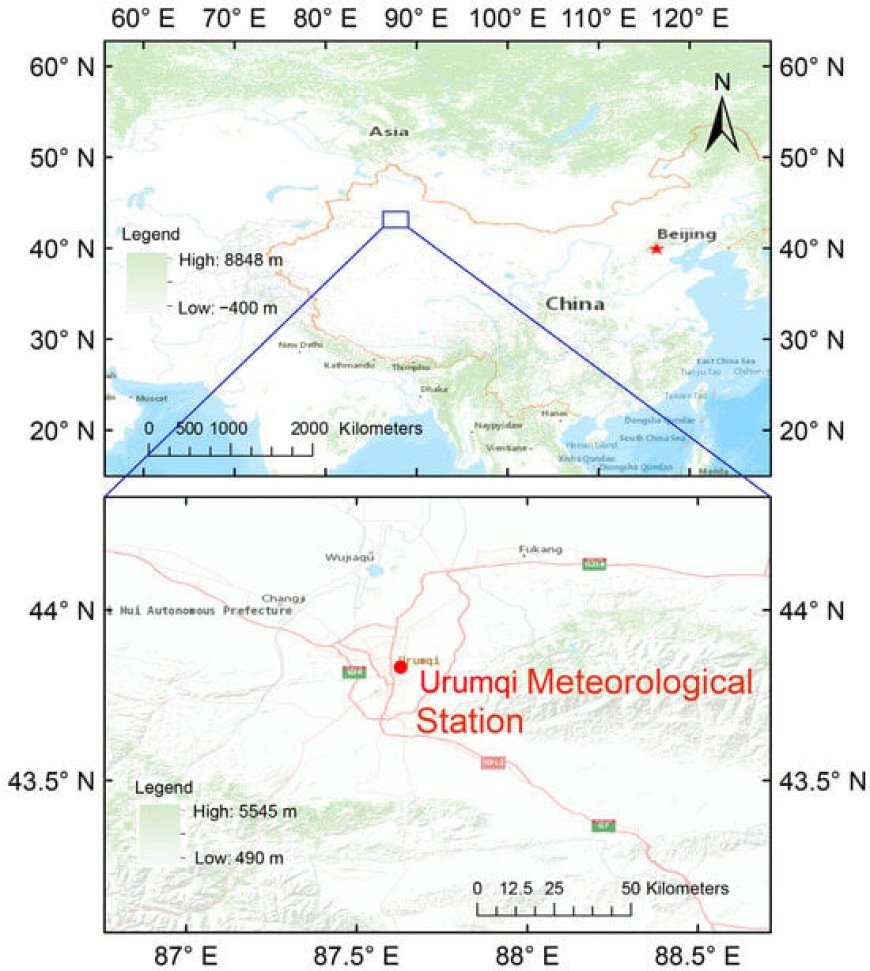
Dry and hot Foehn wind weather often occurs in Urumqi, China, due to its canyon terrain. This directly impacts the lives and health of local people. Using surface meteorological variables (including the hourly wind, temperature, humidity, and pressure) measured in situ at the Urumqi Meteorological Station and ERA5 reanalysis from the European Centre for Medium-Range Weather Forecasts in the past 15 years (2008–2022), the characteristics of Foehn wind and their relationship with EI Niño and extreme high-temperature events in Urumqi are analyzed. The results show that the annual distributions of Foehn wind present a fluctuating pattern, and the highest frequency occurred in 2015. Compared to the summer (July) and winter (February) seasons, Foehn wind occurs most frequently in spring (March, April, May) and autumn (September, October, and November). Daily variations in Foehn wind occur most frequently from 9:00 a.m. to 14:00 p.m. In particular, high levels are found at 10:00 a.m. and 11:00 a.m. in April and May. In 2011, 2012, and 2014, the average wind speed of FW exceeded 6 m/s, and the lowest average wind speed was 3.8 m/s in 2021. The temperature and relative humidity changes (ΔT and ΔRH) caused by Foehn wind are the most significant in winter and when Foehn wind begins to occur. The high-temperature hours related to Foehn wind weather in Urumqi represented 25% of the total in the past 15 years. During the EI Niño period, the amount of Foehn wind in Urumqi significantly increased; The correlation coefficient beteewn slide anomaly of Foehn days and the Oceanic Niño Index is as high as 0.71. Specifically, Foehn wind activity aggravates extreme high-temperature events. This study provides indications for Foehn wind weather forecasting in Urumqi.
Climate, Vol. 12, Pages 56: Characteristics of Foehn Wind in Urumqi, China, and Their Relationship with EI Niño and Extreme Heat Events in the Last 15 Years
Climate doi: 10.3390/cli12040056
Authors: Maoling Ayitikan Xia Li Yusufu Musha Qing He Shuting Li Yuting Zhong Kai Cheng
Dry and hot Foehn wind weather often occurs in Urumqi, China, due to its canyon terrain. This directly impacts the lives and health of local people. Using surface meteorological variables (including the hourly wind, temperature, humidity, and pressure) measured in situ at the Urumqi Meteorological Station and ERA5 reanalysis from the European Centre for Medium-Range Weather Forecasts in the past 15 years (2008–2022), the characteristics of Foehn wind and their relationship with EI Niño and extreme high-temperature events in Urumqi are analyzed. The results show that the annual distributions of Foehn wind present a fluctuating pattern, and the highest frequency occurred in 2015. Compared to the summer (July) and winter (February) seasons, Foehn wind occurs most frequently in spring (March, April, May) and autumn (September, October, and November). Daily variations in Foehn wind occur most frequently from 9:00 a.m. to 14:00 p.m. In particular, high levels are found at 10:00 a.m. and 11:00 a.m. in April and May. In 2011, 2012, and 2014, the average wind speed of FW exceeded 6 m/s, and the lowest average wind speed was 3.8 m/s in 2021. The temperature and relative humidity changes (ΔT and ΔRH) caused by Foehn wind are the most significant in winter and when Foehn wind begins to occur. The high-temperature hours related to Foehn wind weather in Urumqi represented 25% of the total in the past 15 years. During the EI Niño period, the amount of Foehn wind in Urumqi significantly increased; The correlation coefficient beteewn slide anomaly of Foehn days and the Oceanic Niño Index is as high as 0.71. Specifically, Foehn wind activity aggravates extreme high-temperature events. This study provides indications for Foehn wind weather forecasting in Urumqi.
What's Your Reaction?