Climate, Vol. 12, Pages 25: Influence of Climatic Factors on the Occurrence of Vibrio parahaemolyticus Food Poisoning in the Republic of Korea
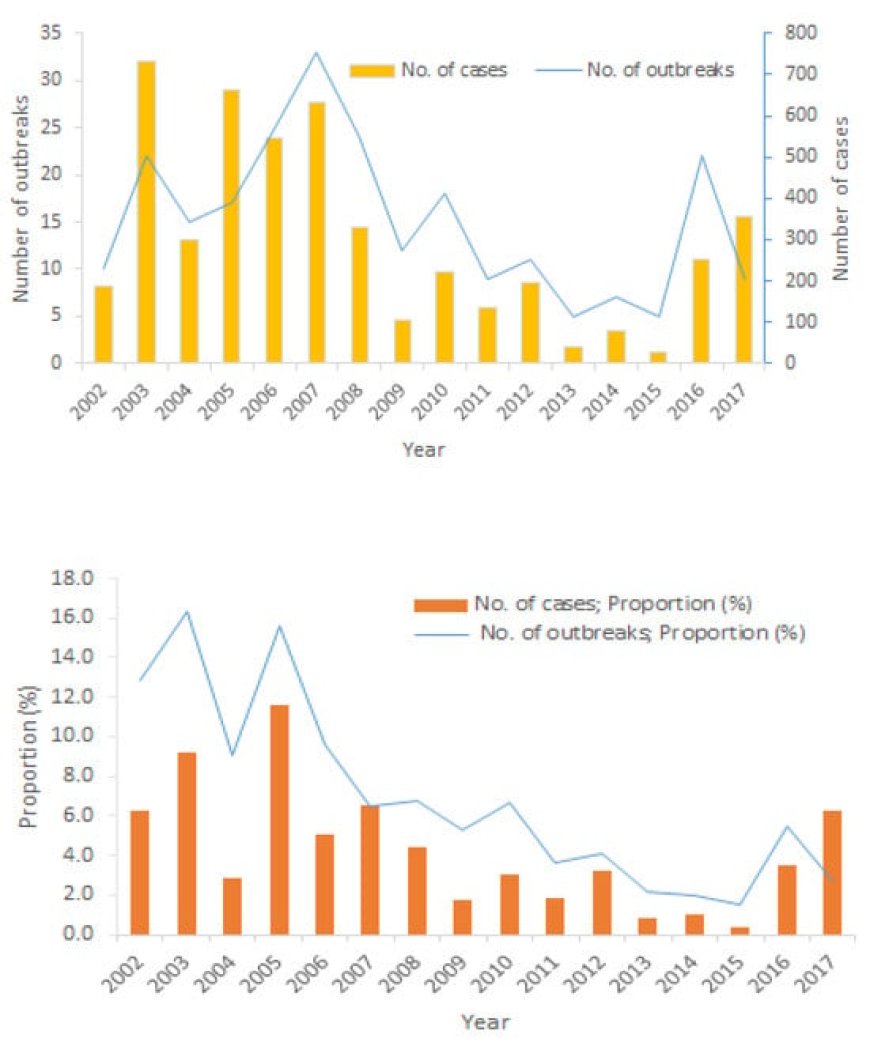
This study aimed to investigate the outbreaks and characteristics of Vibrio parahaemolyticus food poisoning in the Republic of Korea and the impact of climatic factors on the food poisoning occurrence. All data were obtained from the official statistics of the Republic of Korea (2002 to 2017). A trend analysis, Pearson’s correlation analysis, and regression analysis were used to determine the relationship between the outbreaks of V. parahaemolyticus food poisoning and climatic factors. During the study period, the number of outbreaks of V. parahaemolyticus food poisoning ranked third among bacterial food poisoning. The food poisoning incidences of V. parahaemolyticus occurred mostly from July to September. The average temperature, maximum and minimum temperatures, precipitation, number of days with rainfall, and humidity showed a significant positive correlation with the number of outbreaks of V. parahaemolyticus food poisoning (p < 0.001), but daytime hours showed a negative correlation (p < 0.01). The data further indicated that minimum temperature was the most influential variable on the outbreaks of food poisoning (p < 0.01). These results indicate that the outbreaks of V. parahaemolyticus food poisoning in the Republic of Korea are associated with climatic factors, suggesting that these incidences may have been impacted by climate change, especially due to warming around the Korean peninsula.
Climate, Vol. 12, Pages 25: Influence of Climatic Factors on the Occurrence of Vibrio parahaemolyticus Food Poisoning in the Republic of Korea
Climate doi: 10.3390/cli12020025
Authors: Jong-Gyu Kim
This study aimed to investigate the outbreaks and characteristics of Vibrio parahaemolyticus food poisoning in the Republic of Korea and the impact of climatic factors on the food poisoning occurrence. All data were obtained from the official statistics of the Republic of Korea (2002 to 2017). A trend analysis, Pearson’s correlation analysis, and regression analysis were used to determine the relationship between the outbreaks of V. parahaemolyticus food poisoning and climatic factors. During the study period, the number of outbreaks of V. parahaemolyticus food poisoning ranked third among bacterial food poisoning. The food poisoning incidences of V. parahaemolyticus occurred mostly from July to September. The average temperature, maximum and minimum temperatures, precipitation, number of days with rainfall, and humidity showed a significant positive correlation with the number of outbreaks of V. parahaemolyticus food poisoning (p < 0.001), but daytime hours showed a negative correlation (p < 0.01). The data further indicated that minimum temperature was the most influential variable on the outbreaks of food poisoning (p < 0.01). These results indicate that the outbreaks of V. parahaemolyticus food poisoning in the Republic of Korea are associated with climatic factors, suggesting that these incidences may have been impacted by climate change, especially due to warming around the Korean peninsula.
What's Your Reaction?