Climate, Vol. 12, Pages 102: Auto-Machine-Learning Models for Standardized Precipitation Index Prediction in North–Central Mexico
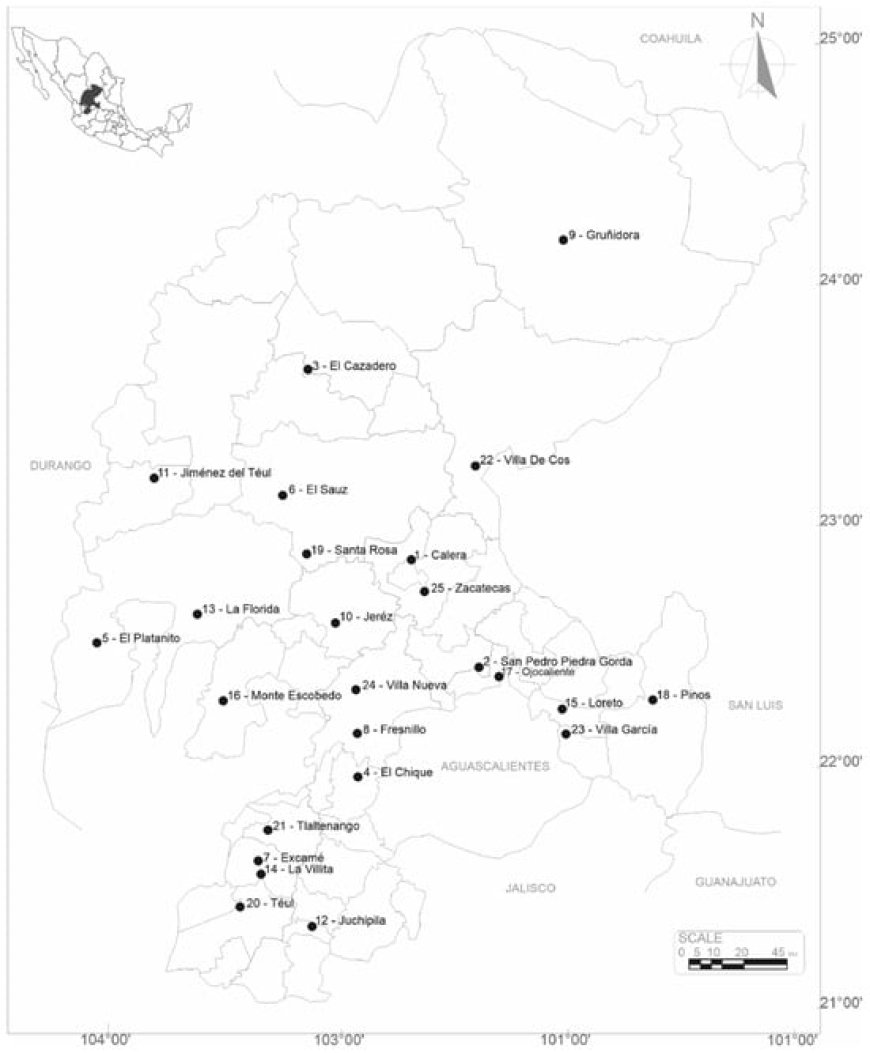
Certain impacts of climate change could potentially be linked to alterations in rainfall patterns, including shifts in rainfall intensity or drought occurrences. Hence, predicting droughts can provide valuable assistance in mitigating the detrimental consequences associated with water scarcity, particularly in agricultural areas or densely populated urban regions. Employing predictive models to calculate drought indices can be a useful method for the effective characterization of drought conditions. This study applied an Auto-Machine-Learning approach to deploy Artificial Neural Network models, aiming to predict the Standardized Precipitation Index in four regions of Zacatecas, Mexico. Climatological time-series data spanning from 1979 to 2020 were utilized as predictive variables. The best models were found using performance metrics that yielded a Mean Squared Error, Mean Absolute Error, and Coefficient of Determination ranging from 0.0296 to 0.0388, 0.1214 to 0.1355, and 0.9342 to 0.9584, respectively, for the regions under study. As a result, the Auto-Machine-Learning approach successfully developed and tested Artificial Neural Network models that exhibited notable predictive capabilities when estimating the monthly Standardized Precipitation Index within the study region.
Climate, Vol. 12, Pages 102: Auto-Machine-Learning Models for Standardized Precipitation Index Prediction in North–Central Mexico
Climate doi: 10.3390/cli12070102
Authors: Rafael Magallanes-Quintanar Carlos E. Galván-Tejada Jorge Isaac Galván-Tejada Hamurabi Gamboa-Rosales Santiago de Jesús Méndez-Gallegos Antonio García-Domínguez
Certain impacts of climate change could potentially be linked to alterations in rainfall patterns, including shifts in rainfall intensity or drought occurrences. Hence, predicting droughts can provide valuable assistance in mitigating the detrimental consequences associated with water scarcity, particularly in agricultural areas or densely populated urban regions. Employing predictive models to calculate drought indices can be a useful method for the effective characterization of drought conditions. This study applied an Auto-Machine-Learning approach to deploy Artificial Neural Network models, aiming to predict the Standardized Precipitation Index in four regions of Zacatecas, Mexico. Climatological time-series data spanning from 1979 to 2020 were utilized as predictive variables. The best models were found using performance metrics that yielded a Mean Squared Error, Mean Absolute Error, and Coefficient of Determination ranging from 0.0296 to 0.0388, 0.1214 to 0.1355, and 0.9342 to 0.9584, respectively, for the regions under study. As a result, the Auto-Machine-Learning approach successfully developed and tested Artificial Neural Network models that exhibited notable predictive capabilities when estimating the monthly Standardized Precipitation Index within the study region.
What's Your Reaction?