Climate, Vol. 12, Pages 87: Analysing the Transformative Changes of Nationally Determined Contributions and Long-Term Targets
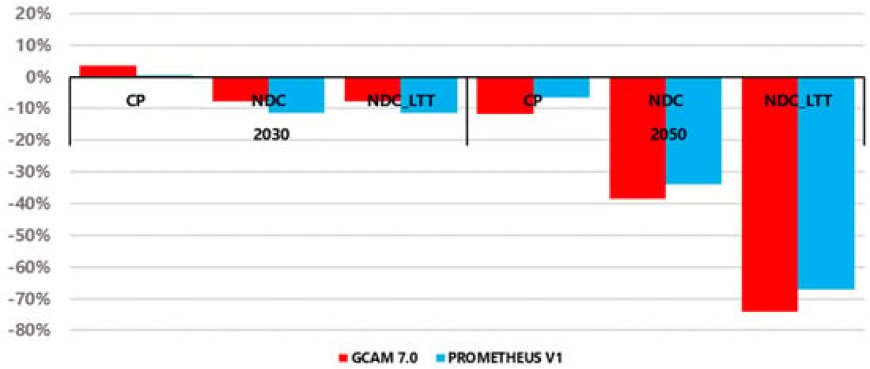
As the imperative to address climate change intensifies, understanding the effectiveness of policy interventions becomes paramount. In the context of addressing these urgent challenges and given the inadequacy of current policies to address this issue, this study examines the extent to which Nationally Determined Contributions (NDCs) and Long-Term Targets (LTTs) can contribute to achieving ambitious climate goals. Recognizing the critical need for effective climate action, we employ the advanced modelling tools PROMETHEUS and GCAM to assess the implications of different scenarios–Current Policies (CP), Nationally Determined Contributions (NDC), and combination of NDCs with Long-Term Targets (NDC_LTT)–on the future development of energy system and emission. This study, by employing these well-known models, seeks to provide an improved understanding of the impacts of NDCs on global emission trajectories and whether the integration of NDCs and LTTs can help close the gap towards Paris-compatible pathways. The study analyzes various sectors including buildings, transportation, electricity generation, and industry to provide insights into the limitations of existing policies and the potential of enhanced commitments to drive transformative changes in a global scale. The effectiveness of these policies varies across different sectors, highlighting the challenges that need to be addressed for achieving the required emission reduction targets in the medium- and long-term. Key findings indicate significant shifts in energy consumption, fuel mix, technology adoption, and emission trajectories, particularly under the synergistic action represented by the NDC_LTT scenario.
Climate, Vol. 12, Pages 87: Analysing the Transformative Changes of Nationally Determined Contributions and Long-Term Targets
Climate doi: 10.3390/cli12060087
Authors: Panagiotis Fragkos Dirk-Jan van de Ven Russell Horowitz Eleftheria Zisarou
As the imperative to address climate change intensifies, understanding the effectiveness of policy interventions becomes paramount. In the context of addressing these urgent challenges and given the inadequacy of current policies to address this issue, this study examines the extent to which Nationally Determined Contributions (NDCs) and Long-Term Targets (LTTs) can contribute to achieving ambitious climate goals. Recognizing the critical need for effective climate action, we employ the advanced modelling tools PROMETHEUS and GCAM to assess the implications of different scenarios–Current Policies (CP), Nationally Determined Contributions (NDC), and combination of NDCs with Long-Term Targets (NDC_LTT)–on the future development of energy system and emission. This study, by employing these well-known models, seeks to provide an improved understanding of the impacts of NDCs on global emission trajectories and whether the integration of NDCs and LTTs can help close the gap towards Paris-compatible pathways. The study analyzes various sectors including buildings, transportation, electricity generation, and industry to provide insights into the limitations of existing policies and the potential of enhanced commitments to drive transformative changes in a global scale. The effectiveness of these policies varies across different sectors, highlighting the challenges that need to be addressed for achieving the required emission reduction targets in the medium- and long-term. Key findings indicate significant shifts in energy consumption, fuel mix, technology adoption, and emission trajectories, particularly under the synergistic action represented by the NDC_LTT scenario.
What's Your Reaction?