Climate, Vol. 12, Pages 100: Taking Stock of Recent Progress in Livelihood Vulnerability Assessments to Climate Change in the Developing World
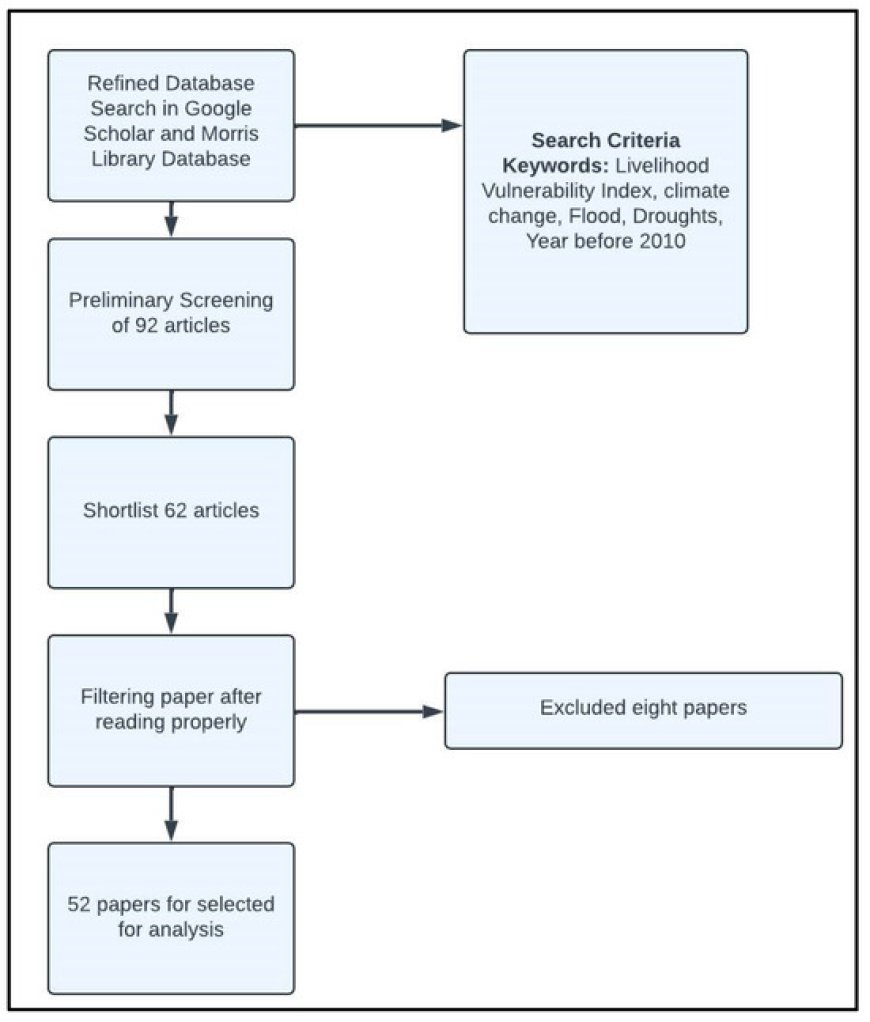
Over the past few decades, the use of vulnerability assessments has grown substantially to support rural communities in developing countries. These studies aim to help these communities achieve their livelihood goals, such as sustainable resource use and adaptation to global changes, by evaluating their susceptibility to climate change impacts. This systematic review critically examines the extensive body of literature on Livelihood Vulnerability Index (LVI) assessments related to climate change impacts in developing countries. By synthesizing findings from various studies, this review highlights patterns and methodologies used to understand the effects of climate change on vulnerable populations. Key focus areas include geographical distribution, methodological approaches, and the frameworks utilized in vulnerability assessments. The review identifies prominent frameworks, such as the LVI and LVI-IPCC, which integrate indicators of sensitivity, exposure, and adaptive capacity to evaluate climate risks. Findings reveal a concentration of studies in Asia and Africa, with a strong emphasis on agricultural and coastal ecosystems. Methodologically, there is a notable reliance on stratified random sampling to accurately capture community and household-level vulnerabilities. A detailed comparative analysis of the LVI, LVI-IPCC, and Sustainable Livelihood Framework (SLF) is also presented, highlighting their characteristics, benefits, and limitations. The review underscores the need for methodological refinements to better address temporal and regional variations in vulnerability. It concludes with recommendations for future research, integrating broader climate scenarios, exploring sectoral interdependencies, and adopting dynamic approaches to enhance the accuracy and applicability of vulnerability assessments.
Climate, Vol. 12, Pages 100: Taking Stock of Recent Progress in Livelihood Vulnerability Assessments to Climate Change in the Developing World
Climate doi: 10.3390/cli12070100
Authors: Atoofa Zainab Kalim U. Shah
Over the past few decades, the use of vulnerability assessments has grown substantially to support rural communities in developing countries. These studies aim to help these communities achieve their livelihood goals, such as sustainable resource use and adaptation to global changes, by evaluating their susceptibility to climate change impacts. This systematic review critically examines the extensive body of literature on Livelihood Vulnerability Index (LVI) assessments related to climate change impacts in developing countries. By synthesizing findings from various studies, this review highlights patterns and methodologies used to understand the effects of climate change on vulnerable populations. Key focus areas include geographical distribution, methodological approaches, and the frameworks utilized in vulnerability assessments. The review identifies prominent frameworks, such as the LVI and LVI-IPCC, which integrate indicators of sensitivity, exposure, and adaptive capacity to evaluate climate risks. Findings reveal a concentration of studies in Asia and Africa, with a strong emphasis on agricultural and coastal ecosystems. Methodologically, there is a notable reliance on stratified random sampling to accurately capture community and household-level vulnerabilities. A detailed comparative analysis of the LVI, LVI-IPCC, and Sustainable Livelihood Framework (SLF) is also presented, highlighting their characteristics, benefits, and limitations. The review underscores the need for methodological refinements to better address temporal and regional variations in vulnerability. It concludes with recommendations for future research, integrating broader climate scenarios, exploring sectoral interdependencies, and adopting dynamic approaches to enhance the accuracy and applicability of vulnerability assessments.
What's Your Reaction?