Climate, Vol. 11, Pages 219: Grassland Resilience to Woody Encroachment in North America and the Effectiveness of Using Fire in National Parks
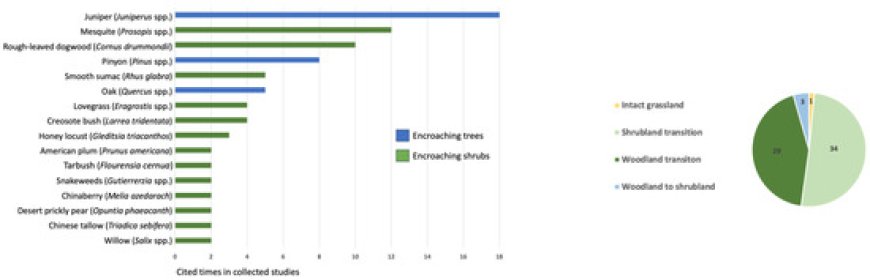
The grasslands of North America are threatened by woody encroachment. Restoring historical fire regimes has been used to manage brush encroachment. However, fire management may be insufficient due to the nonlinear and hysteretic responses of vegetation recovery following encroachment and the social–political constraints affecting fire management. We synthesized the fire thresholds required to control woody encroachment by typical encroaching species in North America, especially the Great Plains region, and identified the social–political constraints facing fire management in selected grassland national parks. Our synthesis revealed the resistance, hysteresis, and irreversibility of encroached grasslands using fire and emphasized the need for a combination of brush management methods if the impacts of climate change are to be addressed. Frequent fires alone may maintain grassland states, reflecting resistance. However, high-intensity fires exceeding fire-mortality thresholds are required to exclude non-resprouting shrubs and trees, indicating hysteresis. Fire alone may be insufficient to reverse encroachment by resprouting species, exhibiting reversibility. In practice, appropriate fire management may restore resistant grassland states. However, social–political constraints have restricted the use of frequent and high-intensity fires, thereby reducing the effectiveness of management actions to control woody encroachment of grasslands in national parks. This research proposes a resilience-based framework to manage woody encroachment in grassland national parks and similar protected areas.
Climate, Vol. 11, Pages 219: Grassland Resilience to Woody Encroachment in North America and the Effectiveness of Using Fire in National Parks
Climate doi: 10.3390/cli11110219
Authors: Han Ling Guangyu Wang Wanli Wu Anil Shrestha John L. Innes
The grasslands of North America are threatened by woody encroachment. Restoring historical fire regimes has been used to manage brush encroachment. However, fire management may be insufficient due to the nonlinear and hysteretic responses of vegetation recovery following encroachment and the social–political constraints affecting fire management. We synthesized the fire thresholds required to control woody encroachment by typical encroaching species in North America, especially the Great Plains region, and identified the social–political constraints facing fire management in selected grassland national parks. Our synthesis revealed the resistance, hysteresis, and irreversibility of encroached grasslands using fire and emphasized the need for a combination of brush management methods if the impacts of climate change are to be addressed. Frequent fires alone may maintain grassland states, reflecting resistance. However, high-intensity fires exceeding fire-mortality thresholds are required to exclude non-resprouting shrubs and trees, indicating hysteresis. Fire alone may be insufficient to reverse encroachment by resprouting species, exhibiting reversibility. In practice, appropriate fire management may restore resistant grassland states. However, social–political constraints have restricted the use of frequent and high-intensity fires, thereby reducing the effectiveness of management actions to control woody encroachment of grasslands in national parks. This research proposes a resilience-based framework to manage woody encroachment in grassland national parks and similar protected areas.
What's Your Reaction?